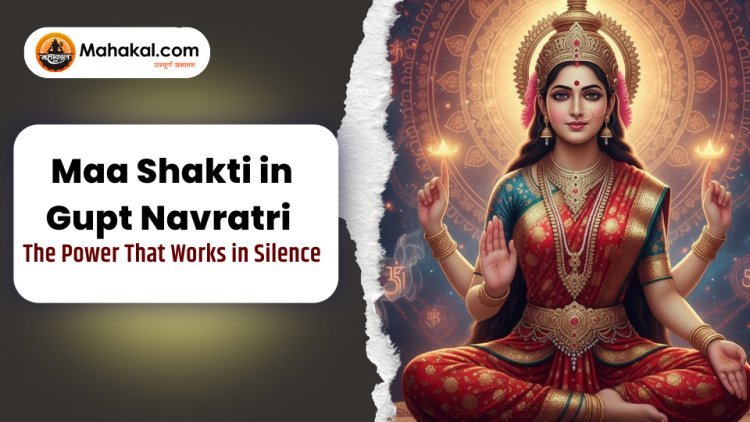
Maa Shakti in Gupt Navratri – The Power That Works in Silence
Maa Shakti in Gupt Navratri represents the silent yet immensely powerful divine energy that works beyond visibility and words. During this sacred period, the Goddess is worshipped in her subtle and hidden form, emphasizing inner transformation over external celebration. Gupt Navratri is considered ideal for deep sadhana, mantra chanting, and meditation. The silent worship helps awaken inner strength, intuition, and spiritual awareness. Maa Shakti’s energy during this time removes inner blockages and negative tendencies. It encourages discipline, patience, and surrender on the spiritual path. Through silence and devotion, devotees experience profound inner purification and divine connection.
Introduction
Gupt Navratri is a sacred spiritual period in Sanatan Dharma where worship is performed not through grand celebrations, but through silence, discipline, and inner sadhana. During this time, Maa Shakti reveals her most subtle and powerful form—a force that works silently within the seeker.
Unlike public Navratri festivals, Gupt Navratri is dedicated to inward spiritual awakening, making it a powerful phase for understanding the true essence of Maa Shakti.
Who is Maa Shakti in Sanatan Dharma ?
Maa Shakti is the primordial cosmic energy responsible for creation, preservation, and transformation. She is the dynamic force behind Brahma, Vishnu, and Mahesh, and exists both as the universe and the consciousness within beings.
In Gupt Navratri, Maa Shakti is worshipped in her esoteric and formless dimensions, beyond rituals and symbols.
Why is Gupt Navratri Dedicated to Silent Shakti ?
The word Gupt means hidden or secret. This Navratri emphasizes that true power does not announce itself—it transforms quietly.
Key reasons silence is important:
- Silence sharpens awareness
- Energy turns inward
- Ego dissolves naturally
- The mind becomes receptive to divine frequencies
Maa Shakti operates silently during Gupt Navratri, reshaping the inner world of the devotee.
Maa Shakti as the Inner Awakening Force
During Gupt Navratri, Shakti is not sought externally but experienced internally.
Her silent workings include:
- Awakening of Kundalini energy.
- Cleansing of subconscious fears.
- Breaking karmic patterns.
- Strengthening intuition and clarity.
- Emotional and mental purification.
This is why Gupt Navratri is considered ideal for deep spiritual transformation.
Connection with the Ten Mahavidyas
Gupt Navratri is closely associated with the Dasa Mahavidyas, the ten supreme wisdom forms of Maa Shakti.
Each Mahavidya represents:
- Inner power
- Psychological transformation
- Mastery over limitations
- Expansion of consciousness
Their worship is subtle and intense, suited only for inward-focused sadhana.
Spiritual Practices to Experience Silent Shakti
To align with Maa Shakti during Gupt Navratri, seekers traditionally follow disciplined practices:
- Mantra japa in solitude
- Meditation and breath awareness
- Observance of Maun Vrat
- Night-time spiritual practices
- Minimal speech and sensory restraint
These practices help one feel the silent yet powerful presence of Shakti.
Why Is Silent Power Stronger Than Visible Power?
Sanatan philosophy teaches that:
- Loud power dominates
- Silent power transforms
Maa Shakti during Gupt Navratri does not destroy outwardly; she heals, realigns, and elevates internally. This silent grace leads to lasting spiritual growth.
Psychological and Spiritual Benefits
The subtle energy of Maa Shakti during Gupt Navratri brings:
- Mental stability
- Reduction of fear and anxiety
- Emotional balance
- Enhanced concentration
- Inner confidence and fearlessness
Thus, Gupt Navratri supports both spiritual elevation and mental well-being.
Conclusion
Maa Shakti in Gupt Navratri represents the highest truth of Sanatan Dharma—that real transformation happens in silence. When the outer noise fades, her divine energy reshapes the soul from within.
Gupt Navratri is not about being seen by the world, but about being seen by the Divine within.
What's Your Reaction?