Mahabharata: Wisdom From the Greatest Epic
Discover timeless life lessons from the Mahabharata on Dharma, karma, leadership, self-control, devotion, family values, and righteous living. Learn how this ancient epic guides modern life with wisdom and balance.
Introduction
The Mahabharata is not just an ancient Indian epic; it is a timeless guide to human behaviour, morality, leadership, family values, and spiritual evolution. Its teachings remain strikingly relevant in today’s fast-paced world, offering deep insights into how to live with wisdom, balance, and integrity. From the battlefield of Kurukshetra to the sacred conversations of the Bhagavad Gita, the Mahabharata continues to illuminate the path of righteousness.
1. Dharma Above Everything
The Mahabharata teaches that Dharma is not a rigid rulebook but the art of doing the right thing in the right moment. Yudhishthira embodies moral integrity, while Bhishma and Vidura show that Dharma must guide all actions, even in difficult circumstances.
2. Consequences of Greed and Ego
The downfall of the Kauravas is a powerful reminder that unchecked ego, jealousy, and greed destroy relationships, peace, and prosperity. Duryodhana’s arrogance stands as a warning that inner flaws can lead to outer destruction.
3. Importance of Self-Control
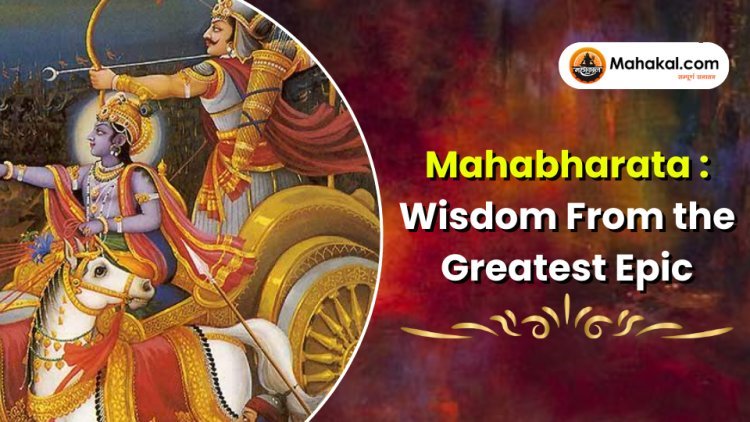
Arjuna’s inner conflict in the Bhagavad Gita reflects the struggle every human faces. Krishna teaches that mastering the mind, desires, and emotions is the key to clarity and success in life.
4. Power of Righteous Leadership
True leadership stands on values, compassion, and fairness. Krishna, Bhishma, and Vidura demonstrate that a leader must act for the welfare of all, not merely for personal benefit.
5. The Value of Devotion and Wisdom
Arjuna’s devotion to Krishna and his readiness to learn signify that true strength comes from humility and a desire for spiritual understanding.
6. Equality and Respect for Women
Draupadi’s humiliation became the turning point of the war. The epic emphasises that dishonouring women disrupts the balance of society and invites karmic consequences.
7. Friendship and Loyalty
The bond between Krishna and Arjuna, and between Karna and Duryodhana, shows that loyalty is sacred. However, the story also teaches that loyalty must never overpower moral judgment.
8. Karma Shapes Destiny
Every action has consequences. The Mahabharata illustrates that destiny is shaped not by luck, but by one’s actions, intentions, and choices.
9. Importance of Detachment
Krishna teaches Arjuna the art of Nishkama Karma—acting with complete sincerity while staying detached from the results. This is the timeless formula for peace in modern life.
10. Family Conflicts and Emotional Intelligence
The rivalry between the Pandavas and Kauravas teaches that jealousy, insecurity, and lack of communication can break even the strongest family bonds. Emotional maturity is essential in every relationship.
11. Knowledge as Real Wealth
Vidura Niti, Bhishma’s teachings, and Krishna’s wisdom highlight that true wealth is not gold or power—it is knowledge, character, and clarity.
Conclusion
The Mahabharata is an eternal mirror that reflects human nature. It teaches us how to choose wisdom over impulse, Dharma over ego, and unity over conflict. Even today, its lessons guide individuals, families, leaders, and societies toward a purposeful and balanced life.
What's Your Reaction?