Sanja Festival 2026: Date, Significance, Puja Vidhi, Tradition & Folk Art
Sanja Festival 2026: Know the date, significance, Puja Vidhi, traditional Sanja designs, folk songs, rituals and the rich cultural heritage of Malwa and Madhya Pradesh.
Sanja Festival 2026: Date, Significance, Puja Vidhi, Tradition & Folk Art
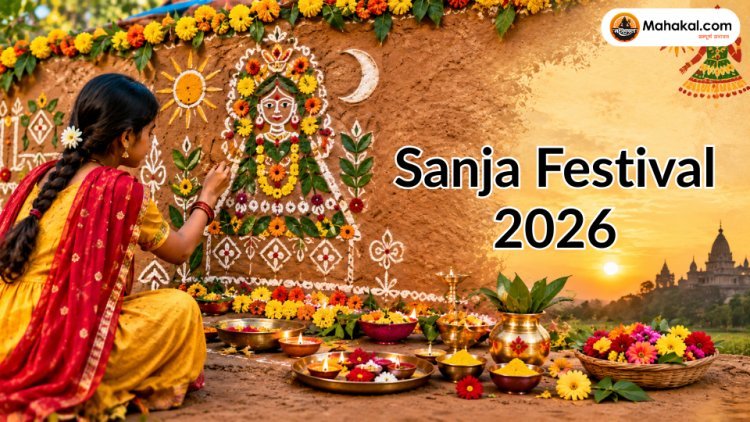
Sanja Festival 2026: Sanja is a unique traditional folk festival celebrated mainly in the Malwa and Nimar regions of Madhya Pradesh. The festival is primarily observed during Pitru Paksha. During this period, unmarried girls traditionally create beautiful Sanja designs and patterns on the walls of their homes using cow dung, flowers, leaves, and other natural materials.
Sanja is not only a religious tradition but also an important part of folk art, folk songs, community participation, and cultural practices passed down from one generation to another.
When is Sanja Festival 2026?
Sanja Festival is traditionally observed during Pitru Paksha. In 2026, Pitru Paksha begins on September 27 and concludes with Sarva Pitru Amavasya on October 10, 2026. The exact duration and concluding day of Sanja celebrations may vary according to local traditions and regional customs. Therefore, it is advisable to follow the local Panchang and traditional practices of your region.
What is Sanja Festival?
Sanja is a traditional folk festival observed in parts of Madhya Pradesh and other regions of North and Central India. It is also known by names such as Sanjhi, Sanjhya, and Sanja.
As part of this tradition, girls create Sanja designs on the walls of their homes in the evening. Different designs and decorations may be created each day. According to cultural documentation, the tradition is associated with Pitru Paksha and remembrance of ancestors, and it has been documented in regions of Madhya Pradesh, including Ujjain.
Significance of Sanja Festival
Sanja holds significance not only from a religious perspective but also from the viewpoint of folk culture and traditional art. During Pitru Paksha, when ancestors are remembered and honored, Sanja has a special place in the cultural life of the region.
In the Malwa and Nimar regions, girls traditionally create new designs on the walls each day and gather in the evening for Sanja Aarti and folk songs. The tradition also encourages community participation and social bonding.
How are Sanja Designs Made?
One of the most distinctive features of Sanja is its traditional wall art. The wall is cleaned and prepared using a base of cow dung and clay. It is then decorated with flowers, leaves, colored paper, and other natural materials.
According to local traditions, different designs may be created on different days. During the final days, an elaborate Sanja design is created, which in some regions is known as Kila Kot.
What Types of Designs are Made During Sanja?
Various designs are created during the Sanja festival according to local traditions. These may include traditional geometric patterns as well as representations of the sun, moon, flowers, leaves, and other folk symbols.
The tradition of creating different designs on different days is an important feature of Malwa's Sanja folk art and gives the festival its distinctive cultural identity.
Folk Songs and Aarti During Sanja Festival
Folk songs and Aarti have an important place in Sanja celebrations. In the evening, girls traditionally gather in front of the Sanja design, sing traditional folk songs, and perform Aarti.
These songs reflect aspects of local life, family relationships, social customs, and traditional values. Thus, Sanja is not simply a form of wall art but a vibrant folk tradition combining art, music, devotion, and community participation.
Sanja Festival and the Tradition of Unmarried Girls
Unmarried girls have traditionally played an important role in Sanja celebrations. They create and decorate the Sanja designs and participate in evening prayers, Aarti, and folk songs.
In some local traditions, worshipping Sanja is also associated with prayers for a good marriage and a happy married life. However, such beliefs and practices may vary from one region to another.
Sanja Festival Puja Vidhi
The method of worshipping Sanja may differ according to regional and family traditions. Generally, the following practices are followed:
-
Clean the wall where the Sanja design will be created.
-
Prepare the base using cow dung and clay.
-
Decorate the Sanja design with flowers, leaves, and other materials.
-
Light a diya in front of Sanja in the evening.
-
Perform Sanja Aarti.
-
Sing traditional folk songs.
-
Offer Prasad and pray for the happiness and prosperity of the family and community.
Conclusion of Sanja Festival
On the final day of Sanja, many regions follow the tradition of giving farewell to Sanja after creating a special design and decoration. In some places, the Sanja design is traditionally immersed in a river, pond, or another water body. The method of concluding the festival can vary according to local customs and traditions.
Sanja Festival and the Culture of Malwa
Sanja holds a special place in the folk culture of the Malwa region of Madhya Pradesh. The festival brings together rural life, folk art, music, traditional customs, and social relationships.
The use of natural materials in Sanja wall art and the creation of different designs each day make it a distinctive form of traditional folk art. Cultural documentation has also highlighted Sanjya painting traditions among the folk painting traditions of Malwa and Mewar.
Cultural Significance of Sanja Festival
In today's modern era, traditional festivals such as Sanja provide an important way to understand and preserve India's cultural heritage. Introducing children and younger generations to these traditions can help preserve folk songs, folk art, traditional knowledge, and cultural practices.
Sanja also demonstrates how religious beliefs, art, music, and community life can come together as an integral part of traditional culture.
Conclusion
Sanja Festival 2026 is a beautiful tradition associated with the rich folk culture of Madhya Pradesh and the period of Pitru Paksha. Sanja's traditional wall art, folk songs, Aarti, and community participation make this festival culturally significant.
In many parts of Malwa, Nimar, and Central India, the tradition of Sanja continues to remain an important part of local cultural heritage. The festival provides an opportunity for younger generations to connect with their cultural roots, folk art, and traditional customs.
For more information about Panchang, Hindu festivals, Vrat, Puja Vidhi, religious traditions, and Hindu culture, stay connected with Mahakal.com.
Har Har Mahadev! Jai Sanja Mata!
What's Your Reaction?