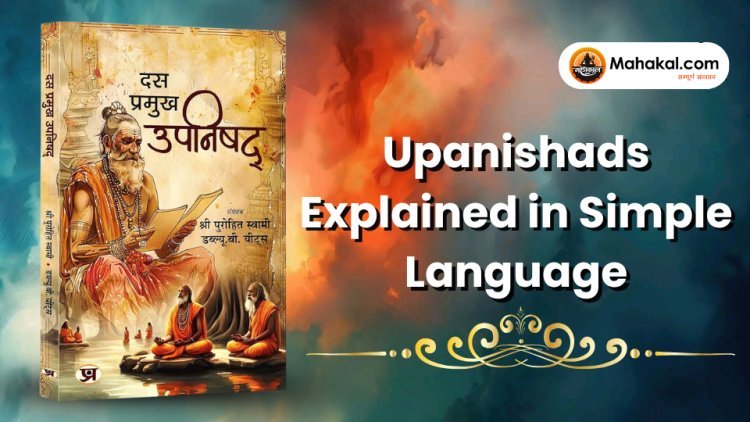
Upanishads Explained in Simple Language
Understand the Upanishads in simple language and discover their timeless wisdom about the soul, consciousness, unity, meditation, and fearless living. Learn how the Upanishads guide inner peace, self-realization, and spiritual clarity in modern life.
Introduction
The Upanishads are among the most profound spiritual treasures of India. Written thousands of years ago, these sacred texts contain the highest knowledge of life, consciousness, the soul, and the universe. Yet many people feel the Upanishads are difficult to understand. This blog explains their essence in simple, clear language so that anyone—regardless of spiritual background—can understand their timeless wisdom.
The Upanishads are not philosophy; they are inner science. They teach us how to live, how to think, and how to realize our true nature.
1. What Are the Upanishads?
The word Upanishad means “to sit near”—near a Guru, to receive knowledge that liberates. They are part of the Vedas and contain teachings that guide a seeker toward self-realization.
The Upanishads answer life’s deepest questions:
-
Who am I?
-
What is the purpose of life?
-
What is the nature of God?
-
What happens after death?
-
What brings true happiness?
2. The Core Message: You Are the Eternal Self
The Upanishads reveal the discovery that changed human spiritual history forever:
You are the Atman — the pure, eternal, unchanging consciousness.
-
You are not the body.
-
You are not the mind.
-
You are the witnessing Self beyond all limitations.
When a person understands this truth, fear disappears and freedom begins.
3. The Upanishads Teach Unity, Not Division
One of the most important teachings is:
“Sarvam Khalvidam Brahma” — All are Brahman.
This means everything in the universe is one divine energy appearing in different forms.
This understanding removes hatred, jealousy, ego, and conflict.
It teaches compassion, humility, and love for all beings.
4. The Universe Is Not Outside You — It Exists Within You
The Upanishads boldly declare:
“Aham Brahmasmi” — I am Brahman.
“Tat Tvam Asi” — You are That.
This does not mean the ego is God; it means the deepest essence within each person is divine.
When you know this, you stop searching for happiness outside. You find it within your own consciousness.
5. Why Do the Upanishads Emphasize Knowledge (Jnana)?
Ignorance is the root cause of suffering.
People think:
“I am weak.”
“I am unhappy.”
“I am limited.”
“I am alone.”
The Upanishads remove this ignorance by revealing the true Self—
a state of bliss, strength, purity, and completeness.
-
Knowledge liberates.
-
Knowledge heals.
-
Knowledge awakens.
6. Meditation :The Path to Realization
The Upanishads teach that silence is the doorway to the soul. Through meditation, the mind becomes calm and the true Self shines naturally. A peaceful mind reflects the Divine. A restless mind hides it.
7. Why the Upanishads Are Relevant in Modern Life
Even today, the Upanishads help us:
-
Reduce stress
-
Overcome negative emotions
-
Build inner strength
-
Live with clarity and purpose
-
Improve relationships
-
Find lasting peace
They teach that happiness is not in objects but in inner awareness.
8. The Upanishads Encourage Fearlessness
Because the soul is eternal, the Upanishads declare:
“Na Jayate Mriyate Va Kadachin” — The Self is never born and never dies.
This teaching removes the deepest human fear—the fear of death—and brings a life filled with courage.
Conclusion
The Upanishads are not ancient theories; they are timeless wisdom meant for each one of us.
Their teachings are simple yet transformative:
-
Know yourself.
-
Realize the divine within you.
-
Live with awareness and love.
-
Seek truth, peace, and inner freedom.
Understanding the Upanishads—even in simple language—can change the way you think, live, and experience your own existence.
The Upanishads teach that a calm mind and focused awareness lead to self-realization. A japa mala helps maintain rhythm, mindfulness, and continuity in meditation, making the inner journey deeper and more disciplined.
[Explore Meditation Malas]
What's Your Reaction?