Dhumavati Jayanti 2026: Date, Puja Timings, Muhurat, Vrat Katha, Significance, Benefits and Worship Rituals
Discover Dhumavati Jayanti 2026 date, Puja timings, Muhurat, Panchang, Vrat Katha, significance, mantra, benefits, and worship rituals of Maa Dhumavati, the seventh Mahavidya of Goddess Shakti.
Dhumavati Jayanti 2026: Date, Puja Timings, Muhurat, Vrat Katha, Significance, Benefits and Worship Rituals
Dhumavati Jayanti is a sacred occasion dedicated to Maa Dhumavati, one of the ten Mahavidyas of Goddess Shakti. Unlike other forms of the Divine Mother that symbolize beauty and prosperity, Goddess Dhumavati represents detachment, spiritual wisdom, and the ultimate truth that everything in the material world is temporary.
Devotees observe Dhumavati Jayanti through fasting, mantra chanting, meditation, and special worship to seek protection from negativity, fear, enemies, and misfortunes.
Experience Sanatan Dharma at Your Space, Download the Mahakal.com App Today.
Dhumavati Jayanti 2026 Date, Tithi and Panchang
Dhumavati Jayanti 2026 will be observed on Monday, 22 June 2026, during the Shukla Paksha Ashtami Tithi of Jyeshtha month.
|
Event |
Date & Time |
|
Dhumavati Jayanti 2026 |
22 June 2026 (Monday) |
|
Ashtami Tithi Begins |
21 June 2026, 03:20 PM |
|
Ashtami Tithi Ends |
22 June 2026, 03:39 PM |
|
Nakshatra |
Uttara Phalguni till 10:22 AM, then Hasta |
|
Yoga |
Vyatipata till 10:31 AM, then Variyan |
|
Karana |
Bava till 03:39 PM, Balava till 04:05 AM (23 June), then Kaulava |
|
Paksha |
Shukla Paksha |
Interestingly, Dhumavati Jayanti 2026 coincides with the Summer Solstice, the longest day of the year, making the occasion especially significant for spiritual practices and meditation.
Who is Goddess Dhumavati?
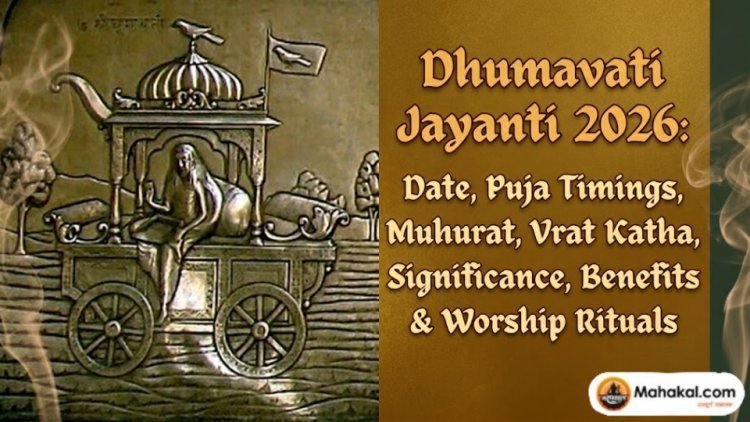
Maa Dhumavati, the seventh among the Ten Mahavidyas, is a powerful form of Goddess Shakti who represents detachment, spiritual wisdom, and freedom from worldly illusions. She teaches devotees to embrace change, overcome ego, and transform adversity into inner strength. Traditionally, Maa Dhumavati is depicted as an elderly goddess seated on a horseless chariot, holding a winnowing basket and surrounded by smoke. The name "Dhumavati" is derived from the Sanskrit word "Dhuma," meaning smoke, symbolizing the transient nature of the material world.
Spiritual Significance of Dhumavati Jayanti
Dhumavati Jayanti marks the appearance of Maa Dhumavati, the seventh Mahavidya of Goddess Shakti. The festival symbolizes the deeper truths of life and teaches devotees that spiritual wisdom arises through detachment and self-realization. Unlike grand celebrations, Dhumavati Jayanti emphasizes inner transformation and liberation from worldly illusions.
Acceptance of Change
Maa Dhumavati teaches devotees to accept life's uncertainties and understand the impermanent nature of the material world.
Destruction of Ego and Attachments
Her worship helps overcome pride, desires, and attachments, paving the way for spiritual growth and inner balance.
Transformation Through Adversity
The Goddess signifies that difficulties and losses can become opportunities for wisdom and spiritual awakening.
Path to Liberation
Devotion to Maa Dhumavati guides seekers beyond worldly illusions and toward peace, self-realization, and Moksha.
Freedom from Fear and Negativity
Her blessings are believed to remove fear, ignorance, and negative influences, granting courage and mental strength.
Dhumavati Jayanti Story and Vrat Katha
According to Hindu scriptures, several legends describe the manifestation of Maa Dhumavati, the seventh among the ten Mahavidyas of Goddess Shakti. The Devi Bhagavatam states that after Goddess Sati immolated herself during Daksha Prajapati's yajna, a fierce form emerged from the smoke of the sacrificial fire. Since the word "Dhuma" means smoke, this divine manifestation came to be known as Maa Dhumavati, symbolizing the eternal truth that remains even after destruction.
Another legend mentioned in the Pranatoshini Tantra narrates that Goddess Parvati once experienced intense hunger while residing on Mount Kailash. When Lord Shiva asked her to wait, she swallowed him in her hunger, causing dense smoke to emerge from her body and transforming her appearance. Lord Shiva then reappeared and declared that she would be known as Dhumavati, the Smoky One.
As the seventh Mahavidya, Maa Dhumavati represents detachment, spiritual wisdom, and inner transformation. Her stories symbolize the impermanence of the material world and inspire devotees to rise above worldly attachments and pursue the path of self-realization and liberation.
Dhumavati Jayanti Puja Vidhi
- Wake up during Brahma Muhurta and take a holy bath.
- Clean the puja area and install the image or idol of Maa Dhumavati.
- Offer flowers, incense, and a ghee lamp.
- Chant Dhumavati mantras and meditate.
- Observe a fast and consume simple sattvic food.
- Read the Devi Bhagavatam and other sacred texts.
Puja Samagri for Dhumavati Jayanti
The following offerings are commonly made:
- Ghee lamp
- Incense sticks
- Camphor
- White flowers
- Yellow flowers
- Coconut
- Fruits
- Dry fruits
- Panchamrit
- Red cloth
- Kumkum
- Akshat (rice)
- Gangajal
https://mahakal.com/shop
Dhumavati Jayanti Mantra
॥ धूं धूं धूमावती स्वाहा ॥
"Dhoom Dhoom Dhumavati Swaha"
Benefits of chanting this mantra:
- Removes fear and negativity.
- Protects from enemies.
- Brings mental peace.
- Destroys obstacles.
- Increases spiritual awareness.
Devotees often chant this mantra 108 times using a Rudraksha mala.
Benefits of Observing Dhumavati Jayanti
Devotees believe that worshipping Maa Dhumavati, the seventh Mahavidya of Goddess Shakti, brings spiritual wisdom, protection, and inner peace. Some of the key benefits associated with observing Dhumavati Jayanti are:
- Protection from enemies and negative energies.
- Relief from fear, anxiety, and mental stress.
- Spiritual growth and progress toward self-realization.
- Removal of obstacles and difficulties in life.
- Increase in confidence, courage, and patience.
- Attainment of wisdom, discernment, and clarity of mind.
- Freedom from worldly attachments and illusions.
- Peace of mind, emotional balance, and positive energy.
Frequently Asked Questions (FAQs)
Q1. When is Dhumavati Jayanti 2026?
Dhumavati Jayanti 2026 will be observed on Monday, 22 June 2026. The Ashtami Tithi begins at 03:20 PM on 21 June and ends at 03:39 PM on 22 June.
Q2. Which Tithi is Dhumavati Jayanti celebrated on?
It is observed on the Ashtami Tithi of Shukla Paksha in Jyeshtha month.
Q3. Who is Maa Dhumavati?
Maa Dhumavati is the seventh Mahavidya and a powerful form of Goddess Shakti associated with wisdom, detachment, and spiritual liberation.
Q4. Which mantra is chanted on Dhumavati Jayanti?
॥ धूं धूं धूमावती स्वाहा ॥
Conclusion
Dhumavati Jayanti is not a festival of outward celebration but a profound reminder of life's impermanence and the power of inner transformation. Maa Dhumavati teaches that loss, suffering, and change are not obstacles but gateways to wisdom and liberation.
Through fasting, mantra chanting, meditation, and sincere devotion, devotees seek the blessings of Maa Dhumavati to overcome fear, remove negativity, and attain spiritual enlightenment.
- Dhumavati Jayanti 2026
- What is the Dhumavati Jayanti Date?
- Dhumavati Jayanti Puja Timings
- When is Dhumavati Jayanti Muhurat?
- Dhumavati Jayanti Panchang
- what is Dhumavati Jayanti Vrat Katha?
What's Your Reaction?