Holashtak 2026 Explained: Traditions, Myths, and Do’s & Don’ts ?
Discover complete details about Holashtak 2026 (24 February–3 March), including its meaning, traditions, mythological story, and religious significance. Learn the connection between Bhakt Prahlad, Holika Dahan, and the spiritual lessons behind this sacred period. Find out what to do and what to avoid during Holashtak for proper planning of weddings and auspicious events. Know detailed information from mhakal.com.
What is Holashtak? Meaning, Origin & Spiritual Background
Holashtak is celebrated to remember the unwavering devotion of Bhakt Prahlad and the divine victory of faith over arrogance, truth over evil, and devotion over fear. These eight days before Holi are deeply connected to one of the most powerful stories in Hindu tradition — the story of Prahlad, Hiranyakashipu, and Holika.
According to ancient scriptures, Hiranyakashipu was a powerful demon king who considered himself supreme and demanded that everyone worship him. However, his own son Prahlad was an ardent devotee of Lord Vishnu. Despite repeated threats, punishments, and torture, Prahlad refused to abandon his faith.
During the eight days leading up to Holika Dahan — now known as Holashtak — Prahlad was subjected to severe trials. These days symbolized intense struggle, emotional testing, and spiritual endurance.
Finally, Hiranyakashipu sought the help of his sister Holika, who had a boon that made her immune to fire. She sat in a blazing fire with Prahlad on her lap, intending to kill him. But due to divine grace:
- Holika was burned to ashes
- Prahlad remained unharmed
- Devotion triumphed over ego
This divine event is commemorated every year through Holika Dahan, marking the end of Holashtak and the destruction of negativity.
Holashtak 2026 Dates – Know the Exact Beginning and Ending
Holashtak 2026 begins on 24 February 2026 (Tuesday) from Phalgun Shukla Ashtami and continues for eight sacred days until 3 March 2026 (Tuesday), the day of Holika Dahan. The colorful celebration of Holi 2026 will be observed on 4 March 2026 (Wednesday).
Understanding the exact Holashtak 2026 dates helps families plan weddings, housewarmings, investments, and religious ceremonies wisely.
Religious Significance of Holashtak – Why It Matters in Hindu Culture
Holashtak holds deep cultural and astrological importance. In many Hindu communities, this period is believed to be less favorable for starting new beginnings because planetary influences are considered unstable.
Key religious beliefs include:
- Energies during these eight days are intense and transformative
- It is a spiritually charged period before the purification ritual of Holika Dahan
- Devotional practices bring inner strength and protection
Rather than being negative, Holashtak is viewed as a preparatory phase before the grand celebration of Holi.
What Not to Do During Holashtak ?
Traditionally, certain auspicious ceremonies are postponed during Holashtak. These include:
- Weddings and engagements
- Griha Pravesh (housewarming ceremony
- Starting a new business or signing major contracts
- Naming ceremonies and Mundan rituals
- Large celebrations or major investments
Many families consult the Hindu Panchang before finalizing important dates during this time.
The belief behind these restrictions is to avoid initiating life-changing events when planetary alignment is considered unstable.
What to Do During Holashtak ?
Instead of focusing on restrictions, Holashtak should be seen as a powerful opportunity for spiritual growth.
Recommended activities:
- Chanting mantras and performing daily puja
- Reading sacred scriptures like Bhagavad Gita
- Practicing meditation and yoga
- Offering charity and helping the needy
- Strengthening family prayers and devotional gatherings
Holashtak is the ideal time for inner cleansing, reflection, and spiritual discipline.
Holashtak and Astrology – Understanding the Belief System
In Vedic astrology, Holashtak is considered a sensitive time because multiple planets are believed to influence human life strongly during these days.
Though not universally followed across India, in North Indian traditions especially, people strictly avoid major ceremonies during Holashtak.
It highlights the cultural importance of aligning human actions with cosmic cycles.
Holika Dahan – The End of Holashtak and Beginning of Renewal
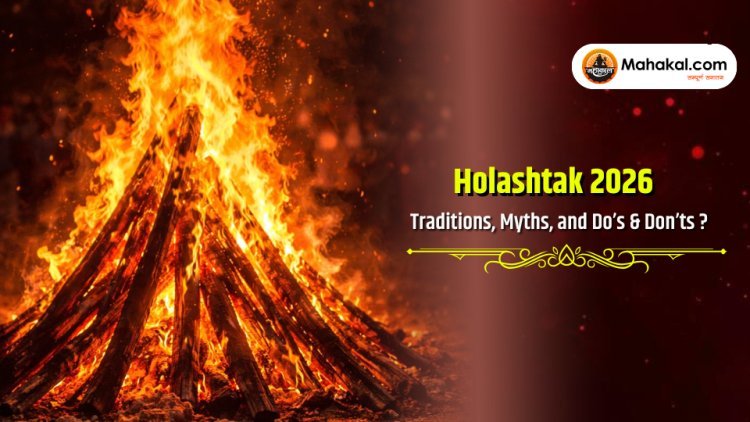
Holashtak concluded with Holika Dahan on 3 March 2026. Bonfires are lit to symbolize:
- Victory of good over evil
- Destruction of negativity
- Spiritual purification
- A fresh start before Holi
The very next day, Holi 2026 (4 March 2026) brings joy, colors, celebration, and social bonding.
Thus, Holashtak acts as a spiritual bridge between discipline and celebration.
Conclusion – Holashtak 2026 Is a Time for Reflection, Not Fear
Holashtak 2026, from 24 February to 3 March, is not a period of negativity — it is a time of spiritual preparation. It encourages mindfulness, devotion, and wise planning before the vibrant festival of Holi.
By respecting traditions and understanding their meaning, we transform Holashtak into a phase of inner awakening and cultural connection.Observe Holashtak with awareness. Celebrate Holika Dahan with devotion. Welcome Holi with joy and positivity.
Experience Sanatan Dharma at Your Space, Download the Mahakal.com App Today.
https://play.google.com/store/apps/details?id=manal.mahakal.com&hl=en_IN
- Holashtak 2026 date
- Holashtak 2026 start and end date
- Holashtak meaning and significance
- Holashtak before Holi 2026
- Holashtak story of Prahlad
- Holika Dahan 2026 date
- Holashtak do’s and don’ts
- Why Holashtak is not auspicious
- Holashtak religious importance
- Holi 2026 festival guide
- Holashtak astrology belief
What's Your Reaction?