Navdurga in Gupt Navratri – Symbolism and Spiritual Meaning
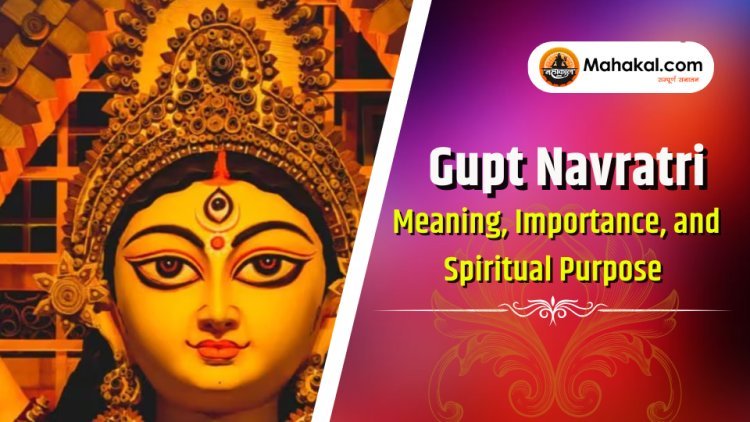
Gupt Navratri is a sacred nine-day period dedicated to the worship of Goddess Durga in her hidden (Gupt) form. Observed with devotion and secrecy, it is believed to enhance spiritual discipline and inner transformation. Devotees observe fasting, recite mantras, and perform rituals to invoke the divine energy of the Goddess. This period is considered ideal for self-reflection, meditation, and the removal of negative influences. Gupt Navratri strengthens faith, patience, and concentration, guiding devotees toward spiritual awakening and inner power. It is regarded as a time to align oneself with divine consciousness and attain mental and spiritual purity.
Navdurga in Gupt Navratri – Symbolism and Spiritual Meaning
Introduction
Gupt Navratri is a sacred period in Sanatan Dharma dedicated to silent sadhana and inner transformation. During this time, the worship of Navdurga is not external or celebratory, but symbolic and deeply psychological. Each form of Maa Durga represents a specific inner force that must be awakened within the seeker.
In Gupt Navratri, Navdurga is not worshipped as distant deities, but as living energies shaping consciousness, discipline, and spiritual evolution.
Navdurga as the Nine Inner Powers
The nine forms of Maa Durga symbolize nine stages of inner awakening. In Gupt Navratri, these forms represent internal transformation rather than outer rituals.
- Maa Kali – The supreme power of time and transformation that destroys ignorance and ego.
- Maa Tara – The guiding force that protects devotees and leads them across spiritual obstacles.
- Maa Baglamukhi – The divine energy that silences negativity, enemies, and harmful intentions.
- Maa Bhuvaneshwari – The cosmic mother who governs creation, space, and universal order.
- Maa Chhinnamasta – The force of self-sacrifice and sudden spiritual awakening beyond fear.
- Maa Dhumavati – The power that teaches detachment, endurance, and wisdom through adversity.
- Maa Tripura Sundari (Shodashi) – The embodiment of divine beauty, balance, and blissful consciousness.
- Maa Matangi – The goddess of inner knowledge, speech, creativity, and spiritual expression.
- Maa Kamala – The bestower of wealth, prosperity, abundance, and spiritual fulfillment.
Symbolism of Navdurga in Gupt Navratri
Each Navdurga form carries symbolic meaning that guides the seeker inward.
- Weapons symbolize mastery over senses and thoughts
- Mounts represent controlled instincts
- Postures reflect mental balance
- Expressions convey inner strength and fearlessness
In Gupt Navratri, these symbols are meditated upon rather than displayed.
Navdurga and Inner Psychological Transformation
Gupt Navratri focuses on inner purification. Navdurga energies help
- Stabilize emotions
- Remove subconscious fears
- Break karmic patterns
- Strengthen willpower
- Develop spiritual resilience
This makes Navdurga worship a journey of self-mastery.
Navdurga and Shakti Sadhana
Navdurga worship during Gupt Navratri supports
- Silent mantra japa
- Inner discipline
- Energy alignment
- Conscious living
Unlike public Navratri, here Shakti works subtly, reshaping awareness and intention.
Why Navdurga Worship Is Subtle in Gupt Navratri ?
Gupt Navratri teaches that true power does not need display.
Navdurga energies operate
- Without noise
- Without expectation
- Without ego
Their silent influence leads to lasting transformation rather than temporary inspiration.
Spiritual Benefits of Navdurga Sadhana
- Inner stability
- Fearlessness
- Mental clarity
- Emotional balance
- Spiritual maturity
These benefits unfold gradually through disciplined practice.
Conclusion
Navdurga in Gupt Navratri is not a ritualistic celebration, but a symbolic map of inner awakening. Each form guides the seeker through layers of consciousness, leading toward clarity, strength, and spiritual fulfillment.
Gupt Navratri reminds us that the true Navdurga resides within, waiting to be awakened through silence, discipline, and devotion.
What's Your Reaction?