10 Divine Forms of Baba Mahakal: Spiritual Significance of the Sacred Shringar Before Mahashivratri
Explore the 10 divine shringar of Mahakal during Shiv Navratri at Mahakaleshwar Temple, Ujjain. Discover their spiritual meaning, symbolism, and Mahashivratri significance.
10 Divine Forms of Baba Mahakal: Spiritual Significance of the Sacred Shringar Before Mahashivratri
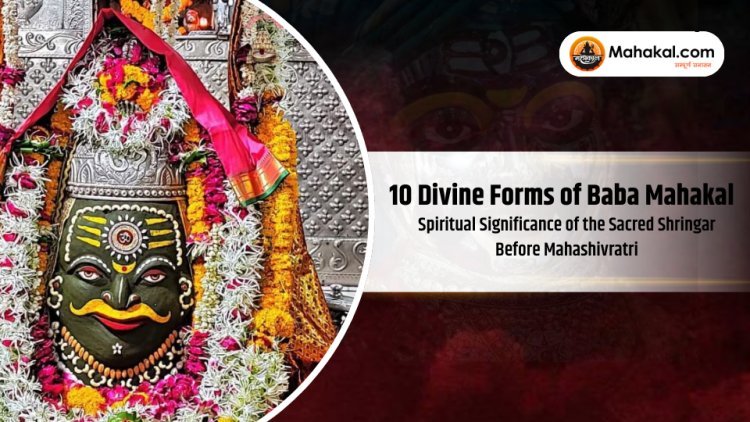
During Shiv Navratri 2026 (beginning around February 7 and culminating on Mahashivratri, February 15, 2026), the sacred Mahakaleshwar Jyotirlinga Temple in Ujjain becomes the center of intense spiritual energy and devotion. Over these 10 auspicious days, Lord Mahakal is adorned in distinct daily Shringar (sacred attire and divine manifestations), each representing a profound spiritual principle of Lord Shiva.
This 10-day Mahakal Shringar Mahotsav is not merely ritual decoration—it is a symbolic unfolding of Shiva’s cosmic roles: ascetic, protector, cosmic ruler, householder, destroyer of ego, and divine groom.
Let us explore the daily special shringar forms of Mahakal during Shiv Navratri 2026, their formation, symbolism, and spiritual importance.
Day 1–2: Chandan & Divya Chandan Shringar
How It Is Formed:
Lord Mahakal is beautifully adorned with sacred sandalwood (chandan) paste applied artistically over the Jyotirlinga. Fragrant floral decorations and cooling elements enhance the serene aura.
Why It Is Special:
Chandan represents purity, calmness, and spiritual cooling of the mind. It symbolizes the beginning of inner cleansing before the intense spiritual build-up toward Mahashivratri.
Spiritual Significance:
It invites peace, emotional balance, and devotional surrender.
Day 3: Sheshnaag Shringar
How It Is Formed:
A symbolic serpent (Naag) adorns the Shivling, representing Sheshnaag coiled around Lord Shiva.
Why It Is Special:
The serpent symbolizes awakened Kundalini energy and protection from negativity. It also reflects Shiva’s mastery over fear and death.
Spiritual Significance:
Represents control over desires, transformation of fear into power, and divine protection.
Day 4: Ghatatop Shringar
How It Is Formed:
Lord Mahakal is adorned in an open-haired (jata) cosmic form, symbolizing the universe flowing through his matted locks.
Why It Is Special:
This form represents the vastness of the cosmos contained within Shiva.
Spiritual Significance:
Teaches surrender to the divine cosmic order and acceptance of life’s flow.
Day 5: Chhabina Shringar
How It Is Formed:
A majestic royal adornment with ornaments, crown, and vibrant attire.
Why It Is Special:
Depicts Mahakal as the supreme ruler of time and destiny.
Spiritual Significance:
Symbolizes prosperity, authority, and divine governance over karma.
Day 6: Holkar Shringar
How It Is Formed:
Inspired by the devotion of the Holkar dynasty, Lord Mahakal is dressed in regal traditional attire.
Why It Is Special:
Honors historical devotion and royal patronage of Mahakaleshwar Temple.
Spiritual Significance:
Represents service, cultural heritage, and devotion beyond time.
Day 6–7: Manmahesh Shringar
How It Is Formed:
Mahakal appears in a composed, divine authority form with calm expressions.
Why It Is Special:
Symbolizes divine wisdom and leadership.
Spiritual Significance:
Blesses devotees with clarity, courage, and removal of obstacles.
Day 7: Uma–Mahesh Shringar
How It Is Formed:
Lord Shiva is symbolically adorned alongside Goddess Parvati.
Why It Is Special:
Represents the union of Shiva (consciousness) and Shakti (energy).
Spiritual Significance:
Symbolizes marital harmony, balance, love, and cosmic creation.
Day 8: Shiv Tandav Shringar
How It Is Formed:
An energetic and powerful decoration representing the cosmic dance of destruction and renewal.
Why It Is Special:
Depicts Shiva’s fierce transformative energy.
Spiritual Significance:
Destroys ego, negativity, and past karmic burdens.
Final Day – Mahashivratri (February 15, 2026): Royal Groom / Saptadhan Shringar
How It Is Formed:
On Mahashivratri night, Lord Mahakal is dressed as a divine groom (Var Roop) with a floral crown (Sehra), Saptadhan (seven sacred grains symbolizing prosperity), and in some traditions, a divine mask.
Why It Is Special:
This is the grand culmination of Shiv Navratri—the sacred marriage symbolism of Shiva and Shakti.
Spiritual Significance:
Represents completion, abundance, divine union, and the ultimate spiritual awakening during the midnight Mahanisha Puja.
Why Shiv Navratri Shringar at Mahakaleshwar Is Unique
- One of the most spiritually powerful celebrations before Mahashivratri.
- Daily transformation of Lord Mahakal into distinct divine manifestations.
- Symbolic journey from ascetic purity to cosmic union.
- Rare darshan opportunity at one of the 12 Jyotirlingas.
Conclusion
The 10-day Shiv Navratri Festival 2026 at Mahakaleshwar Temple, Ujjain, is more than a religious celebration—it is a sacred spiritual progression. Each day’s shringar form of Lord Mahakal reveals a deeper truth about life, transformation, balance, devotion, and liberation.
From the cooling serenity of Chandan Shringar to the majestic Groom (Saptadhan) form on Mahashivratri, the journey symbolizes the devotee’s path—from purification to divine realization.
Witnessing these sacred forms is believed to remove negativity, grant spiritual strength, and connect devotees to the eternal cosmic energy of Mahakal.
Experience Sanatan Dharma at Your Space, Download the Mahakal.com App Today.
https://play.google.com/store/apps/details?id=manal.mahakal.com&hl=en_IN
- Mahakal Shringar
- Shiv Navratri Mahakal
- Mahakaleshwar Temple Ujjain
- 10 Divine Forms of Mahakal
- Mahashivratri Mahakal Darshan
- Daily Mahakal Shringar
- Spiritual Significance of Mahakal
- Mahakal Shringar Mahotsav
- Ujjain Jyotirlinga Temple
- Shiv Navratri Festival Ujjain
What's Your Reaction?