28 Types of Hell in Garuda Purana : Sins, Punishments & The Soul’s Journey Explained
Explore the 28 types of hell (Naraka) described in the Garuda Purana and understand their connection with karma, sins, and the soul’s journey after death. Learn how each Naraka represents consequences of actions and the path toward rebirth or liberation. Discover the deeper spiritual meaning behind these teachings and how to avoid negative karma. Read complete insights and guidance on Mahakal.com.
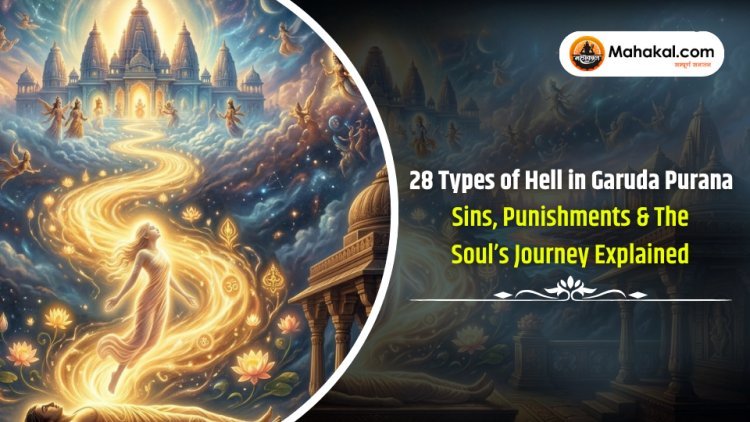
28 Types of Hell in Garuda Purana: Sins, Punishments & The Soul’s Journey Explained
Introduction
The Garuda Purana is one of the most respected scriptures in Sanatan Dharma, especially known for its teachings about life after death, karma, rebirth, and the journey of the soul. Among its most discussed subjects is the description of 28 types of Naraka (hellish realms) where souls experience the results of sinful deeds before taking birth again.
These hells are not described as eternal punishment, but as temporary realms where the soul undergoes consequences according to karma. After completing the required suffering, the soul moves forward in the cycle of rebirth.
This teaching reminds humanity that every action has consequences, and righteous living leads to peace while sinful conduct leads to pain.
What is Naraka in Garuda Purana
Naraka is considered the realm of punishment ruled by Lord Yama, the god of justice and death. After death, the soul is brought before Yama, where Chitragupta presents the record of all deeds performed in life.
According to those karmas, the soul may go to :
- Swarga for virtuous deeds
- Naraka for sinful deeds
- Rebirth on earth according to remaining karma
The concept of Naraka teaches moral discipline, responsibility, and the law of cause and effect.
Why 28 Types of Hell are Mentioned
The Garuda Purana explains that different sins create different karmic consequences. Therefore, separate hells are described for different actions such as violence, cheating, greed, cruelty, lust, disrespect, falsehood, and misuse of power.
Each Naraka symbolizes the suffering created by the same negative behavior done toward others.
28 Types of Hell in Garuda Purana
1. Tamisra - For stealing wealth, spouse, or rights of others.
2. Andhatamisra - For deception and betrayal.
3. Raurava - For harming innocent beings.
4. Maharaurava - For cruelty done for selfish pleasure.
5. Kumbhipaka - For killing animals brutally.
6. Kalasutra - For insulting parents, elders, and saints.
7. Asipatravana - For abandoning dharma and misleading others.
8. Sukaramukha - For punishing innocent people.
9. Andhakupa - For causing pain to small creatures and helpless beings.
10.Krimibhojana - For selfishness and refusing to share food.
11. Sandamsa - For theft of gold, valuables, and sacred property.
12. Taptasurmi - For illicit relationships and lustful acts.
13. Vajrakantaka - Salmali For unnatural misconduct and abuse.
14. Vaitarani - For rulers or powerful people neglecting duty.
15. Puyoda - For living without purity and ethics.
16. Pranarodha - For needless killing and violent hunting.
17. Visasana - For pride and cruelty.
18. Lalabhaksha - For misuse of intimacy and immoral conduct.
19. Sarameyadana - For robbery, arson, poisoning, and harming society.
20. Avichi - For lying and false witness.
21. Ayahpana - For misuse of intoxicants and oath-breaking.
22. Ksarakardama - For arrogance and insulting worthy people.
23. Raksogana - Bhojana For cannibalism and human sacrifice.
24. Shulaprota - For betraying trust and torturing dependents.
25. Dandasuka - For jealousy and venomous behavior.
26. Avata - Nirodhana For imprisoning innocents.
27. Paryavartana - For insulting guests and disrespecting hospitality.
28. Suchimukha - For greed, suspicion, and hoarding wealth.
The Soul’s Journey After Death
According to Garuda Purana, after death the soul leaves the physical body and begins its onward journey. Messengers of Yama guide the soul to the divine court where karmas are examined.
Then the soul may experience :
- Reward for good deeds
- Punishment for sinful actions
- Return to earthly birth
- Progress toward liberation through spiritual merit
The scripture emphasizes that nothing goes unseen in the law of karma.
Spiritual Meaning Behind These Hells
These descriptions are not only about fear, but about moral awakening. The 28 hells symbolically teach:
- Respect parents and elders
- Avoid greed and dishonesty
- Protect animals and nature
- Stay faithful and disciplined
- Speak truth
- Use power responsibly
- Live with compassion
How to Avoid Negative Karma ?
Sanatan teachings advise :
- Daily prayer and self-reflection
- Charity and feeding the needy
- Truthful conduct
- Respecting parents and teachers
- Non-violence
- Devotion to God
- Repentance and correction of mistakes
Conclusion
The 28 types of hell in Garuda Purana are powerful reminders that actions shape destiny. They teach that sin leads to suffering, while dharma leads to peace and elevation. The true purpose of these teachings is not fear, but transformation of life through wisdom and righteous living.
- 28 types of hell in Garuda Purana explained
- Naraka names and punishments in Hinduism
- soul journey after death Garuda Purana
- karma and rebirth explanation Hindu beliefs
- Lord Yama judgment after death
- how to avoid hell according to Garuda Purana
- spiritual meaning of Naraka
- sins and punishments in Hindu scriptures
Experience Sanatan Dharma at Your Space, Download the Mahakal.com App Today.
What's Your Reaction?