Ahoi Ashtami 2026: The Sacred Story, Puja Vidhi, Rituals and Prayers for Children's Happiness and Prosperity
Discover the complete story of Ahoi Ashtami, its religious significance, traditional puja vidhi, fasting rituals, and the importance of worshipping Ahoi Mata for the health, long life, happiness, and prosperity of children.
Ahoi Ashtami 2026: The Sacred Story, Puja Vidhi, Rituals and Prayers for Children's Happiness and Prosperity
Indian Sanatan Dharma celebrates numerous festivals and religious observances that are deeply connected with family happiness, prosperity, devotion, and spiritual well-being. Among these sacred occasions, Ahoi Ashtami holds a special place.
Ahoi Ashtami is an important Hindu fasting festival, primarily observed by mothers for the long life, good health, protection, happiness, and bright future of their children.
This festival is celebrated on the Ashtami Tithi (eighth day) of Krishna Paksha during the Hindu month of Kartik. On this day, mothers observe a fast, worship Goddess Ahoi, listen to the traditional vrat katha, and offer prayers for the well-being of their children.
The most special part of this festival is the evening worship. Traditionally, women offer water to the stars after sunset and break their fast according to their family customs.
According to Hindu religious beliefs, Goddess Ahoi blesses devotees and protects their children. The festival also represents the unconditional love, care, and emotional bond between a mother and her children.
But do you know why Ahoi Ashtami is celebrated? What is the story behind Goddess Ahoi? Why are eight compartments or symbolic figures included in the traditional worship? And what is the significance of offering water to the stars?
Let us explore the complete story of Ahoi Ashtami 2026, its religious significance, puja vidhi, traditional rituals, and important beliefs.
1. What Is Ahoi Ashtami and Why Is It Celebrated?
Ahoi Ashtami is one of the important fasting festivals in Hindu tradition. It is especially popular in North India, where mothers observe this vrat with great devotion.
The main purpose of this festival is to pray for the long life, good health, safety, and prosperity of children.
Goddess Ahoi, also known as Ahoi Mata, is worshipped as a divine mother who blesses children and protects families according to religious beliefs.
On this day, women wake up early, take a bath, and make a religious resolution to observe the fast.
Throughout the day, they follow their traditional fasting practices. In the evening, they prepare a special place for worship, offer prayers to Ahoi Mata, and listen to the vrat katha.
After the evening puja, women offer water to the stars and pray for the happiness and well-being of their children.
Ahoi Ashtami is not merely a religious ritual. It also represents the deep emotional connection, affection, and unconditional love between a mother and her children.
2. When Is Ahoi Ashtami in 2026?
In 2026, Ahoi Ashtami will be celebrated on Sunday, 1 November 2026.
The festival is observed on Kartik Krishna Ashtami according to the North Indian Hindu calendar.
The Ashtami Tithi begins at approximately 2:51 PM on 1 November and ends at approximately 1:10 PM on 2 November, according to New Delhi Panchang timings.
1 November 2026
Ahoi Ashtami Festival
Sunday
Kartik Krishna Ashtami
Evening worship of Ahoi Mata
Tithi and puja timings can vary by location. Consult your local Panchang for the exact muhurat.
The evening puja is generally performed during the twilight period, followed by the traditional offering of water to the stars.
3. Religious Significance of Ahoi Ashtami
Ahoi Ashtami holds great religious and emotional significance in Hindu culture.
According to traditional beliefs, worshipping Goddess Ahoi on this day brings blessings for children's health, safety, happiness, and prosperity.
Mothers observe this fast with the hope that their children will enjoy a long, healthy, peaceful, and successful life.
The festival is associated with several important prayers and wishes:
-
Prayers for the long life of children.
-
Wishes for good health and happiness.
-
Prayers for a bright and successful future.
-
Wishes for family peace and prosperity.
-
Prayers for protection from difficulties and negative circumstances.
Ahoi Ashtami also reminds people of the importance of motherhood, family values, compassion, and spiritual faith.
4. Who Is Goddess Ahoi?
Goddess Ahoi, popularly known as Ahoi Mata, is worshipped in Hindu tradition as a goddess associated with the protection and well-being of children.
According to religious beliefs, mothers worship Ahoi Mata to seek blessings for their children's long life, good health, happiness, and prosperity.
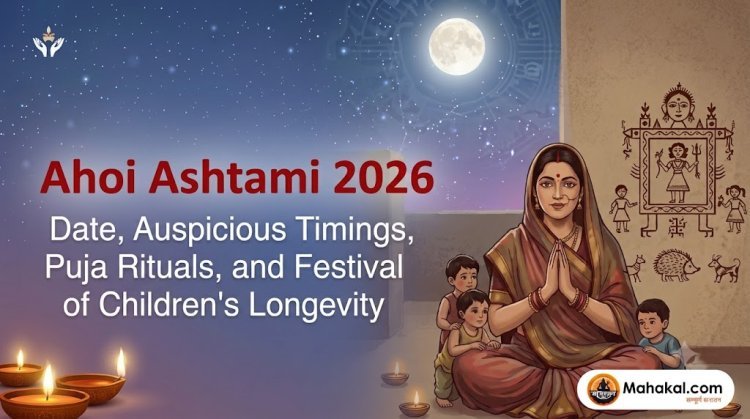
On Ahoi Ashtami, women traditionally draw an image of the goddess on a wall or establish her picture in the place of worship.
The image may also include symbolic representations of a hedgehog-like animal, known as a syahu or sahi, and its offspring.
After establishing the image, devotees offer roli, rice, flowers, a lamp, and traditional food offerings.
The worship is performed with devotion and prayers for the happiness of the entire family.
5. The Mythological Story of Ahoi Ashtami
Long ago, there lived a wealthy merchant in a town. He had seven sons and his family lived a prosperous life.
A few days before the festival of Diwali, his wife went to the forest to collect soil for household cleaning and renovation.
While digging the earth, she unknowingly struck a baby animal belonging to a female sahi (a hedgehog-like creature). Unfortunately, the little animal died because of the accident.
The mother animal became extremely distressed by the loss of her baby. According to the popular traditional legend, she cursed the merchant's wife, saying that she too would experience the pain of losing her children.
Some time later, the merchant's wife suffered the loss of all her seven sons.
The mother was devastated and could not find peace after this tragic incident.
She shared her sorrow with other women in the community. They advised her to visit a sacred place, pray sincerely, and seek forgiveness for the unintentional harm she had caused.
Following their advice, she went to the forest and prayed with deep faith and repentance.
According to the traditional folk story, her sincere prayers pleased the divine power, and she was blessed with happiness and the joy of motherhood again.
From that time onwards, the tradition of observing Ahoi Ashtami and worshipping Ahoi Mata became associated with the well-being of children.
This story teaches an important lesson: every living creature deserves compassion and protection. Even an unintentional action can cause harm, so people should always act with kindness and care towards all living beings.
Note: Different regional versions of the Ahoi Ashtami Vrat Katha are popular. This is a commonly narrated traditional version.
6. Ahoi Ashtami Puja Vidhi: Step-by-Step Worship Method
Ahoi Ashtami puja is performed with devotion and according to family traditions.
Women generally begin their preparations early in the morning and arrange the required worship materials.
Puja Samagri (Worship Materials)
-
Picture or wall drawing of Goddess Ahoi.
-
Roli and Akshat (uncooked rice).
-
Fresh flowers and garland.
-
Ghee lamp or diya.
-
Incense sticks and dhoop.
-
Water-filled kalash.
-
Milk and sweets.
-
Fruits and traditional offerings.
-
Silver Ahoi or symbolic syahu representation, where customary.
Step-by-Step Puja Vidhi
1. Morning Bath and Vrat Sankalp
Wake up early in the morning, take a bath, and wear clean clothes.
After that, take a religious vow to observe the fast and pray for the long life, health, and prosperity of your children.
2. Prepare the Worship Area
Clean the place of worship and decorate it properly.
Draw the image of Goddess Ahoi on the wall or place her photograph in the worship area.
3. Establish Goddess Ahoi
Place a water-filled kalash near the image of the goddess.
Offer roli, rice, flowers, and a garland with devotion.
4. Light the Diya and Incense
Light a ghee lamp in front of Goddess Ahoi and offer incense sticks.
Pray for the happiness, safety, and well-being of your children.
5. Listen to the Ahoi Ashtami Vrat Katha
Read or listen to the traditional story of Ahoi Mata.
Family members can also participate in the religious gathering.
6. Offer Bhog to the Goddess
Offer fruits, sweets, milk, and other traditional food items to the goddess according to family customs.
7. Offer Arghya to the Stars
In the evening, when stars become visible, offer water to them and pray for your children's happiness and long life.
8. Complete the Fast
After completing the puja and offering water to the stars, break the fast according to your family traditions.
7. Why Is Water Offered to the Stars on Ahoi Ashtami?
One of the most distinctive traditions of Ahoi Ashtami is offering Arghya (water offering) to the stars.
On this day, women wait until evening when stars become visible in the sky.
They offer water towards the stars and pray to Goddess Ahoi for the long life, protection, health, and happiness of their children.
According to religious beliefs, this ritual is an expression of devotion and faith.
It is one of the traditions that makes Ahoi Ashtami different from many other Hindu fasting festivals.
In some families, women follow the tradition of breaking the fast after seeing the moon instead of the stars. However, offering Arghya to the stars is the more widely followed practice.
8. The Significance of Syahu and Her Babies in Ahoi Ashtami Worship
The syahu, or sahi, and her babies have special significance in the traditional Ahoi Ashtami story.
The popular legend describes how the accidental death of a baby animal became the central event behind the origin of this fasting tradition.
For this reason, many traditional Ahoi Mata drawings include the mother animal and her offspring.
These symbolic figures remind devotees about kindness, compassion, forgiveness, and the importance of protecting every living creature.
The tradition also teaches people to respect nature and avoid causing unnecessary harm to animals.
9. What Is the Difference Between Ahoi Ashtami and Karwa Chauth?
Ahoi Ashtami and Karwa Chauth are both important Hindu fasting festivals.
Although both are associated with family well-being and prayers, their main purposes and rituals are different.
|
Basis |
Karwa Chauth |
Ahoi Ashtami |
|---|---|---|
|
Main purpose |
Praying for the husband's long life |
Praying for children's long life and well-being |
|
Tithi |
Kartik Krishna Chaturthi |
Kartik Krishna Ashtami |
|
Main worship |
Goddess Parvati, Lord Shiva and Karwa Mata |
Goddess Ahoi |
|
Fasting tradition |
Moon worship |
Star worship |
|
Main emotion |
Marital love and devotion |
Maternal love and devotion |
Both festivals represent faith, dedication, family values, and the importance of relationships in Hindu culture.
10. Important Rules and Precautions for Ahoi Ashtami Vrat
Women observing Ahoi Ashtami should follow their family traditions and perform the rituals with devotion.
Some commonly followed practices include:
-
Wake up early and take a bath before beginning the fast.
-
Wear clean and traditional clothes.
-
Keep the worship area neat and clean.
-
Listen to or read the Ahoi Ashtami Vrat Katha.
-
Maintain a peaceful and positive mindset.
-
Avoid hurting any living creature.
-
Perform the evening puja according to the local Panchang.
-
Break the fast according to family traditions.
It is important to remember that fasting practices differ from family to family.
Some women observe a strict waterless fast, while others follow a modified fast depending on their health and circumstances.
People should not ignore their health or force themselves to observe a difficult fast.
11. Special Importance of Ahoi Ashtami for Children's Well-Being
The greatest significance of Ahoi Ashtami lies in the beautiful relationship between a mother and her children.
A mother always wishes for her children to remain healthy, happy, safe, and successful throughout their lives.
Ahoi Ashtami provides a special religious occasion to express these feelings through prayers, fasting, and worship.
On this day, mothers pray for:
-
Children's physical and mental well-being.
-
Success in education and career.
-
A bright and prosperous future.
-
Protection from difficulties.
-
Happiness and peace within the family.
The festival also helps pass traditional values, religious stories, and cultural practices from one generation to another.
It reminds everyone that love, care, and responsibility are among the most important foundations of family life.
12. Ahoi Ashtami: A Festival of Motherhood, Faith, and Family Values
Ahoi Ashtami is more than a traditional fasting festival.
It represents the unconditional love of mothers and their prayers for their children's happiness.
The rituals of the day, including worshipping Ahoi Mata, listening to the vrat katha, and offering water to the stars, express the deep faith of devotees.
The festival also teaches compassion towards animals and respect for all forms of life.
Through its traditions, Ahoi Ashtami encourages families to preserve their cultural values and remain connected with their spiritual roots.
Conclusion: Ahoi Ashtami Is a Sacred Celebration of Motherly Love and Devotion
Ahoi Ashtami is one of the most meaningful fasting festivals in Hindu tradition. It celebrates the sacred relationship between a mother and her children.
On this day, mothers worship Goddess Ahoi and pray for their children's long life, good health, happiness, protection, and prosperity.
The traditional story of Ahoi Ashtami also teaches us to treat every living creature with kindness and compassion and to understand the importance of repentance and forgiveness.
This festival is not merely about fasting and religious rituals. It is a celebration of motherhood, family relationships, devotion, and cultural values.
May Goddess Ahoi bless every family with happiness, peace, prosperity, and well-being. May all children enjoy a healthy, bright, and successful future.
Jai Ahoi Mata
What's Your Reaction?