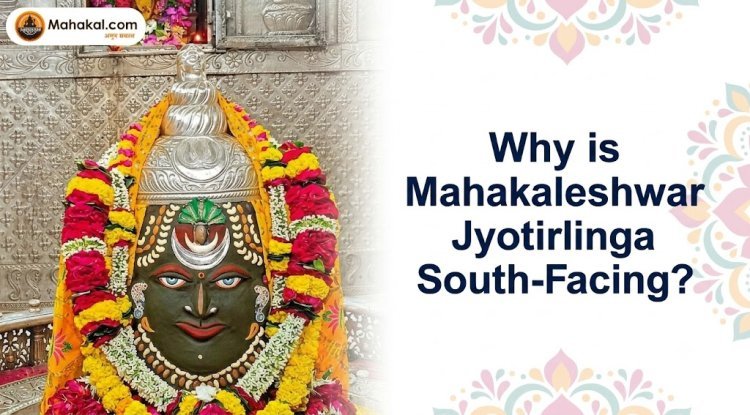
Why Is Mahakaleshwar Jyotirlinga South-Facing? Discover the Religious Beliefs Behind This Unique Feature!
Discover why Mahakaleshwar Jyotirlinga in Ujjain is known for its south-facing form. Explore the religious significance of the southern direction, Lord Shiva as Mahakal, traditional legends, Bhasma Aarti and the spiritual meaning behind this unique feature.
Why Is Mahakaleshwar Jyotirlinga South-Facing? Discover the Religious Beliefs Behind This Unique Feature!
India is home to twelve sacred Jyotirlingas dedicated to Lord Shiva, each holding a special place in Hindu religious tradition. Among them, Mahakaleshwar Jyotirlinga in Ujjain, Madhya Pradesh, is particularly renowned for its distinctive religious identity. Here, Lord Shiva is worshipped as Mahakal, the supreme lord of time. The temple is not only a major pilgrimage destination but also a centre of ancient traditions, spiritual beliefs and devotional practices.
One of the most distinctive features associated with Mahakaleshwar is its south-facing form, traditionally known as Dakshinamukhi Mahakal. This characteristic distinguishes the shrine and raises several questions among devotees. Why is Mahakaleshwar Jyotirlinga considered south-facing? What is the relationship between the southern direction and Lord Shiva's form as Mahakal? Is there a mythological story behind this feature? What spiritual meaning do devotees associate with the worship of Dakshinamukhi Mahakal?
To understand these questions, it is helpful to explore the religious traditions surrounding Mahakaleshwar, the symbolism associated with the southern direction and the significance of Lord Shiva as the one who transcends time.
1. The Religious Significance of Mahakaleshwar Jyotirlinga
Ujjain has been an important religious and cultural centre in India since ancient times. It is also known in traditional literature as Avantika. The city is associated with Lord Shiva's worship, sacred rituals, spiritual practices and numerous mythological traditions. Mahakaleshwar Jyotirlinga holds a special place among the twelve Jyotirlingas.
The meaning of Mahakal extends beyond the concept of time alone. It represents the supreme divine reality that is understood in Hindu philosophy as transcending birth, death and the changes that occur in the material world. Human life, the changing seasons and the natural world are all subject to time. Lord Shiva, however, is worshipped as the eternal principle beyond these changing conditions.
For devotees, visiting Mahakaleshwar is therefore more than a religious journey. It can also be an opportunity for reflection, devotion and spiritual peace. People pray for family well-being, courage, mental calmness and the strength to face life's challenges.
Another important belief associated with Mahakaleshwar is that the Jyotirlinga is Swayambhu, meaning self-manifested. This religious tradition represents Lord Shiva's eternal and uncreated nature and contributes to the shrine's special significance.
2. What Does Dakshinamukhi Mahakal Mean?
The term Dakshinamukhi generally means facing south. Mahakaleshwar Jyotirlinga is particularly known for this distinctive south-facing form, which forms an important part of its religious identity.
In Hindu traditions, directions are not understood only as geographical locations. They may also be associated with deities, sacred symbolism and spiritual concepts. For this reason, the direction in which a deity is believed to face can carry religious significance.
Devotees connect the south-facing form of Mahakaleshwar with Lord Shiva's distinctive power and his identity as Mahakal. Understanding this tradition requires an examination of the beliefs associated with the southern direction.
It is important, however, not to present one particular mythological event as the universally accepted explanation for the south-facing form. Religious interpretations may emphasise different symbolic meanings. The south-facing tradition itself remains a significant feature of Mahakaleshwar worship.
3. What Is the Connection Between the South, Yama and Death?
In Hindu religious traditions, the southern direction is associated with Yama, the deity connected with death and the moral order. This association appears in different forms throughout traditional religious literature.
Within this framework, the south-facing form of Mahakaleshwar is given a distinctive spiritual interpretation. Lord Shiva is known as Mahakal, the lord of time. According to devotional belief, Shiva's form as Mahakal represents the supreme divine reality that transcends the limitations of life, death and time.
When the southern direction's traditional association with mortality is considered alongside Shiva's identity as Mahakal, the south-facing form becomes a symbol for reflecting on time, death and the temporary nature of worldly existence.
This does not mean that worshipping a south-facing Shiva Lingam automatically removes every difficulty or overcomes death. It is a religious and spiritual interpretation. Its deeper message is to appreciate life, perform good deeds and maintain faith rather than live in fear.
For many devotees, Mahakaleshwar represents courage, trust and inner strength. Worship encourages them to acknowledge life's uncertainties while continuing to live with purpose and devotion.
4. Why Is Lord Shiva Called Mahakal, the Lord Beyond Time?
Lord Shiva is worshipped by many names, including Mahadev, Shankar, Rudra, Neelkanth, Pashupatinath and Mahakal. The name Mahakal is especially significant in discussions of time and mortality.
The word Kala can refer to time and, in religious contexts, may also be associated with death. Every living being experiences change. The body ages, life moves through different stages, and worldly possessions and achievements do not remain unchanged forever.
Lord Shiva's Mahakal form expresses the idea of a supreme reality beyond these transformations. Devotees call him the lord beyond time because their religious understanding places Shiva above the limitations that govern ordinary worldly existence.
This idea encourages people to become more conscious of how they live. When individuals understand that time is limited, they may begin to value relationships, responsibilities and good deeds more deeply. Worshipping Mahakal can inspire patience, wisdom and spiritual awareness.
The Mahakaleshwar Temple reminds devotees that wealth, status and material success are temporary. A meaningful life also depends on good conduct, compassion, service and devotion.
5. The Traditional Mythological Story of Mahakaleshwar
A well-known legend associated with Mahakaleshwar Jyotirlinga involves King Chandrasena, a young devotee named Shrikhar and an asura named Dushan. The story is traditionally narrated to illustrate Lord Shiva's devotion to his followers and his role as their protector.
According to the popular account, King Chandrasena ruled the ancient city of Avantika and was a devoted worshipper of Lord Shiva. Inspired by Shiva's devotion, a young boy named Shrikhar also began worshipping the deity. The legend describes how an asura named Dushan troubled the people of Ujjain and attempted to disrupt their religious practices.
When the devotees prayed for divine protection, Lord Shiva appeared and defeated the asura. In response to the devotees' prayers, he remained at Ujjain in the form of Mahakaleshwar Jyotirlinga. The central message of the story is the belief that Lord Shiva protects his sincere devotees.
This legend helps explain Mahakaleshwar's religious importance and his special association with Ujjain. However, it should not be presented as a universally accepted explanation for the exact south-facing orientation. That feature is primarily understood through religious tradition and spiritual symbolism.
6. Why Is Mahakaleshwar Considered Swayambhu?
An important feature of Mahakaleshwar Jyotirlinga is the belief that it is Swayambhu. The term refers to a divine manifestation believed to have appeared on its own rather than being created and installed in the ordinary manner.
For devotees, this belief symbolises the eternal and infinite nature of Lord Shiva. The tradition of the self-manifested Jyotirlinga, together with the south-facing form, contributes to Mahakaleshwar's distinctive religious identity.
Many pilgrims regard visiting the shrine as a deeply meaningful spiritual experience. Prayer, mantra chanting and meditation offer opportunities to focus the mind and strengthen their devotion.
The Swayambhu tradition should be understood in the context of religious faith. Its significance lies in the belief in Lord Shiva's eternal nature and the devotion associated with the sacred shrine.
7. The Special Significance of Bhasma Aarti
Mahakaleshwar Temple is famous for its Bhasma Aarti, a distinctive ritual in which the deity is ceremonially adorned with sacred ash as part of the temple's worship tradition. Many devotees hope to witness this special form of worship.
In Shaivite traditions, sacred ash carries profound spiritual symbolism. It reminds devotees of the temporary nature of the physical body and worldly achievements. It encourages reflection on humility, truth, good deeds and devotion.
The spiritual message of Bhasma Aarti is that people should not become excessively attached to material possessions or social status. Instead, they should recognise the value of righteous conduct and spiritual awareness.
The ritual is not merely a ceremony but also an important part of Ujjain's religious heritage. Visitors wishing to attend should follow the temple's current arrangements and rules for participation.
8. Is There a Special Religious Significance to Worshipping Dakshinamukhi Mahakal?
Devotees believe that worshipping Lord Mahakal can inspire courage, patience and faith during difficult circumstances. The distinctive south-facing tradition encourages many people to approach Mahakaleshwar with particular reverence.
Common practices associated with Shiva worship include offering water, presenting Bilva leaves, chanting mantras and meditating according to one's tradition and the temple's rules.
The spiritual aspirations associated with Mahakal worship include:
-
Courage in difficult times: Remembering Lord Shiva can inspire devotees to face challenges with greater confidence.
-
Mental calmness: Prayer, mantra chanting and meditation can help people reflect on their thoughts and seek inner peace.
-
Good conduct: Mahakal's form reminds devotees of the importance of time and the temporary nature of worldly life.
-
Self-reflection: Shiva worship can encourage people to consider their responsibilities, behaviour and purpose.
-
Family well-being: Devotees pray for peace, happiness and the welfare of their loved ones.
These are religious beliefs and spiritual aspirations, not guarantees of particular worldly outcomes.
9. Is Mahakaleshwar the Only South-Facing Jyotirlinga?
Mahakaleshwar is particularly distinguished among the twelve Jyotirlingas by its south-facing form. This feature is recognised as an important part of the shrine's religious identity.
When discussing this characteristic, it is important to distinguish the direction of the worshipped deity from the orientation of the sanctum, the temple structure and the supporting base of a Shiva Lingam. These details are related but are not necessarily identical.
The religious significance of Dakshinamukhi Mahakal is best explained through the temple's traditions and the symbolism associated with Lord Shiva as Mahakal.
This distinctive identity contributes to Ujjain's importance as a major pilgrimage destination for devotees of Lord Shiva.
10. The Ancient Spiritual Connection Between Mahakaleshwar and Ujjain
Ujjain's religious importance extends beyond Mahakaleshwar Temple. The city is known for its ancient temples, sacred sites and long-standing spiritual traditions. Its identity is closely connected with the worship of Lord Shiva, the traditions of ancient Avantika and the wider history of Indian religious culture.
Mahakaleshwar Temple is one of the central landmarks of this spiritual heritage. Pilgrims from different parts of India visit Ujjain to experience its sacred atmosphere, participate in religious traditions and seek the blessings of Lord Mahakal.
The south-facing tradition adds another distinctive element to the city's religious identity. It encourages devotees to reflect on Lord Shiva's Mahakal form, the nature of time and the temporary character of worldly life.
The importance of a pilgrimage site does not depend solely on its physical structure. Its religious traditions, historical associations, rituals and the faith maintained across generations also contribute to its significance.
11. The Spiritual Message of Dakshinamukhi Mahakal
The spiritual meaning of Mahakaleshwar's south-facing form should not be limited to fear or death. It can also be understood as an invitation to reflect on the value of life, the importance of time and the role of devotion.
People often become absorbed in wealth, professional success, status and concerns about the future. Yet time continues to move forward. Worshipping Mahakal can remind devotees that every moment is valuable and should be used for meaningful actions.
When devotion inspires truthfulness, compassion, patience and humility, religious faith can become a source of positive change in daily life.
The traditional association between the southern direction and mortality need not encourage fear. Instead, it can remind people to recognise life's uncertainties while making responsible choices and performing good deeds.
For devotees, Lord Mahakal remains a symbol of faith, courage and spiritual awareness.
Conclusion
Mahakaleshwar Jyotirlinga in Ujjain holds a distinctive place in Hindu religious tradition because of its south-facing form, the belief that it is Swayambhu and its famous Bhasma Aarti. In religious interpretations that associate the southern direction with Yama and mortality, Dakshinamukhi Mahakal symbolises Lord Shiva's supreme authority over time.
The traditional legends associated with Mahakaleshwar emphasise devotion, divine protection and the restoration of righteousness. The spiritual meaning of Mahakal also encourages reflection on the value of time, the temporary nature of worldly existence and the importance of good deeds.
The deeper message associated with the south-facing form is that people should not live in fear of life's uncertainties. Instead, they can seek inspiration in truth, compassion, righteous conduct and devotion.
Visitors to Ujjain can honour this sacred tradition by respecting the temple's religious practices and reflecting on the spiritual message associated with Lord Mahakal.
Jai Shri Mahakal! Har Har Mahadev!
What's Your Reaction?