Diwali 2026: Why Is Diwali Celebrated? Know the Lakshmi Puja Vidhi, Auspicious Muhurat, Mythological Story and Religious Significance
When is Diwali 2026? Discover the date, Lakshmi Puja Muhurat, worship rituals of Goddess Lakshmi and Lord Ganesha, the story of Lord Rama's return to Ayodhya and the religious significance of Deepawali.
Diwali 2026: Why Is Diwali Celebrated? Know the Lakshmi Puja Vidhi, Auspicious Muhurat, Mythological Story and Religious Significance
Diwali is one of the biggest and most celebrated Hindu festivals in India. Also known as Deepawali, it is the festival of lights, happiness, prosperity and new beginnings.
On this auspicious occasion, homes are decorated with traditional lamps, colourful rangolis and beautiful decorations. Devotees worship Goddess Lakshmi and Lord Ganesha to seek wealth, wisdom, happiness and prosperity.
According to Hindu mythology, Diwali is also associated with the return of Lord Rama to Ayodhya after completing fourteen years of exile and defeating Ravana. To celebrate his return, the people of Ayodhya illuminated the entire city with lamps.
Let us explore the date, auspicious timings, puja rituals, mythological story and religious significance of Diwali 2026.
1. When Is Diwali 2026?
In 2026, the main Diwali festival will be celebrated on Sunday, 8 November. It falls on Kartik Amavasya, the new moon day of the Hindu month of Kartik.
-
Day: Sunday
-
Date: 8 November 2026
-
Amavasya Tithi Begins: Approximately 11:28 AM on 8 November
-
Amavasya Tithi Ends: Approximately 12:31 PM on 9 November
-
Lakshmi Puja Muhurat (Ujjain): 6:09 PM to 8:07 PM
-
Pradosh Kaal (Ujjain): 5:45 PM to 8:19 PM
These timings are for Ujjain, Madhya Pradesh. Puja timings may vary in other cities depending on local sunset and Panchang calculations.
2. Why Is Diwali Celebrated?
There are several religious and mythological stories associated with the celebration of Diwali.
The most popular belief is connected with Lord Rama.
According to the Ramayana, Lord Rama returned to Ayodhya along with Goddess Sita and Lakshmana after completing fourteen years of exile and defeating Ravana.
The people of Ayodhya welcomed their beloved king by lighting thousands of oil lamps throughout the city.
The entire kingdom celebrated his return with great happiness and devotion. This tradition is associated with the celebration of Diwali.
Diwali is also celebrated as an occasion to welcome Goddess Lakshmi and seek her blessings for prosperity and happiness.
3. Religious Significance of Diwali
Diwali is not just a festival of lights; it also holds deep spiritual and religious significance.
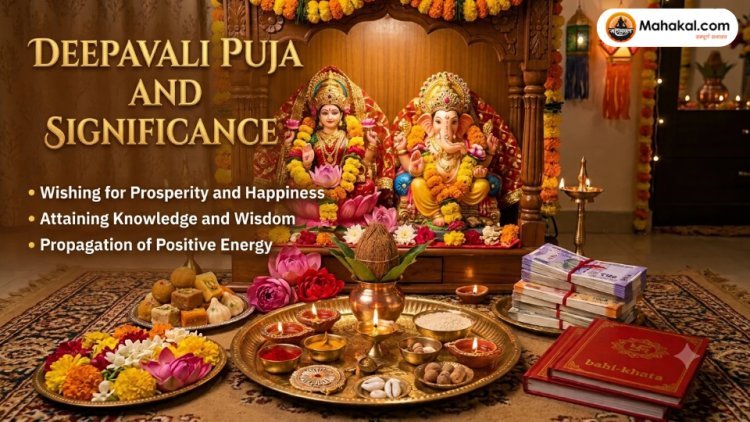
On this auspicious day, devotees worship Goddess Lakshmi, Lord Ganesha and Goddess Saraswati.
-
Goddess Lakshmi: The goddess of wealth, prosperity, fortune and abundance.
-
Lord Ganesha: The remover of obstacles and the deity of wisdom and intelligence.
-
Goddess Saraswati: The goddess of knowledge, education, music and arts.
Diwali reminds us that light always has the power to overcome darkness and that goodness ultimately triumphs over evil.
4. Diwali Puja Vidhi
Diwali puja is performed with great devotion and traditional rituals.
Simple Steps for Lakshmi-Ganesh Puja:
-
Wake up early, take a bath and wear clean clothes.
-
Clean the entire house and the prayer area.
-
Decorate the main entrance with rangoli and traditional lamps.
-
Place a red or yellow cloth on the puja platform.
-
Install the idols of Goddess Lakshmi and Lord Ganesha.
-
Offer flowers, rice grains, sandalwood paste and sweets.
-
Light a traditional diya using ghee or oil.
-
Chant prayers and mantras dedicated to the deities.
-
Perform the aarti of Goddess Lakshmi and Lord Ganesha.
-
Pray for happiness, peace and prosperity for the family.
After completing the puja, distribute prasad among family members and light diyas throughout the house.
5. Why Is Goddess Lakshmi Worshipped on Diwali?
According to Hindu beliefs, Goddess Lakshmi is the goddess of wealth, prosperity, fortune and abundance.
Worshipping her on the Amavasya night of Diwali is considered auspicious. Devotees pray for financial stability, happiness and prosperity in their homes.
It is believed that Goddess Lakshmi blesses devotees who welcome her with devotion and maintain cleanliness and positivity in their homes.
Along with Goddess Lakshmi, Lord Ganesha is also worshipped because he is regarded as the remover of obstacles and the god of auspicious beginnings.
6. What Should You Do on Diwali?
Several traditional activities are considered auspicious during Diwali celebrations.
-
Clean and decorate your home.
-
Create colourful rangoli designs at the entrance.
-
Light traditional clay diyas.
-
Worship Goddess Lakshmi and Lord Ganesha.
-
Donate food and clothes to needy people.
-
Spend quality time with family.
-
Perform Lakshmi Puja at your workplace or business.
-
Share happiness and exchange Diwali wishes with loved ones.
7. Significance of Lighting Diyas on Diwali
Lighting diyas is one of the most beautiful and important traditions of Diwali.
A diya represents knowledge, hope, positivity and spiritual awakening.
According to religious beliefs, lighting lamps at the entrance, courtyard, rooftop and prayer area of the house symbolizes the removal of darkness and the welcoming of positive energy.
Traditional clay lamps also represent India's rich cultural heritage and connection with nature.
8. What Does Diwali Teach Us?
Diwali teaches several valuable lessons about life.
It symbolizes the victory of good over evil, light over darkness and knowledge over ignorance.
The festival encourages people to share love, kindness and happiness with their families and communities.
Diwali is not only an occasion to decorate our homes but also an opportunity to fill our hearts with positivity, gratitude and hope.
Conclusion
Diwali is one of the most sacred and significant festivals in Hindu tradition. It celebrates the blessings of Goddess Lakshmi, the wisdom of Lord Ganesha and the victory of Lord Rama.
Through prayers, traditional rituals, lighting diyas and family celebrations, people welcome happiness, peace and prosperity into their lives.
This Diwali, illuminate not only your home but also your heart with kindness, love and positivity.
Wishing you and your family a very Happy Diwali 2026!
What's Your Reaction?