Four Stages of Life (Ashrama Dharma) Explained
Discover the Four Stages of Life (Ashrama Dharma) explained in simple language—Brahmacharya, Grihastha, Vanaprastha, and Sannyasa—revealing timeless Vedic wisdom for balanced living, spiritual growth, duty, and liberation, relevant for modern life.
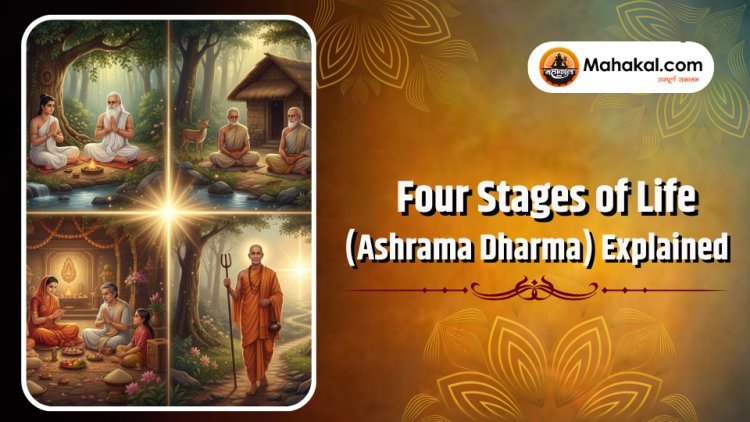
In the ancient Vedic tradition, human life is seen as a sacred journey of growth, duty, learning, and liberation. The concept of Ashrama Dharma, or the Four Stages of Life, provides a timeless framework that helps individuals live with purpose, balance, and spiritual awareness. These stages—Brahmacharya, Grihastha, Vanaprastha, and Sannyasa—offer profound guidance even for modern life.
1. Brahmacharya – The Stage of Learning and Character Building
- Age Childhood to youth.
- Focus Education, discipline, self-control, and values.
Brahmacharya is the foundation of life. In this stage, one gains knowledge, builds strong moral values, cultivates mental focus, and learns to live with purity and self-discipline. It teaches humility, respect for elders, and dedication to education—qualities essential for a strong future.
2. Grihastha – The Stage of Responsibility and Contribution
- Age Adulthood.
- Focus Family life, responsibilities, service, and community.
Grihastha is considered the most important ashrama because the entire society depends on it. One becomes a householder, supports family, earns livelihood, and contributes to society. This stage teaches love, duty, sacrifice, and maintaining balance between material and spiritual life.
3. Vanaprastha – The Stage of Withdrawal and Inner Refinement
- Age Later adulthood.
- Focus Detachment, mentorship, and spiritual deepening.
Vanaprastha marks the gradual withdrawal from worldly roles. Responsibilities are handed over to the next generation. One focuses more on meditation, scriptures, spiritual teaching, and guiding younger members of society. It symbolizes transition from outer involvement to inner awakening.
4. Sannyasa – The Stage of Liberation and Complete Renunciation
- Age Final stage of life.
- Focus Devotion, renunciation, oneness, and liberation.
Sannyasa is the culmination of all spiritual efforts. Here one renounces personal desires, ego, and worldly attachment. The seeker lives in devotion, selflessness, and pursuit of moksha. It is a state of complete freedom, purity, and union with the Divine.
Why Ashrama Dharma Still Matters Today ?
Even in the modern world, these stages offer valuable guidance:
- They teach balance between responsibilities and spirituality.
- They remind us to grow inwardly as we grow outwardly.
- They help individuals maintain clarity, discipline, and purpose.
- They guide families to live with harmony, duty, and compassion.
- They ensure society remains strong, ethical, and spiritually rooted.
Conclusion
Ashrama Dharma is not just an ancient concept—it's a universal blueprint for a meaningful life. By understanding and practicing these four stages in spirit, we align our lives with wisdom, peace, and divine purpose.
Ashrama Dharma is not only to be understood, but to be lived. These simple spiritual resources can support your journey toward balance, discipline, and inner peace.
See supportive spiritual products →
What's Your Reaction?