History of Ram Ghat and Other Major Ghats of Ujjain: Religious Significance, Ancient Traditions and Historical Facts
Explore the history and religious significance of Ram Ghat and other major ghats along the Shipra River in Ujjain. Learn about Siddhavat, Triveni Sangam, Mangalnath and the traditions associated with these sacred riverbanks through historical evidence, local beliefs and scriptural context.
History of Ram Ghat and Other Major Ghats of Ujjain: Religious Significance, Ancient Traditions and Historical Facts
Ujjain, one of the most revered religious cities in India, is known not only for the Mahakaleshwar Jyotirlinga but also for the sacred Shipra River that flows through the city. The riverbanks have been important centres of religious life for generations. Along the Shipra, devotees perform ritual bathing, worship, ancestral offerings, prayers and other religious ceremonies. Among these riverfront sites, Ram Ghat holds a particularly prominent place. It is one of the best-known bathing ghats in Ujjain and a major centre of activity during the Simhastha Kumbh Mela.
However, understanding the history of Ujjain's ghats requires an important distinction. The religious significance of the Shipra River and its sacred banks belongs to a much older tradition, while many of the stone steps, embankments, temples and architectural features visible today developed or were reconstructed during later historical periods.
This article explores Ram Ghat and other important riverfront sites of Ujjain, separating documented historical information from religious traditions and local beliefs.
1. The Historical Relationship Between the Shipra River and Ujjain
Ujjain has been known by ancient names such as Avantika and Ujjayini. It was an important centre of religion, learning, trade and political activity in ancient India. Its location on the banks of the Shipra River contributed significantly to its development.
In traditional Indian towns, river ghats served several purposes. They provided access to water and places for bathing, worship, religious ceremonies, ancestral rites and community gatherings. Ujjain's riverfront developed in a similar way, with different areas becoming associated with different religious and social activities.
An academic study of Ujjain's riverfront and urban public spaces notes that most of the ghats and associated shrines visible in the city date primarily from the Maratha period in the eighteenth century and later. This does not mean that religious activity at these locations began during that period. Rather, it suggests that older sacred traditions were given a more developed architectural form through later construction, renovation and patronage.
The historical development of Ujjain's ghats can therefore be understood through two broad aspects:
-
Ancient religious traditions: The sacred association of the Shipra River, Avantika and the riverbanks with pilgrimage and religious observances.
-
Historical architectural development: The construction, expansion and renovation of ghats, temples and riverfront structures, particularly during the Maratha period and later.
2. History of Ram Ghat: One of Ujjain's Most Famous Sacred Riverfronts
Ram Ghat is one of the most recognised religious locations along the Shipra River. It holds a prominent position in Ujjain's religious identity and becomes especially important during the Simhastha Kumbh Mela.
Devotees visit Ram Ghat for ritual bathing, worship, ancestral offerings and other religious ceremonies. The evening Shipra Aarti also makes it an important place for pilgrims and visitors.
Why Is It Called Ram Ghat?
A popular local religious tradition connects the name Ram Ghat with Lord Rama. According to this belief, Lord Rama performed ancestral rites for his father, King Dasharatha, on the banks of the Shipra River. The tradition associates this sacred event with the place now known as Ram Ghat.
This belief gives the ghat a special association with ancestral worship and remembrance. Devotees visit the riverbank to perform tarpan and other rituals as an expression of respect for their ancestors.
Important distinction: The account of Lord Rama performing pind daan at the exact location of present-day Ram Ghat should be presented as a local religious tradition unless a specific primary textual reference is established. It would not be appropriate to attribute this exact event to a particular Purana, chapter and verse without verifying the original text.
When Did the Present Structure of Ram Ghat Develop?
The present architectural appearance of Ram Ghat must be understood in the context of Ujjain's Maratha-period development.
During the eighteenth century, Ujjain experienced significant religious and urban reconstruction. Temples, religious institutions and riverfront structures were developed or renovated during this period.
Architectural research on Ujjain indicates that most of the city's existing ghats and associated shrines belong mainly to the Maratha period and later. Therefore, while the religious importance of Ram Ghat may be rooted in older traditions, the present stone structure should not automatically be described as an ancient construction.
Today, Ram Ghat remains an active religious centre. It receives devotees throughout the year and becomes particularly busy during major religious festivals, the Kartik period and the Simhastha.
The Tradition of Shipra Aarti at Ram Ghat
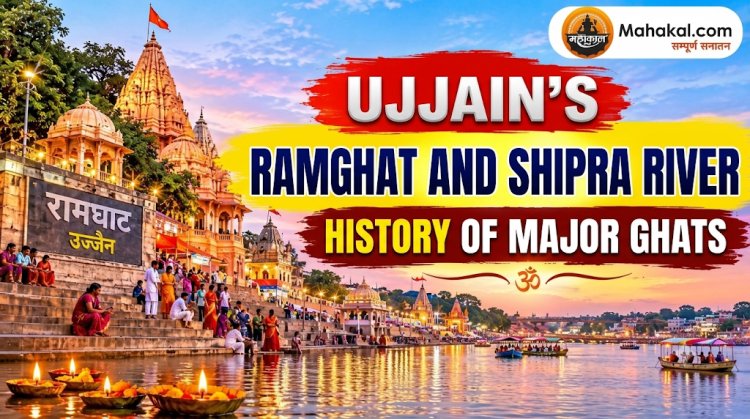
The evening Shipra Aarti is one of the most recognisable traditions associated with Ram Ghat. Around sunset, devotees gather along the riverbank as priests perform the aarti with lamps, bells and devotional chants.
The ceremony reflects the broader Indian tradition of reverence for rivers as life-giving and sacred forces. It is an expression of gratitude, devotion and respect for the Shipra.
Devotees also offer small lamps to the river as part of the tradition of deepdaan. For many visitors, the evening aarti is an important spiritual experience during their visit to Ujjain.
3. Ram Ghat and Scriptural References: What Do the Religious Texts Say?
The Avanti Khanda of the Skanda Purana is an important religious source for understanding the sacred geography and pilgrimage traditions of Ujjain. It describes the religious significance of Avantika, the Mahakala region and various sacred places associated with the city.
However, different published editions of the Skanda Purana may vary in chapter numbering and textual arrangement. Therefore, a specific claim about a particular ghat should be supported by checking the relevant passage in a clearly identified edition.
The popular account of Lord Rama performing ancestral rites at Ram Ghat should not be presented as a direct statement from a specific chapter and verse of the Skanda Purana unless that passage has been verified.
The Religious Importance of Rivers and Pilgrimage Sites
In Hindu religious traditions, rivers are associated with purity, life and spiritual practice. Bathing, worship, charity, meditation and ancestral offerings on riverbanks form part of a broad religious tradition found across various Hindu texts and customary practices.
However, a general scriptural principle concerning the religious importance of river bathing is not the same as a specific historical or mythological claim about an event occurring at a particular ghat. These two types of claims must be distinguished when discussing religious history.
4. Triveni Sangam and Its Religious Significance
Triveni Sangam is another important religious location associated with Ujjain's river system. The geographical description of the area connects it with the meeting of the Shipra River, the Khan River and another smaller watercourse. In local religious tradition, the third stream is also associated with the mythical or invisible Saraswati River.
The 1961 District Census Handbook of Ujjain mentions the confluence of the Shipra, Khan and another small stream. It also describes the meeting point as a sacred place.
This historical document supports the geographical description and the religious recognition of the confluence at that time. It does not, however, scientifically establish the third stream as the Saraswati River.
Religious Beliefs Associated with Triveni Sangam
In Hindu tradition, the meeting of three rivers is considered especially sacred. Just as Prayagraj is associated with the Triveni Sangam, the Triveni area of Ujjain also holds religious importance for devotees.
According to local belief, ritual bathing and ancestral ceremonies at the confluence are spiritually beneficial. Devotees visit the area on special religious occasions to perform bathing rituals, tarpan and worship.
The Navagraha Temple
The Navagraha Temple is also located near the Triveni area. It is associated with the worship of the nine celestial bodies recognised in traditional Hindu astrology.
Devotees visit the temple to offer prayers for planetary peace and well-being according to their astrological beliefs.
The present religious popularity of the temple should not automatically be treated as proof of an ancient foundation date. Such a historical claim would require an inscription, archival record or a verified textual reference.
5. Siddhavat: A Sacred Site Associated with Ancestral Rituals
Siddhavat is an important religious location on the banks of the Shipra River. It is particularly known for the large banyan tree situated at the site.
In Indian religious culture, the banyan tree is often associated with longevity, continuity and stability. Various traditions across the country connect banyan trees with worship, fasting and ancestral observances.
Historical Mention of Siddhavat
The 1961 District Census Handbook of Ujjain mentions Siddhavat as a famous banyan tree on the banks of the Shipra River. The document compares it with the Akshayavat of Prayagraj and records the local belief that the tree had remained unchanged for a very long period.
This provides an important historical record of Siddhavat's local identity and religious recognition. However, the actual biological age of a tree cannot be established solely through local tradition. Scientific assessment would be needed to determine its age.
Religious Practices at Siddhavat
Siddhavat is widely associated with ancestral rites. Devotees visit the site to perform tarpan, shraddha and other ceremonies in remembrance of their ancestors.
Local religious tradition considers rituals performed here to be spiritually significant. The place receives particular attention during Pitru Paksha and other important dates associated with ancestral worship.
Distinction between belief and scriptural evidence: The religious importance of Siddhavat and its association with ancestral rites are significant parts of local tradition. However, a specific claim about a guaranteed result of a ritual should only be described as a scriptural statement when a relevant text, chapter and verse can be verified.
6. Mangalnath and Its Connection with the Shipra River
The Mangalnath Temple is a prominent religious site in Ujjain, situated near the Shipra River. It is particularly associated with the worship of the planet Mars and traditional astrological practices.
The Ujjain district administration's tourism information refers to the tradition that Mangalnath is the place of origin of the planet Mars and associates this belief with the Matsya Purana.
This claim must be understood in its religious and mythological context. The traditional belief that Mangalnath is the birthplace of Mars is not a scientific claim about the physical formation of the planet Mars.
Devotees visit the temple for worship, Mangal-related rituals and ceremonies associated with traditional astrological beliefs.
The nearby riverfront also forms part of the sacred landscape of the area. However, the exact construction date or original builder of a particular ghat in this region should not be stated without reliable historical documentation.
7. Narsingh Ghat and Other Riverfront Religious Sites
Apart from Ram Ghat, several other ghats and religious locations are associated with the Shipra River. These places have served local residents and pilgrims for bathing, worship, religious ceremonies and community activities.
Narsingh Ghat is associated by name with the religious tradition of Lord Narasimha. Its local importance is connected with the temples and religious activities in the surrounding riverfront area.
However, the name of a ghat alone cannot establish its construction date, original builder or antiquity. Such conclusions require evidence such as inscriptions, donation records, government documents or archaeological findings.
It is also important to remember that river courses, riverbanks, city boundaries and religious activities change over time. Consequently, the names and boundaries of present-day ghats may not always correspond exactly to their historical forms.
8. The Role of the Maratha Period in the Development of Ujjain's Ghats
The Maratha period is important for understanding the present architectural character of Ujjain's riverfront.
After periods of political change and damage to religious structures, Ujjain experienced renewed construction and restoration. During the eighteenth century, the Maratha influence encouraged the development of temples, religious institutions and public structures.
The Scindia period also played an important role in the city's cultural and religious development.
Architectural research on Ujjain indicates that most of the existing ghats and associated shrines took their present form during the Maratha period and later.
This leads to an important historical conclusion:
The religious traditions associated with the Shipra riverbanks may be much older than the stone steps and architectural structures visible at the ghats today.
Ghat construction also served practical and social purposes. Steps provided safer access to the river, while open spaces and adjoining religious structures supported bathing, worship, ceremonies and large gatherings.
9. The Connection Between Ujjain's Ghats and the Simhastha Kumbh Mela
The Simhastha Kumbh Mela is deeply connected with the Shipra River and its ghats. During this major religious gathering, saints, ascetics, akharas and pilgrims from different parts of India visit Ujjain.
Ritual bathing in the Shipra is one of the central activities of the festival. Ram Ghat and other designated bathing areas become important centres of religious activity.
During Simhastha, the ghats serve purposes beyond bathing. They become places for religious gatherings, saintly assemblies, worship, charity and spiritual interaction.
Ram Ghat has a particularly prominent place among Ujjain's traditional bathing locations. However, the exact bathing arrangements and permitted locations for each edition of Simhastha are determined by the administration. Visitors should follow the official instructions issued for the event.
10. Major Religious Rituals Performed at the Ghats
Several religious practices are performed along the Shipra River throughout the year. Some of the most common include:
1. Sacred Bathing: Devotees bathe in the Shipra on religious festivals, new-moon days, full-moon days and other auspicious occasions.
2. Pitru Tarpan: Water is offered in remembrance of ancestors as part of traditional ancestral rites.
3. Shraddha and Pind Daan: Families perform prescribed rituals to express respect and remembrance for their departed ancestors.
4. Deepdaan: Devotees offer lamps to the river as a symbol of faith, devotion and gratitude.
5. River Aarti: The aarti expresses reverence for the Shipra and its role in religious and cultural life.
6. Charity and Donations: Devotees offer food, clothing and other items according to their means and religious traditions.
The specific methods and beliefs associated with these rituals may vary according to family customs, local traditions and religious communities.
11. Are All the Ghats of Ujjain Mentioned in the Puranas?
This is an important question when studying the religious history of Ujjain.
Because Ujjain is an ancient sacred city, it is sometimes assumed that the name and complete history of every present-day ghat must be recorded in an ancient Purana. Such an assumption should be avoided unless the original text supports it.
The Avanti Khanda of the Skanda Purana is an important religious source for understanding the sacred geography and pilgrimage traditions of Ujjain. It describes several religious places and traditions associated with the region.
However, the names, architectural forms and boundaries of present-day ghats do not necessarily appear in ancient texts in the same form in which they exist today.
To establish a scriptural reference for a particular ghat, three things should be checked:
-
The correct name of the text and its relevant section.
-
The chapter and verse number in the specific edition being cited.
-
Whether the original passage actually refers to that location or tradition.
Therefore, claims about Lord Rama performing pind daan at Ram Ghat, the exact age of Siddhavat or the builder of a particular ghat should not be attributed to a Purana without verifiable evidence.
12. The Ghats of Ujjain as Cultural Heritage
The ghats of the Shipra are not merely places for bathing and worship. They are also important parts of Ujjain's social and cultural life.
Devotees performing morning prayers, priests conducting rituals, families making ancestral offerings and visitors gathering for the evening aarti all reflect the living traditions of the city.
For some families, these riverbanks are places of remembrance. For pilgrims, they are sacred bathing locations. For spiritual seekers, they provide an environment for prayer, reflection and meditation.
Large religious gatherings such as the Simhastha further highlight the cultural importance of these riverfront spaces.
13. The Need to Protect the Shipra River and Its Ghats
The long-term preservation of a sacred river depends not only on religious devotion but also on protecting its natural flow and water quality.
Concerns about the Shipra's water quality and river flow have been documented over time. A performance audit by the Comptroller and Auditor General of India on the degradation of the Kshipra River in Madhya Pradesh discusses challenges relating to the river's condition.
Protecting the religious traditions of the ghats must therefore go hand in hand with environmental responsibility.
Visitors should avoid throwing plastic, waste, flowers and other polluting materials directly into the river. They should use designated facilities for the disposal of पूजा materials and help keep the riverbanks clean.
The purity of the Shipra is not only a matter of religious faith. It is also a responsibility towards nature and future generations.
14. A Brief Overview of Major Ghats and Religious Sites of Ujjain
| Ghat or Site | Main Significance |
|---|---|
| Ram Ghat | Famous bathing ghat, evening Shipra Aarti and an important traditional location during Simhastha |
| Triveni Sangam | Confluence area associated with the Shipra, Khan and the local religious tradition of Saraswati |
| Siddhavat | Famous banyan tree and a religious site associated with ancestral rituals |
| Mangalnath Area | Riverfront region associated with the Mangalnath Temple and traditional beliefs about Mars |
| Narsingh Ghat | Riverfront site associated with the religious tradition of Lord Narasimha |
| Other Local Ghats | Places used for bathing, worship, donations and local religious activities |
The religious significance of these locations comes from different traditions and local practices. The exact construction date and architectural history of each ghat require separate historical evidence.
15. Frequently Asked Questions (FAQs)
Q1. Which is the most famous ghat in Ujjain?
Ram Ghat is one of the most famous and prominent religious ghats in Ujjain. It is known for bathing, the evening Shipra Aarti and its importance during Simhastha.
Q2. Why is it called Ram Ghat?
According to a popular local belief, Lord Rama performed ancestral rites for his father, King Dasharatha, on the banks of the Shipra. This tradition is associated with the name Ram Ghat. It should not be described as a direct scriptural statement without a verified chapter and verse.
Q3. When were the present ghats of Ujjain built?
Architectural research indicates that most of Ujjain's existing ghats and associated shrines developed primarily during the Maratha period, particularly from the eighteenth century onwards. The religious traditions associated with these places may be older.
Q4. Why is Siddhavat famous?
Siddhavat is known for its famous banyan tree and its association with ancestral rituals. Devotees visit the site for tarpan and shraddha ceremonies.
Q5. Which rivers are associated with the Triveni Sangam of Ujjain?
Historical geographical descriptions mention the Shipra, Khan and another smaller stream. Local religious tradition also associates the third stream with Saraswati.
Q6. Is Ram Ghat mentioned in any Purana?
The Avanti Khanda of the Skanda Purana is an important source for the sacred geography and religious traditions of Ujjain. However, the specific account of Lord Rama performing pind daan at Ram Ghat should not be attributed to a particular chapter and verse without verification.
Q7. What is the importance of Ram Ghat during Simhastha?
Ram Ghat is one of Ujjain's important traditional bathing locations. During Simhastha, it becomes a major centre of religious activity and Shipra bathing. Actual bathing arrangements are determined by the administration for each event.
Conclusion
Ram Ghat and the other riverfront sites of Ujjain are more than stone steps leading to a river. They represent generations of religious devotion, social traditions and cultural heritage.
The evening aarti at Ram Ghat, ancestral rituals at Siddhavat, the religious significance of Triveni Sangam and the astrological traditions associated with Mangalnath all contribute to Ujjain's spiritual identity.
Their history also teaches us an important lesson: the antiquity of a sacred tradition and the age of the present architectural structure are not necessarily the same. The religious traditions associated with the Shipra may be ancient, while many of the ghats visible today developed architecturally during the Maratha period and later.
The best way to understand Ujjain's ghats is to respect their religious significance, study their history through reliable evidence and present local traditions honestly as traditions. This approach helps preserve the heritage of this sacred city and pass it on accurately to future generations.
What's Your Reaction?