Simhastha Kumbh 2028: Why Is the Kumbh Mela Celebrated in Ujjain? History, Mythological Secrets, 13 Akharas and the Significance of Shahi Snan
Explore the complete guide to Simhastha Kumbh 2028 in Ujjain. Discover its ancient history, mythological connection with Samudra Manthan, astrological significance, 13 Akharas, Naga Sadhus, Shahi Snan, sacred Shipra River bathing traditions and spiritual importance.
Simhastha Kumbh 2028: Why Is the Kumbh Mela Celebrated in Ujjain? History, Mythological Secrets, 13 Akharas and the Significance of Shahi Snan
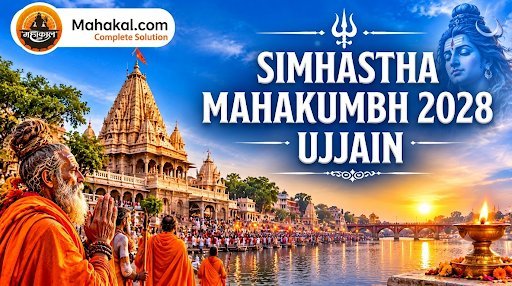
Simhastha Kumbh holds a unique position in India's religious and spiritual traditions. Celebrated approximately once every 12 years in the ancient holy city of Ujjain, Madhya Pradesh, this grand religious gathering is much more than a traditional fair. It represents a remarkable confluence of Sanatan culture, ancient beliefs, astrological calculations, spiritual knowledge and the traditions of Hindu saints and ascetics.
During Simhastha, millions of devotees from different parts of India and abroad visit Ujjain to take a sacred dip in the Shipra River, seek blessings at the Mahakaleshwar Jyotirlinga and receive spiritual guidance from saints and sages.
The grand processions of Naga Sadhus, traditional Akhara ceremonies, Shahi Snan, religious discourses, yajnas, charity and spiritual activities make this event one of the most significant religious gatherings in India.
But why is Simhastha celebrated specifically in Ujjain? Why is it called Simhastha? What is its connection with the mythological Samudra Manthan? Which planetary position determines its timing? And why do the 13 Akharas and Naga Sadhus play such an important role?
Let us explore the history, mythology, scriptural references, astrological foundations and spiritual significance of Simhastha Kumbh 2028 in detail.
1. What Is Simhastha and What Is Its Religious Significance?
Simhastha is a major religious gathering held on the banks of the sacred Shipra River in Ujjain. It is also popularly known as Ujjain Kumbh or Simhastha Kumbh.
During this event, saints, sages, monks, Naga Sadhus, Mahamandaleshwars and devotees belonging to different religious traditions gather in the holy city.
According to Hindu religious beliefs, bathing in the Shipra River, performing charity, chanting mantras, meditation and worship during this period are considered spiritually significant.
However, Simhastha is not limited to ritual bathing. It is also an important occasion for preserving India's ancient spiritual traditions, including the Guru-Shishya tradition, renunciation, asceticism, meditation and religious learning.
What Does the Word Simhastha Mean?
The word Simhastha consists of two parts:
-
Simha: The zodiac sign Leo, the fifth sign of the zodiac.
-
Stha: Meaning situated, established or positioned.
When the planet Jupiter, known as Brihaspati or Guru, enters the zodiac sign Leo, the traditional astrological condition associated with Ujjain's Simhastha is formed.
In Hindu astrology, Jupiter is known as Devguru, the teacher of the gods. It is associated with wisdom, religion, education, morality and spiritual development.
Religious Importance of Simhastha
-
Taking a sacred bath in the Shipra River as a symbol of spiritual purification.
-
Visiting Lord Mahakaleshwar and other sacred temples.
-
Receiving spiritual knowledge through the teachings of saints and sages.
-
Performing charity, mantra chanting, meditation and religious rituals.
-
Experiencing the ancient traditions of Sanatan Dharma.
-
Reflecting on life and moving beyond material attachments.
2. Why Is Simhastha Celebrated Only in Ujjain?
Ujjain was historically known as Avantika and Ujjayini. It has been an important centre of religion, culture, education and astronomical knowledge since ancient times.
The celebration of Simhastha in Ujjain is traditionally associated with four major factors.
The Sacred City of Lord Mahakaleshwar
Ujjain is home to Shri Mahakaleshwar Jyotirlinga, one of the twelve sacred Jyotirlingas of Lord Shiva.
Lord Mahakal is regarded as the presiding deity of Ujjain. The south-facing Jyotirlinga tradition and the famous Bhasma Aarti give the temple a distinctive religious identity.
The Sacred Shipra River
The Shipra River is central to Ujjain's religious identity. Ancient temples, pilgrimage sites and sacred bathing ghats are situated along its banks.
During Simhastha, devotees gather here for ritual bathing, worship, charity and religious ceremonies.
The Ancient Religious Heritage of Avantika
Ujjain finds mention in ancient Indian literature and Puranic traditions. The city has long been associated with Shaiva, Vaishnava and Shakta traditions, as well as Indian philosophy, education and astrology.
The Astrological Foundation
The entry of Jupiter into Leo is considered the principal astrological basis of Ujjain's Simhastha.
This distinctive planetary association gives Ujjain's Kumbh a separate identity among India's major Kumbh gatherings.
3. How Did Simhastha Begin? The Mythological Story of Samudra Manthan
One of the most popular mythological traditions associated with Simhastha is the story of Samudra Manthan, or the churning of the cosmic ocean, and the divine nectar of immortality.
According to Hindu scriptures, the strength of the gods had weakened at one point. Following Lord Vishnu's guidance, the gods and demons decided to churn the cosmic ocean together.
Mount Mandara was used as the churning rod, while Vasuki, the divine serpent, served as the rope. Lord Vishnu assumed the Kurma Avatar, taking the form of a giant tortoise to support the mountain.
Many divine treasures emerged during the churning. Among them was the deadly poison known as Halahala.
To protect the universe, Lord Shiva consumed the poison and held it in his throat. This is why he became known as Neelkanth.
Eventually, Lord Dhanvantari emerged carrying a pot of Amrit, the nectar of immortality. A conflict arose between the gods and demons over its possession.
Lord Vishnu then assumed the enchanting form of Mohini and distributed the nectar among the gods.
The Amrit Kalash and the Four Sacred Kumbh Locations
According to a popular religious tradition associated with the Kumbh Mela, drops of nectar fell at four locations on Earth during the struggle over the Amrit Kalash:
-
Prayagraj
-
Haridwar
-
Ujjain
-
Nashik
These four places subsequently became associated with the tradition of the Kumbh Mela.
According to the traditional belief associated with Ujjain, drops of divine nectar fell into the Shipra River. This is one reason why bathing in the Shipra is considered especially sacred during Simhastha.
What Do the Scriptures Say?
The Samudra Manthan story is described in the Eighth Canto of the Shrimad Bhagavata Mahapurana.
-
Canto 8, Chapter 6: Preparation for the churning of the ocean by the gods and demons.
-
Canto 8, Chapter 7: Lord Shiva consumes the Halahala poison.
-
Canto 8, Chapter 8: Divine treasures and Lord Dhanvantari emerge from the ocean.
-
Canto 8, Chapter 9: Lord Vishnu assumes the Mohini form and distributes the nectar.
However, the popular belief that drops of Amrit fell at all four Kumbh locations should not be presented as a direct verse from the Shrimad Bhagavatam. It belongs to the broader religious tradition associated with the Kumbh Mela.
4. In Which Puranas and Religious Texts Is Simhastha Mentioned?
To understand the religious foundation of Simhastha, it is important to distinguish between ancient references to Ujjain and the Shipra River and the historical development of the modern Kumbh gathering.
The Avantika Khanda of the Skanda Purana contains descriptions of Avantika, the Shipra River and several sacred pilgrimage sites in Ujjain.
Some important scriptural references include:
|
Scripture |
Reference |
Subject |
|---|---|---|
|
Shrimad Bhagavata Mahapurana |
Canto 8, Chapters 6–9 |
Samudra Manthan and the story of Amrit |
|
Skanda Purana |
Avantika Khanda, Chapter 43 |
Glory of Ujjayini |
|
Skanda Purana |
Avantika Khanda, Chapters 49–52 |
Sacred significance of the Shipra River |
|
Skanda Purana |
Avantika Khanda, Chapter 62 |
Significance of Gomti Kund |
|
Skanda Purana |
Avantika Khanda, Chapter 64 |
Kalabhairava pilgrimage tradition |
Chapter numbering may vary between different editions and recensions of the Skanda Purana.
Is Simhastha Mentioned in the Vedas?
The Rigveda contains references involving the Sanskrit word Kumbha in different contexts. However, the presence of the word alone does not establish that the modern Simhastha gathering existed in the same form during the Vedic period.
Similarly, references to Ujjain and the Shipra River in the Puranas should not be interpreted as proof that every aspect of the present-day Simhastha festival is described in those texts.
Scriptural references, religious beliefs and historical evidence must therefore be understood separately.
5. Why Does Simhastha Take Place Approximately Every 12 Years?
Simhastha is traditionally celebrated approximately once every 12 years.
The main astronomical reason is the orbital period of Jupiter. Jupiter takes approximately 11.86 Earth years to complete one revolution around the Sun.
In Indian astrology, Jupiter is traditionally considered to spend approximately one year in each zodiac sign.
When Jupiter returns to Leo, the traditional astrological opportunity for Ujjain's Simhastha arises.
This does not mean that every Simhastha must occur after exactly 12 calendar years. Variations in planetary motion and traditional calendrical calculations can affect the interval.
6. How Is the Timing of Simhastha Determined According to Astrology?
The principal astrological foundation of Simhastha is Jupiter's entry into Leo.
The positions of the Sun and Moon, Hindu lunar dates and auspicious timings also play important roles in determining religious ceremonies.
Importance of Jupiter
Jupiter is known as Devguru in Hindu astrology. It represents wisdom, religion, education, morality and spiritual development.
Importance of the Sun
The Sun is associated with the soul, energy and life. Its position is also important in traditional astrological calculations related to Simhastha.
Importance of the Moon
The Moon's movement forms the basis of Hindu lunar dates. Full Moon and New Moon days are especially significant for religious bathing festivals.
Therefore, the timing of Simhastha is not determined merely by the Gregorian calendar. It is associated with planetary positions, traditional astrology and the Hindu Panchang.
7. What Is the Difference Between Simhastha and Other Kumbh Melas?
Simhastha is the Kumbh festival celebrated in Ujjain. India's four major Kumbh locations have their own religious and astrological traditions.
|
Location |
Sacred River |
Traditional Astrological Association |
|---|---|---|
|
Prayagraj |
Confluence of Ganga, Yamuna and the traditionally identified Saraswati |
Special planetary positions involving the Sun, Moon and Jupiter |
|
Haridwar |
Ganga |
Jupiter in Aquarius and Sun in Aries |
|
Ujjain |
Shipra |
Jupiter in Leo |
|
Nashik |
Godavari |
Jupiter in Leo |
Ujjain's Simhastha is distinguished by the presence of Mahakaleshwar Jyotirlinga, the Shipra River, the ancient city of Avantika and its unique traditions of saints and Akharas.
8. What Is Shahi Snan or Amrit Snan and Why Is It Important?
Shahi Snan is one of the most significant religious ceremonies of Simhastha.
On this occasion, saints and ascetics belonging to different Akharas proceed towards the sacred river in traditional processions and perform ritual bathing.
These processions include Naga Sadhus, Mahamandaleshwars, monks and representatives of different Akharas.
In several modern religious events, the traditional term Shahi Snan is also referred to as Amrit Snan.
The tradition is associated with the religious status of the Akharas, ceremonial bathing order, ascetic traditions and collective religious discipline.
For devotees, it is an opportunity to witness the spiritual processions, receive blessings and experience the religious atmosphere of the Kumbh.
9. What Is the History of the Akharas?
Akharas are organised religious communities within India's ancient ascetic traditions.
Their traditional roles include preserving religious teachings, organising spiritual practices, maintaining the Guru-Shishya tradition and managing the institutions and communities of renunciants.
Some Akharas also developed traditions of physical training and martial arts.
Popular religious traditions associate the organisation of the Akharas with Adi Shankaracharya. However, there is no conclusive historical evidence establishing that all 13 currently recognised Akharas were founded by him at the same time.
Their present organisational structure developed across different historical periods.
10. What Are the Names of the 13 Akharas of Simhastha?
The tradition of Simhastha recognises 13 major Akharas.
Shaiva Sannyasi Akharas
-
Shri Panchdashnam Juna Akhara
-
Shri Panchayati Niranjani Akhara
-
Shri Panchayati Mahanirvani Akhara
-
Shri Panch Atal Akhara
-
Shri Panchdashnam Avahan Akhara
-
Taponidhi Shri Anand Akhara
-
Shri Panch Agni Akhara
Vaishnava Bairagi Akharas
-
Shri Panch Nirmohi Ani Akhara
-
Shri Panch Nirvani Ani Akhara
-
Shri Panch Digambar Ani Akhara
Udasi Akharas
-
Shri Panchayati Bada Udasi Akhara
-
Shri Panchayati Naya Udasi Akhara
Nirmal Akhara
13. Shri Panchayati Nirmal Akhara
Each Akhara follows its own religious traditions, spiritual disciplines, leadership structure and lineage.
Their participation gives Simhastha a distinctive spiritual and cultural identity.
11. Who Are Naga Sadhus? Their History and Traditions
Naga Sadhus represent one of the most distinctive forms of India's ascetic traditions.
They are known for their strict spiritual discipline, renunciation, meditation, yoga and detachment from worldly attachments.
Naga Sadhus are often recognised by their ash-covered bodies, matted hair and traditional ascetic appearance.
How Does Someone Become a Naga Sadhu?
Becoming a Naga Sadhu involves initiation and discipline according to the traditions of the respective Akhara.
The process may include the permission of a Guru, renunciation ceremonies, spiritual vows and rigorous religious practices.
Certain traditions also include symbolic funeral rites and other initiation rituals.
Major Traditions of Naga Sadhus
-
Applying sacred ash to the body.
-
Worshipping Lord Shiva.
-
Practising meditation and austerity.
-
Following the discipline of their Guru and Akhara.
-
Observing celibacy and renunciation according to their tradition.
-
Maintaining distance from material comforts and worldly attachments.
Not all Naga Sadhus follow exactly the same dress practices or spiritual disciplines.
12. Major Bathing Festivals and Religious Dates of Simhastha
Several Hindu lunar dates are considered particularly significant during Simhastha.
These commonly include:
-
Chaitra Purnima
-
Vaishakha Amavasya
-
Akshaya Tritiya
-
Vaishakha Shukla Ekadashi
-
Vaishakha Purnima
Devotees observe these occasions through ritual bathing, charity, worship, mantra chanting and other religious ceremonies.
Simhastha 2028 Dates
According to the available planning information, the proposed festival period for Simhastha 2028 is from 27 March to 27 May 2028.
The final dates of the bathing festivals and Amrit Snans should be confirmed through official government notifications. Proposed dates should not be treated as the final bathing calendar.
13. The Significance of Bathing in the Shipra River: Punya and Moksha
The Shipra River is central to the religious identity of Ujjain.
The Avantika Khanda of the Skanda Purana describes the sacred significance of the Shipra and its association with the pilgrimage traditions of the region.
According to Hindu religious beliefs, bathing in the Shipra helps devotees seek spiritual purification and religious merit, known as Punya.
However, Moksha, or liberation, is not considered the guaranteed result of a single ritual bath.
In Indian philosophical traditions, liberation is associated with self-realisation, devotion, righteous action, renunciation and the understanding of the divine.
Therefore, bathing during Simhastha also represents a spiritual commitment to purification and a more meaningful life.
14. Major Religious Places to Visit in Ujjain During Simhastha
During Simhastha, devotees visit several ancient temples and pilgrimage sites in addition to bathing in the Shipra River.
1. Shri Mahakaleshwar Jyotirlinga: One of the twelve sacred Jyotirlingas of Lord Shiva and the presiding religious centre of Ujjain.
2. Ram Ghat: One of the most important bathing ghats on the Shipra River.
3. Harsiddhi Mata Temple: A famous temple associated with the Shakta tradition and the worship of Goddess Harsiddhi.
4. Kal Bhairav Temple: A renowned temple dedicated to Lord Shiva's fierce form, Kalabhairava, famous for its unique tradition of offering liquor.
5. Mangalnath Temple: Traditionally regarded in local astrological belief as the birthplace of Mars.
6. Sandipani Ashram: According to religious tradition, the place where Lord Krishna and Balarama received education from Sage Sandipani.
7. Chintaman Ganesh Temple: A famous ancient temple dedicated to Lord Ganesha.
8. Gadkalika Temple: A renowned temple dedicated to Goddess Kalika, also associated with popular traditions about poet Kalidasa.
9. Choubis Khamba Mata Temple: An important part of Ujjain's ancient religious and historical heritage.
10. Siddhavat: A sacred pilgrimage site associated with ancestral rites and religious ceremonies.
15. The Importance of Charity, Mantra Chanting, Meditation and Spiritual Discourses
During Simhastha, devotees perform charitable activities according to their faith and capacity.
These may include food donations, clothing donations, providing drinking water and helping people in need.
Many devotees chant the Mahamrityunjaya Mantra, Gayatri Mantra, Shiva Mantras and prayers dedicated to their chosen deities.
Religious discourses, Vedanta discussions, devotional singing, meditation and spiritual gatherings encourage visitors to reflect on the deeper meaning of life.
Simhastha offers an opportunity to understand the importance of religion, service, moral conduct and self-reflection.
16. How to Reach Ujjain for Simhastha 2028?
Ujjain is one of the major religious and tourism destinations in Madhya Pradesh.
-
By Train: Ujjain Railway Station is connected to several major cities across India.
-
By Road: Ujjain can be reached by road from Indore, Bhopal, Dewas and other nearby cities.
-
By Air: The nearest major airport is Devi Ahilya Bai Holkar Airport in Indore.
Visitors should plan their accommodation, transportation and bathing arrangements in advance.
During the festival, follow official crowd-management instructions, use designated bathing areas and take special care of children and elderly family members.
17. What Is the True Spiritual Message of Simhastha?
Simhastha is much more than a religious gathering. It is a celebration of India's spiritual heritage and ancient cultural consciousness.
The sacred Shipra River, devotion to Mahakal, traditions of the Akharas, renunciation of Naga Sadhus and spiritual wisdom of saints come together during this grand event.
Its deeper message is that human life should include religion, service, wisdom, discipline and self-reflection.
Simhastha reminds us that spirituality is not limited to external rituals. It is also about purifying our thoughts, actions and conduct.
Ujjain's Simhastha represents a magnificent confluence of Sanatan traditions, Indian culture and spiritual wisdom, where faith meets knowledge, devotion meets renunciation and ancient traditions inspire self-realisation.
Frequently Asked Questions About Simhastha Kumbh 2028
1. What is Simhastha Kumbh?
Simhastha Kumbh is a major religious gathering held on the banks of the Shipra River in Ujjain, Madhya Pradesh.
2. Why is Simhastha celebrated in Ujjain?
It is associated with Ujjain's ancient religious traditions, the sacred Shipra River and the entry of Jupiter into Leo.
3. How often is Simhastha celebrated?
It is traditionally celebrated approximately once every 12 years.
4. Why is it called Simhastha?
The name comes from Jupiter being positioned in the zodiac sign Leo, known as Simha Rashi.
5. What is the connection between Simhastha and Samudra Manthan?
According to a popular religious belief, drops of Amrit from the divine nectar pot fell at four sacred Kumbh locations, including Ujjain.
6. How many Akharas participate in Simhastha?
The tradition recognises 13 major Akharas.
7. What is Shahi Snan?
Shahi Snan is a special ceremonial bath performed by saints and ascetics of different Akharas during traditional religious processions.
8. Does bathing during Simhastha guarantee Moksha?
According to religious belief, bathing is associated with spiritual purification and Punya. Moksha, however, is a broader philosophical concept connected with spiritual knowledge and self-realisation.
9. When will Simhastha 2028 take place?
The proposed festival period is from 27 March to 27 May 2028. The final bathing schedule should be verified through official announcements.
10. Which temples should devotees visit in Ujjain during Simhastha?
Major religious sites include Mahakaleshwar Jyotirlinga, Harsiddhi Mata Temple, Kal Bhairav Temple, Mangalnath Temple, Chintaman Ganesh Temple, Gadkalika Temple and Sandipani Ashram.
What's Your Reaction?