The Birth Story of Lord Ganesha: How Did He Become the First Worshipped God? Discover the Divine Mystery
Discover the fascinating birth story of Lord Ganesha, how he received an elephant head, and why he is worshipped first before every auspicious occasion. Learn the divine story of Lord Shiva, Goddess Parvati and Ganesha's wisdom.
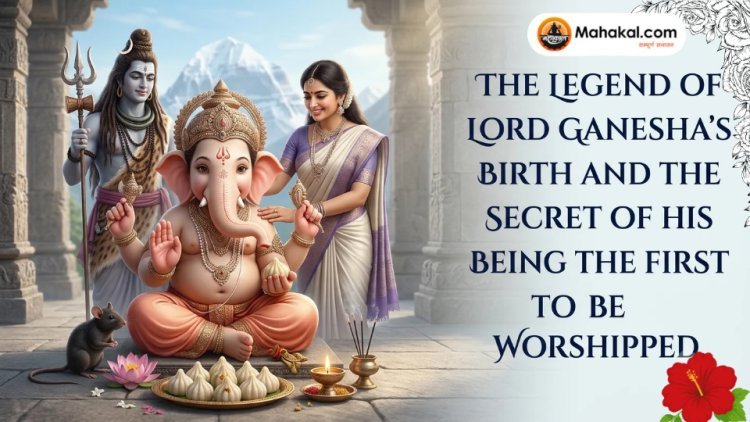
The Birth Story of Lord Ganesha and the Mystery Behind Being the First Worshipped God
In Hinduism, Lord Ganesha is worshipped as the first deity before beginning any auspicious work. Whether it is a wedding, housewarming ceremony, business inauguration, religious ritual or any new beginning, devotees first remember and worship Lord Ganesha.
He is widely known as Vighnaharta, the remover of obstacles, and Siddhivinayak, the giver of success and prosperity.
But have you ever wondered how Lord Ganesha was born? Why did Lord Shiva cut off his head? How did he receive the head of an elephant? And what made him the first worshipped deity among all the gods?
Let us explore the fascinating story of Lord Ganesha's birth and the divine mystery behind his position as the Pratham Pujya Devta.
1. How Did Goddess Parvati Create Lord Ganesha?
According to Hindu mythology, Goddess Parvati once decided to take a bath and wanted someone to guard the entrance so that nobody could enter without her permission.
To accomplish this, she created a beautiful young boy using the turmeric paste and other substances from her body. She then infused divine energy into the child and brought him to life.
This child was none other than Lord Ganesha.
Goddess Parvati accepted him as her son and instructed him to guard the entrance. She clearly told him not to allow anyone inside without her permission.
Being obedient and devoted to his mother, young Ganesha stood at the entrance and began performing his duty.
2. The Encounter Between Lord Shiva and Young Ganesha
After some time, Lord Shiva returned and wanted to meet Goddess Parvati.
However, young Ganesha stopped him at the entrance and refused to allow him inside.
Lord Shiva explained that he was Goddess Parvati's husband, but Ganesha remained firm because he had been given a direct instruction by his mother.
The attendants of Lord Shiva tried to move the boy aside, but Ganesha bravely fought against them and did not allow anyone to enter.
Eventually, Lord Shiva became angry, and a fierce battle took place between him and young Ganesha.
In the heat of the conflict, Lord Shiva used his divine weapon, the trident, and severed Ganesha's head.
When Goddess Parvati learned what had happened to her son, she became extremely upset and furious. She demanded that her son be brought back to life.
Her anger threatened to disturb the balance of the entire universe.
3. How Did Lord Ganesha Receive an Elephant Head?
To calm Goddess Parvati and restore peace in the universe, Lord Shiva decided to bring Ganesha back to life.
According to the popular mythological account, Lord Shiva instructed his attendants to go in the northern direction and bring the head of the first living being they encountered.
The attendants found an elephant and brought its head to Lord Shiva.
Lord Shiva placed the elephant's head on the body of the child and used his divine powers to bring him back to life.
Thus, Lord Ganesha appeared in his unique elephant-headed form.
Goddess Parvati was delighted to see her son alive again. Lord Shiva also accepted Ganesha as his own son and blessed him with a special position among the gods.
4. How Did Lord Ganesha Become the First Worshipped God?
One of the most fascinating stories associated with Lord Ganesha explains why he is worshipped before every other deity.
According to a popular Hindu mythological tradition, a question once arose among the gods about who deserved to be worshipped first.
To settle the matter, Lord Shiva announced a competition.
He declared that whoever travelled around the entire universe and returned first would receive the honour of being worshipped before all other gods.
Hearing this announcement, the gods immediately began their journey.
Lord Kartikeya mounted his peacock and started travelling around the universe.
Other deities also set out using their respective divine vehicles.
However, Lord Ganesha faced a challenge. His vehicle was a small mouse, and travelling around the entire universe seemed difficult.
But instead of rushing into the competition, Ganesha decided to use his intelligence.
5. The Wisdom That Made Ganesha the Winner
Lord Ganesha looked at his parents, Lord Shiva and Goddess Parvati, and came up with a brilliant idea.
Instead of travelling around the universe, he respectfully stood before his parents and circled them three times.
When Lord Shiva asked why he had not travelled around the universe, Ganesha replied:
"For me, my parents represent the entire universe. Everything in creation is contained within them. Therefore, circling my parents is equal to circling the whole universe."
His answer deeply impressed Lord Shiva and Goddess Parvati.
They were delighted by his wisdom, devotion and understanding.
Lord Shiva declared Ganesha the winner of the competition and blessed him with the honour of being worshipped first before every auspicious occasion.
This is how Lord Ganesha became known as Pratham Pujya, the first worshipped deity.
6. Why Is Lord Ganesha Known as Vighnaharta?
Lord Ganesha is worshipped as Vighnaharta, meaning the remover of obstacles.
Devotees believe that remembering and worshipping him brings positivity, wisdom, prosperity and success into life.
Every part of his appearance carries a special spiritual meaning.
-
Large Head: Symbolises wisdom, knowledge and broad thinking.
-
Large Ears: Teach us to listen carefully and understand others.
-
Small Eyes: Represent concentration and focus.
-
Long Trunk: Symbolises adaptability and the ability to handle different situations.
-
Large Belly: Represents the ability to accept and digest life's experiences.
-
Mouse as His Vehicle: Symbolises control over desires and ego.
These qualities make Lord Ganesha a symbol of intelligence, wisdom, discipline and positive beginnings.
7. Why Is Lord Ganesha Worshipped Before Every Auspicious Work?
In Hindu tradition, worshipping Lord Ganesha before beginning any important task is considered highly auspicious.
Devotees believe that his blessings help remove obstacles and bring success to new beginnings.
He is worshipped before:
-
Marriage ceremonies.
-
Griha Pravesh and housewarming rituals.
-
Starting a new business.
-
Opening a shop or office.
-
Religious ceremonies and yajnas.
-
Beginning new journeys and important projects.
The tradition of offering prayers to Lord Ganesha first reflects faith in his divine blessings and his position as the Pratham Pujya Devta.
8. Important Life Lessons from the Birth Story of Lord Ganesha
The birth story of Lord Ganesha is not just a mythological account. It also teaches valuable lessons about life.
1. Respect for Parents: Parents hold a special place in our lives, and respecting them is one of the greatest virtues.
2. Power of Intelligence: Intelligence and wisdom can solve problems that physical strength alone cannot.
3. Dedication to Duty: Ganesha remained committed to his responsibility and followed his mother's instructions.
4. Humility and Wisdom: True greatness comes from knowledge, good values and humility.
5. Patience and Understanding: Difficult situations should be handled with wisdom rather than anger or haste.
These lessons continue to inspire millions of devotees even today.
Conclusion
The birth story of Lord Ganesha teaches us the importance of devotion, wisdom, discipline and respect for parents.
His unique elephant-headed appearance represents intelligence and understanding, while the story of his victory in the cosmic competition explains why he is honoured as the first worshipped deity.
Lord Ganesha reminds us that success does not always come from physical strength or speed. Sometimes, wisdom, devotion and the right perspective make all the difference.
That is why devotees begin every auspicious occasion by remembering him and seeking his blessings.
Ganpati Bappa Morya! Mangal Murti Morya!
What's Your Reaction?