Understanding Shakti in Sanatan Dharma | Meaning, Forms & Shiva–Shakti Tatva
Discover the meaning of Shakti in Sanatan Dharma, Shiva–Shakti balance, forms of Devi, Kundalini Shakti, and its modern relevance. Explore divine feminine energy and spiritual power through ancient wisdom.
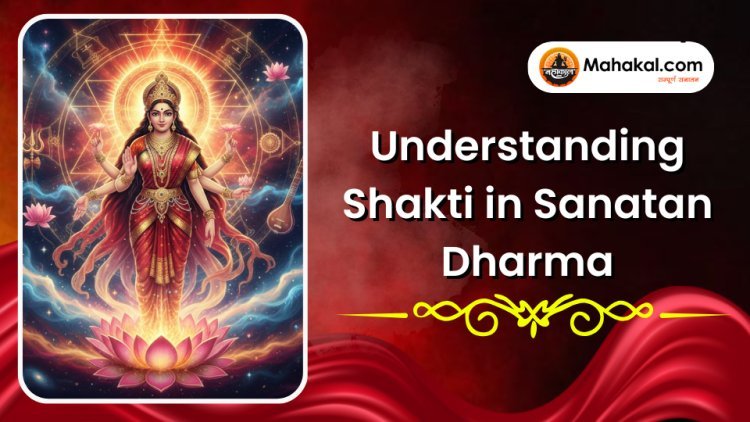
Understanding Shakti in Sanatan Dharma
Introduction
In Sanatan Dharma, Shakti is the fundamental cosmic energy that governs creation, sustenance, and transformation of the universe. Often asked questions like “What is Shakti in Hinduism?” or “Meaning of Shakti in Sanatan Dharma” reflect humanity’s timeless curiosity about the divine force behind existence.
Shakti is not merely power; it is conscious energy, inseparable from consciousness itself. Without Shakti, even Shiva is considered inert. This eternal truth highlights why Shakti holds supreme importance in Sanatan philosophy.
Meaning of Shakti in Sanatan Dharma
The word Shakti comes from the Sanskrit root “Shak”, meaning ability or power to act. In Sanatan Dharma, Shakti represents:
-
Creative energy.
-
Dynamic force of the universe.
-
Divine feminine principle.
-
Source of all motion and manifestation.
Shakti is the living force through which Brahman expresses itself.
Shakti and Shiva, The Cosmic Balance
One of the most searched concepts is “Shiva and Shakti relationship”. Sanatan texts describe Shiva as pure consciousness and Shakti as active power. Without Shakti, Shiva is Shava (inert). Without Shiva, Shakti lacks direction.
Together, Shiva and Shakti represent the perfect cosmic balance of awareness and energy.
Forms of Shakti in Hindu Philosophy
Shakti manifests in various forms, each serving a cosmic purpose :
Adi Shakti
The primordial power from which all energies arise.
Durga Shakti
The force that protects righteousness and destroys negativity.
Lakshmi Shakti
The power of abundance, prosperity, and harmony.
Saraswati Shakti
The energy of knowledge, wisdom, and creativity.
Kali Shakti
The transformative force that dissolves ignorance and ego.
Shakti in the Human Body
Sanatan wisdom explains that Shakti resides within every being as Kundalini Shakti, dormant at the base of the spine. Through yoga, meditation, and spiritual discipline, this energy rises through the chakras, leading to spiritual awakening and self-realization.
Shakti Worship in Sanatan Dharma
Shakti is worshipped through :
-
Devi Puja and Shakti Sadhana.
-
Navratri festivals.
-
Shakti Peethas.
-
Mantra and Tantra practices.
These practices aim to awaken inner strength, protection, and spiritual clarity.
Modern Relevance of Shakti Tatva
In modern times, Shakti represents inner power, resilience, creativity, and balance. Understanding Shakti helps individuals overcome fear, weakness, and confusion, guiding them toward self-empowerment and spiritual harmony.
Conclusion
Shakti is the living pulse of Sanatan Dharma. It is the energy that moves the universe and the power that transforms the soul. Understanding Shakti is not merely theological; it is a journey toward realizing the divine force within oneself.
Experience Sanatan Dharma at Your Space, Download the Mahakal.com App Today.
https://play.google.com/store/apps/details?id=manal.mahakal.com&hl=en_IN
For happiness, prosperity, and balance in life, seek the blessings of Maa Bhagwati. Connect with the divine pujas of Maa Bhagwati through Mahakal.com and join these sacred rituals today.
https://mahakal.com/epooja/lal-mirch-hawan-at-pitambara-shaktipeeth-datiya
https://mahakal.com/epooja/maa-baglamukhi-lal-mirch-havan-at-nalkheda
https://mahakal.com/epooja/shri-sukta-stotra-paath
https://mahakal.com/epooja/haldi-pili-sarso-hawan-at-pitambara-shaktipeeth-datiya
What's Your Reaction?