Why Is Mangalnath Temple in Ujjain Believed to Be the Birthplace of Mars? Discover the Mythological Story of Lord Shiva and Mangal Dev
Discover why Mangalnath Temple in Ujjain is believed to be the birthplace of Mars according to Hindu tradition. Explore the Matsya Purana legend, Lord Shiva's connection with Mangal Dev, Mangal Dosha, Bhaat Puja, and the temple's astrological significance.
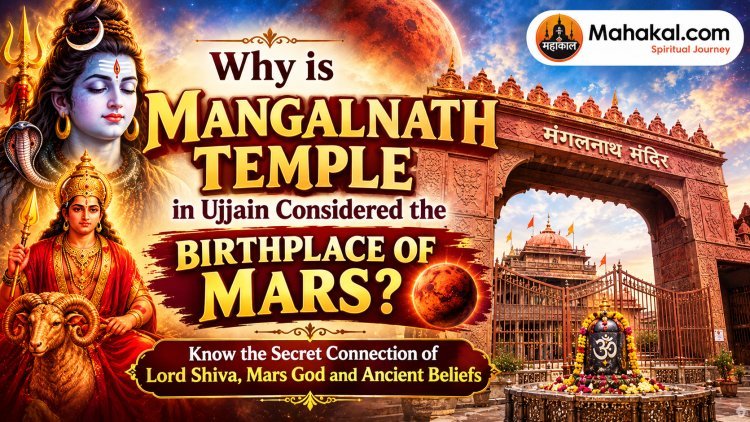
Why Is Mangalnath Temple in Ujjain Believed to Be the Birthplace of Mars?
Introduction: Was Mars Born in the Sacred City of Ujjain?
Ujjain, one of the most sacred cities in Madhya Pradesh, is renowned not only as the city of Lord Mahakal but also for its historical associations with astronomy, astrology, and ancient Indian knowledge traditions.
Among its many religious landmarks, Mangalnath Temple holds a distinctive place. According to Hindu religious tradition, this temple is associated with the birthplace of Mangal, the planetary deity identified with Mars.
Situated near the sacred Shipra River, the temple attracts devotees who come to worship Lord Shiva, offer prayers to Mangal Dev, and participate in traditional rituals associated with Mangal Dosha.
But why is Mangalnath Temple believed to be the birthplace of Mars? What is the connection between Lord Shiva and Mangal Dev? Does this belief appear in ancient Hindu literature? And why is Mars considered important in Vedic astrology?
To understand the answers, we need to explore the temple's mythological traditions, Ujjain's historical significance, and the role of Mars in Hindu religious and astrological beliefs.
1. Where Is Mangalnath Temple Located?
Mangalnath Temple is located in Ujjain, Madhya Pradesh, near the banks of the Shipra River. It is one of the city's notable religious destinations and is known for its peaceful surroundings and distinctive spiritual significance.
According to the official tourism description published by the Ujjain district administration, Mangalnath is regarded as the birthplace of Mars according to the Matsya Purana.
The temple is dedicated to Lord Shiva and is also closely associated with the worship of Mangal Dev.
Its major features include:
-
A religious tradition centred on Lord Shiva.
-
A mythological association with the origin of Mars.
-
Rituals and prayers dedicated to Mangal Dev.
-
Worship associated with traditional beliefs about Mangal Dosha.
-
A peaceful location near the Shipra River.
-
A connection with Ujjain's religious and astronomical heritage.
These features make Mangalnath Temple a distinctive destination for devotees and visitors interested in Hindu mythology.
2. Why Is Mangalnath Temple Believed to Be the Birthplace of Mars?
The answer comes from Hindu mythological tradition.
According to a belief associated with the Matsya Purana, the area around Mangalnath Temple in Ujjain is connected with the origin of Mangal, the planetary deity identified with Mars.
In Hindu tradition, Mangal is worshipped as one of the Navagrahas, or nine planetary deities. He is also known by names such as Angaraka and Bhauma. The name Bhauma is traditionally associated with the Earth.
A popular legend associated with Mangalnath Temple describes a fierce battle between Lord Shiva and the demon Andhakasura. During the struggle, a drop of perspiration from Lord Shiva's forehead fell upon the Earth. According to this traditional account, Mangal emerged from this divine event.
The location associated with this story consequently became revered as the birthplace of Mangal Dev.
This narrative belongs to Hindu mythology and religious belief. It should not be confused with the scientific explanation of how the physical planet Mars formed.
This sacred association is what gives Mangalnath Temple its distinctive position among India's important centres of worship dedicated to Mangal Dev.
3. What Is the Connection Between Lord Shiva and Mangal Dev?
The identity of Mangalnath Temple is closely connected with the relationship between Lord Shiva and Mangal Dev in religious tradition.
Lord Shiva represents divine power, transformation, asceticism, and spiritual liberation in Hinduism. Numerous temples dedicated to Shiva are associated with particular mythological events and sacred traditions.
At Mangalnath Temple, the worship of Lord Shiva is central to the religious experience. The belief connecting the site with the origin of Mars also makes it important for devotees who worship Mangal Dev.
In Vedic astrology, Mars is traditionally associated with courage, energy, determination, and assertiveness. From a spiritual perspective, worship associated with Mangal Dev is connected with prayers for strength, discipline, and the ability to face difficult circumstances.
The association between Shiva and Mangal Dev gives the temple its distinctive religious character. Devotees visit to offer prayers to Lord Shiva and seek the blessings of Mangal Dev according to their faith.
4. The Legend of Andhakasura and the Origin of Mangal Dev
To understand the mythological identity of Mangalnath Temple, it is useful to explore the story of Andhakasura.
In Hindu mythological literature, Andhakasura is described as a powerful demon. Various traditions recount his conflict with Lord Shiva.
According to a popular account associated with Mangalnath Temple, a fierce battle took place between Lord Shiva and Andhakasura. During the struggle, a drop of perspiration from Shiva's forehead fell to the ground. The divine event is associated with the emergence of Mangal.
Because Mangal is traditionally linked with the Earth, he is also known as Bhauma. The Sanskrit term is associated with the word for Earth or land.
The story brings together three important elements:
Lord Shiva: A symbol of divine power and transformation.
The Earth: The foundation of life and physical existence.
Mangal Dev: A planetary deity traditionally associated with energy, courage, and action.
This narrative is an important part of the temple's religious identity. Details of mythological stories may vary across texts and regional traditions, so the account should be understood within its religious context.
5. What Is the Connection Between Ujjain, Mars, and Ancient Astronomy?
The significance of Mangalnath Temple extends beyond mythology. Ujjain also has an important place in the history of Indian astronomy and timekeeping.
Ancient Indian scholars studied planetary movements, calculated time, developed calendars, and observed celestial events. Ujjain became an important centre in the traditions of mathematical astronomy.
The official tourism description of Mangalnath Temple notes that the location was historically regarded as suitable for astronomical studies because of the clear view of the planet.
Its open surroundings and location near the Shipra River provide a setting naturally associated with observing the sky.
However, specific claims about particular ancient astronomical observations at the temple require supporting historical evidence.
It is important to distinguish between religious belief and scientific knowledge. The belief that Mangalnath is the birthplace of Mars belongs to Hindu mythology, while Mars is a physical planet whose formation and characteristics are studied through modern astronomy.
Ujjain's significance therefore lies in both its religious traditions and its historical connections with Indian astronomical learning.
6. What Is the Importance of Mars in Vedic Astrology?
Mars occupies an important position among the Navagrahas in Vedic astrology. Traditional astrological interpretations associate it with courage, physical energy, determination, land, competition, and assertive action.
According to these interpretations, the position of Mars in a birth chart is considered when examining certain aspects of an individual's personality and life.
Some major associations include:
-
Courage and determination: The ability to confront challenges.
-
Energy and initiative: Motivation to act and pursue goals.
-
Land and property: Traditional associations with real estate and land-related matters.
-
Discipline and competition: Persistence and effort in demanding situations.
-
Marriage astrology: Traditional interpretations involving Mangal Dosha or Manglik status.
These associations belong to the traditional framework of Vedic astrology. Planetary positions have not been scientifically established as reliable predictors of an individual's personality, marriage, health, or future.
7. What Is Mangal Dosha, and Why Do Devotees Visit Mangalnath Temple?
Mangal Dosha, also known as Manglik Dosha, is a concept in Hindu astrology.
Traditional astrological calculations assess the placement of Mars in particular houses of a birth chart when determining whether a person is considered Manglik. Different astrological traditions may use different methods and interpretations.
Mangalnath Temple is a well-known destination for religious rituals associated with Mangal Dosha. Devotees who receive such an interpretation of their birth charts sometimes visit the temple to offer prayers and perform traditional ceremonies.
For these devotees, the rituals express faith in Lord Shiva and Mangal Dev and a hope for peace, harmony, and auspiciousness in life.
However, people should not become fearful of marriage or other life decisions solely because of an astrological designation. Communication, mutual respect, shared values, and compatibility are important considerations in relationships.
Religious worship may provide spiritual reassurance, but it should not be presented as a guaranteed solution to every personal difficulty.
8. Why Is Bhaat Puja Performed at Mangalnath Temple?
Bhaat Puja is a well-known ritual associated with Mangalnath Temple. It is performed within traditions connected with the worship of Mangal Dev and religious observances concerning Mangal Dosha.
The word Bhaat refers to cooked rice in this ritual context. The precise procedure and materials may vary according to the type of ceremony and the temple's established practices.
Devotees undertake the ritual as an expression of faith and as a prayer for peace, well-being, and relief from difficulties they associate with planetary influences.
The general elements of a ritual may include:
-
Taking a religious intention according to the prescribed tradition.
-
Offering prayers to Lord Shiva and Mangal Dev.
-
Using rice and other ritual materials as required by the ceremony.
-
Reciting appropriate prayers or mantras under the guidance of a priest.
-
Concluding with prayers for the well-being of the devotee and family.
Visitors should confirm the current procedure, required materials, availability, and timing with authorised temple priests or management.
As with other religious practices, the meaning of the ritual is rooted in faith. Its outcomes should not be described as guaranteed.
9. Why Is Tuesday Considered Important at Mangalnath Temple?
Tuesday holds a special place in Hindu religious traditions associated with Mangal Dev and Hanuman Ji. The day is traditionally linked with the worship of Mars.
Special worship takes place at Mangalnath Temple on Tuesdays. The official Ujjain district tourism description also mentions the temple's Tuesday rituals.
Devotees visit to seek blessings, offer prayers to Lord Shiva and Mangal Dev, and participate in religious observances according to their beliefs.
Some worshippers recite traditional mantras or arrange specific rituals for personal or family well-being.
From a spiritual perspective, Tuesday worship can also serve as a reminder to cultivate courage, discipline, self-control, and positive action.
If you plan to visit on a Tuesday, confirm the current darshan schedule and ritual arrangements before travelling.
10. Which Mantras Can Be Recited at Mangalnath Temple?
Devotees traditionally recite various mantras during the worship of Mangal Dev.
One commonly used mantra is:
Mangal Mantra
Om Kraam Kreem Kraum Sah Bhaumaya Namah.
This mantra is used in traditional devotional practices associated with Mars.
Devotees may also worship Lord Shiva by reciting the Panchakshari mantra:
Shiva Mantra
Om Namah Shivaya.
During mantra recitation, devotees generally focus on calmness, devotion, and respectful pronunciation.
For specialised ceremonies, a knowledgeable priest can provide guidance on the appropriate mantra, pronunciation, and ritual procedure.
11. Does Worship at Mangalnath Temple Completely Remove Mangal Dosha?
This is a common question among devotees considering a visit to the temple.
According to religious tradition, prayers and rituals at Mangalnath Temple are associated with seeking peace and auspiciousness in matters connected with Mangal Dosha.
Devotees may find personal meaning, reassurance, and a sense of spiritual connection through these practices.
However, it would not be accurate to claim that a particular ritual will certainly remove every astrological difficulty or guarantee success in marriage, career, or financial matters.
Astrological remedies belong to the realm of religious belief. Practical decisions should also take into account real-life circumstances, reliable information, and appropriate professional advice.
Faith is best approached as a source of hope and reflection rather than fear or a guarantee of specific outcomes.
12. How Can You Visit Mangalnath Temple?
Mangalnath Temple is located in Ujjain, Madhya Pradesh, near the Shipra River.
Ways to reach Ujjain:
-
By train: Ujjain railway station is connected to several major cities through rail services.
-
By air: Devi Ahilyabai Holkar Airport in Indore is the nearest major airport.
-
By road: Ujjain can be reached by road from Indore and other major cities in Madhya Pradesh.
Before visiting, check the current darshan timings, special puja arrangements, and local visitor guidelines. Tuesdays and major religious occasions may attract larger crowds.
If you are planning a pilgrimage to Ujjain, you can also include Mahakaleshwar Jyotirlinga and other important temples in your itinerary.
13. What Spiritual Message Does Mangalnath Temple Convey?
Mangalnath Temple offers an opportunity to explore the relationship between planetary deities, religious mythology, and traditional Hindu worship.
The worship of Lord Shiva and the mythological association with the origin of Mangal Dev come together at this sacred site. Its traditions also reflect Ujjain's importance in India's religious and astrological heritage.
Mars is traditionally associated with courage, energy, and determination. From a spiritual perspective, these qualities can inspire people to face difficulties with patience, fulfil responsibilities, maintain discipline, and act with consideration for others.
A visit to the temple can therefore be meaningful beyond the performance of rituals. It can offer time for prayer, reflection, and a renewed commitment to positive actions.
Conclusion: Why Is Mangalnath Temple Called the Birthplace of Mars?
Mangalnath Temple in Ujjain holds a distinctive place in Hindu religious tradition because of its association with the origin of Mangal Dev, the worship of Lord Shiva, and rituals connected with Mars.
According to a tradition associated with the Matsya Purana, the temple's location is linked with the birth of Mangal. The story involving Lord Shiva, Andhakasura, and the divine drop of perspiration is an important part of this religious identity.
Ujjain's historical association with astronomy and timekeeping adds another dimension to the site's cultural significance.
Even today, devotees visit the temple to worship Lord Shiva and Mangal Dev, participate in Bhaat Puja, and pray according to their religious beliefs.
The birthplace narrative is a mythological belief rather than a scientific explanation of the formation of Mars. Understanding this distinction allows visitors to appreciate both the temple's religious importance and Ujjain's broader historical heritage.
For anyone interested in places where Hindu mythology, astrology, and history intersect, Mangalnath Temple offers a fascinating glimpse into the spiritual traditions of ancient Ujjain.
Har Har Mahadev! Jai Manga
What's Your Reaction?