Chaubis Khamba Mata Mandir Ujjain : History, 24 Pillars, Vikramaditya Connection & Spiritual Significance
Discover Chaubis Khamba Mata Mandir Ujjain, an ancient temple famous for its 24 pillars, Vikramaditya connection, Goddess Mahamaya worship, rich history, architecture, and spiritual significance.
Chaubis Khamba Mata Mandir Ujjain : History, 24 Pillars, Vikramaditya Connection & Spiritual Significance
Introduction
Among the many sacred temples of Ujjain, Chaubis Khamba Mata Mandir stands as a remarkable blend of spirituality, history, and ancient architecture. Located near the old city area, this revered temple is dedicated to Goddess Mahamaya and Goddess Mahalaya, who are believed to be the guardian deities of Ujjain.
Famous for its 24 intricately carved pillars, the temple is closely associated with Maharajadhiraja Vikramaditya, the legendary king of Ujjain. For devotees, history enthusiasts, and spiritual seekers, Chaubis Khamba Mata Mandir remains one of the most significant heritage temples in Ujjain.
Experience Sanatan Dharma at Your Space, Download the Mahakal.com App Today.
What is Chaubis Khamba Mata Mandir?
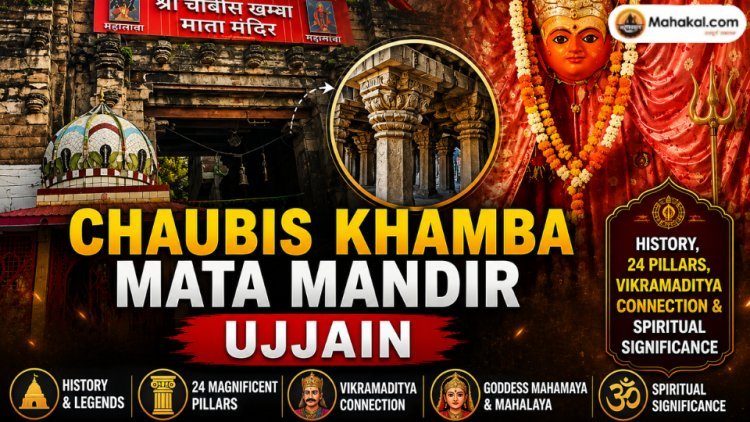
The name Chaubis Khamba literally means "Twenty-Four Pillars." The temple derives its name from the magnificent entrance structure supported by 24 beautifully carved stone pillars.
Historically, this structure is believed to have served as the main gateway to ancient Ujjain (Avantika) and the sacred Mahakal Van, through which devotees entered the holy city to seek blessings at Mahakaleshwar Jyotirlinga.
Today, although the ancient fortifications no longer exist, the temple continues to preserve the spiritual legacy of Ujjain.
Why is Chaubis Khamba Mata Mandir Famous?
Several factors make this temple unique:
- Ancient gateway of historic Ujjain
- Dedicated to Goddess Mahamaya and Mahalaya
- Famous for its 24 carved pillars
- Strong connection with King Vikramaditya
- Important Navratri pilgrimage site
- Significant Shakti worship center in Ujjain
- Historic architectural monument of the Paramara era
The temple beautifully combines mythology, devotion, and heritage.
History of Chaubis Khamba Mata Mandir
The origins of the temple are linked to Maharajadhiraja Vikramaditya, one of India's most celebrated rulers.
According to local traditions, the original structure was built during Vikramaditya's reign and later renovated by the Paramara dynasty between the 9th and 12th centuries.
Ancient accounts suggest that the entrance gate was once decorated with precious gems and exquisite carvings. Over centuries, invasions and natural changes damaged portions of the original structure, but the sacred gateway and temple survived.
Today, it remains one of the oldest surviving religious monuments in Ujjain.
The Fascinating Vikramaditya Legend
One of the most popular legends associated with Chaubis Khamba Mata Mandir revolves around King Vikramaditya.
It is believed that 32 divine figures tested the wisdom, courage, and intellect of kings who wished to rule Ujjain.
Before ascending the throne, Vikramaditya performed a grand worship of Goddess Mahamaya and Mahalaya during Shukla Ashtami.
Pleased by his devotion, the Divine Mother blessed him with wisdom, enabling him to answer all the questions posed by the 32 celestial figures.
After successfully passing the test, Vikramaditya was blessed to rule according to Dharma and became one of the most respected kings in Indian history.
Who are Goddess Mahamaya and Mahalaya?
The temple enshrines two powerful forms of the Divine Mother:
Goddess Mahamaya
Mahamaya symbolizes divine power, protection, wisdom, and spiritual awakening.
Goddess Mahalaya
Mahalaya represents compassion, grace, and the nurturing aspect of the Divine Mother.
Together, they are believed to protect Ujjain and bless devotees with prosperity, courage, and spiritual growth.
Spiritual Significance of Chaubis Khamba Mata Mandir
Devotees visit the temple seeking:
- Protection from negative energies
- Success and prosperity
- Wisdom and decision-making ability
- Family harmony
- Spiritual growth
- Blessings of Divine Mother
The temple is especially crowded during Navratri, when thousands of devotees gather to worship the Goddess.
What Makes the 24 Pillars Special?
The most iconic feature of the temple is its 24 beautifully carved stone pillars.
Each pillar showcases unique carvings depicting:
- Hindu deities
- Mythological scenes
- Floral motifs
- Geometric patterns
- Ancient artistic craftsmanship
The pillars represent the remarkable skill of medieval Indian artisans and serve as a living testimony to Ujjain's rich cultural heritage.
Architectural Highlights of the Temple
Ancient Stone Gateway
The temple entrance consists of two levels supported by intricately carved pillars.
Gupta and Paramara Influence
The architecture reflects elements of both Gupta and Paramara styles.
Sculptural Beauty
Visitors can admire detailed carvings of gods, goddesses, floral patterns, and symbolic motifs.
Historical Significance
The temple is one of the few surviving structures connected to ancient Ujjain's original city layout.
Best Time to Visit Chaubis Khamba Mata Mandir
The temple can be visited throughout the year.
Most Auspicious Occasions
- Navratri Festival
- Shukla Ashtami
- Chaitra Navratri
- Sharadiya Navratri
Best Season
October to March offers pleasant weather for sightseeing and temple visits.
How to Reach Chaubis Khamba Mata Mandir?
By Road
The temple is easily accessible from all parts of Ujjain via auto-rickshaw, taxi, or private vehicle.
By Rail
Nearest railway station:
Ujjain Junction Railway Station
By Air
Nearest airport:
Devi Ahilyabai Holkar Airport, Indore
Nearby Attractions
- Mahakaleshwar Jyotirlinga
- Harsiddhi Mata Temple
- Ram Ghat
- Kal Bhairav Temple
- Sandipani Ashram
Why You Should Visit Chaubis Khamba Mata Mandir
A visit to Chaubis Khamba Mata Mandir offers:
- Ancient spiritual heritage
- Connection with King Vikramaditya
- Unique medieval architecture
- Divine blessings of Mahamaya and Mahalaya
- Peaceful atmosphere for worship
- Rich historical significance
It is one of the few places in Ujjain where history, mythology, and devotion come together beautifully.
Conclusion
Chaubis Khamba Mata Mandir is much more than an ancient temple—it is a symbol of Ujjain's glorious spiritual and cultural heritage. From its legendary association with Vikramaditya and the Divine Mother to its magnificent 24 pillars and historic gateway, the temple offers visitors a deeply enriching experience.
Whether you are a devotee, history enthusiast, or traveler exploring Ujjain, a visit to Chaubis Khamba Mata Mandir is a journey into the timeless spiritual legacy of the City of Mahakal.
Frequently Asked Questions (FAQs)
1. Why is Chaubis Khamba Mata Mandir famous?
The temple is famous for its 24 carved pillars, connection with King Vikramaditya, and the worship of Goddess Mahamaya and Mahalaya.
2. Who are the deities worshipped in Chaubis Khamba Mata Mandir?
The temple is dedicated to Goddess Mahamaya and Goddess Mahalaya, considered the guardian deities of Ujjain.
3. What is the significance of the 24 pillars?
The 24 pillars showcase ancient Indian craftsmanship and symbolize the architectural brilliance of medieval Ujjain.
4. When is the best time to visit Chaubis Khamba Mata Mandir?
Navratri and Shukla Ashtami are considered the most auspicious times to visit the temple.
5. Is Chaubis Khamba Mata Mandir connected to King Vikramaditya?
According to local legends, King Vikramaditya received divine blessings from Goddess Mahamaya and Mahalaya before becoming the ruler of Ujjain.
- Chaubis Khamba Mata Mandir Ujjain
- 24 Pillars Temple Ujjain
- Chaubis Khamba Mata Mandir History
- Ancient Temples in Ujjain
- Ujjain Tourist Attractions
- Historical Temples of Ujjain
https://mahakal.com/tourbook/ujjain-1-day-tour-LwvWrK
https://mahakal.com/tourbook/ujjain-omkareshwar-darshan-tour-Fkw4pI
What's Your Reaction?