Kashi Vishwanath Temple: History, Untold Mysteries, and the Grand Kashi Corridor Saga
A comprehensive guide to Kashi Vishwanath Temple in Varanasi. Discover its ancient history, 12 Jyotirlinga connection, destruction and rebuilding, Gyanvapi secrets, and the 500,000 sq ft Kashi Corridor.
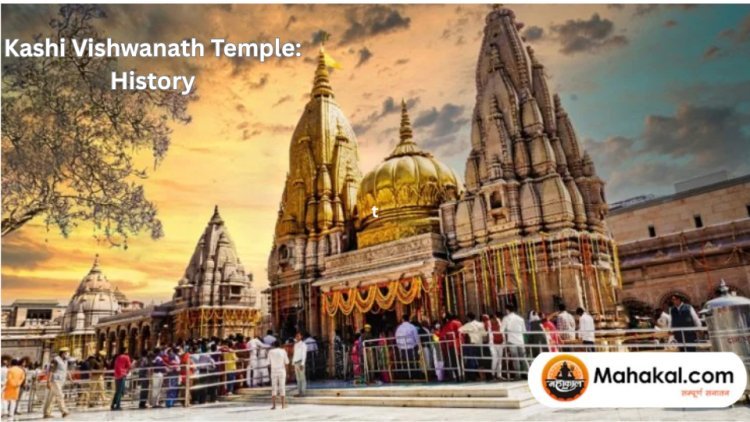
Kashi Vishwanath Temple: History, Spirituality, and the Secrets of the Grand Corridor
Introduction
Varanasi, anciently known as Kashi, is widely regarded as the oldest continuously inhabited city in the world. In Hindu philosophy, Kashi is not merely a geographical location; it is a spiritual realm said to rest upon the tip of Lord Shiva’s trident (Trishul). At the physical and spiritual heart of this holy city stands the legendary Kashi Vishwanath Temple, housing one of the 12 sacred Jyotirlingas (lingams of light) of Lord Shiva.
The saga of Kashi Vishwanath is a profound narrative of ultimate devotion, historical turbulence, destruction, and glorious resurrection. In this detailed blog, we unpack the ancient mythologies, centuries of history, deep spiritual secrets, and the modern architectural marvel known as the Kashi Vishwanath Corridor.
1. Mythological Origin: The Eternal Pillar of Light
According to the Skanda Purana (Kashi Khanda) and Shiva Purana, Kashi was created at the dawn of time by Lord Shiva and Goddess Parvati as their cosmic abode.
-
The Manifestation of Jyotirlinga: Mythology dictates that when a dispute arose between Lord Brahma and Lord Vishnu regarding cosmic supremacy, Lord Shiva manifested as a boundless, infinite pillar of light (Jyotirlinga) that pierced through all realms. The Jyotirlinga at Kashi represents a physical manifestation of this eternal light.
-
The City of Light: The name Kashi originates from the Sanskrit root Kash, meaning "to shine." Thus, Kashi is the "City of Supreme Light" where spiritual illumination takes place.
2. Historical Saga: Invasions and Resurrections
The history of Kashi Vishwanath is a testament to the resilience of Sanatan Dharma. The temple was destroyed and rebuilt several times across centuries:
-
Medieval Destruction (1194 AD): Qutb-ud-din Aibak, acting on orders from Muhammad Ghori, launched an attack on Varanasi and demolished the original temple structure.
-
Reconstruction by Raja Todar Mal (1585 AD): During the reign of Mughal Emperor Akbar, his finance minister Raja Todar Mal, alongside scholar Narayan Bhatta, rebuilt the temple on a grand scale.
-
Demolition by Aurangzeb (1669 AD): Emperor Aurangzeb ordered the destruction of the temple and built the Gyanvapi Mosque over its structural foundations, leaving parts of the original temple wall intact.
-
Restoration by Maharani Ahilyabai Holkar (1780 AD): After nearly a century without a formal structure, the noble queen of Indore, Maharani Ahilyabai Holkar, constructed the present temple complex adjacent to the original site.
-
Plating with Pure Gold (1839 AD): Maharaja Ranjit Singh, the ruler of the Sikh Empire, donated 1,000 kilograms of pure gold to plate the two main spires (shikharas) of the temple, making it famously known as the "Golden Temple of Varanasi."
3. Spiritual Mysteries and Legends
(i) The Miracle of Moksha and Taraka Mantra
It is believed that anyone who dies in the sacred domain of Kashi achieves immediate liberation (Moksha) from the endless cycle of birth and death. Scriptures state that Lord Shiva himself whispers the Taraka Mantra into the ears of the departed soul at the moment of death.
(ii) The Secret of Gyanvapi Well (Well of Knowledge)
Positioned between the temple and the mosque lies the historic Gyanvapi Well. Historical accounts state that during Aurangzeb's attack in 1669, the head priest hid the original Jyotirlinga by jumping into this well with the sacred deity to protect it from desecration.
(iii) Avimukta Kshetra
Kashi is revered as Avimukta Kshetra, meaning "the land never abandoned." It is believed that even during cosmic dissolution (Pralaya), Lord Shiva never abandons this holy sanctuary.
(iv) Manikarnika Ghat: The Eternal Cremation Ground
A short walk from the temple is Manikarnika Ghat, where funeral pyres burn continuously 24 hours a day, 365 days a year. Here, death is celebrated not as a tragedy, but as the ultimate liberation of the soul.
4. The Kashi Vishwanath Corridor: A Modern Renaissance
In December 2021, Indian Prime Minister Narendra Modi inaugurated the Kashi Vishwanath Dham (Corridor), marking a historic transformation that seamlessly connected the temple with the holy River Ganga.
Key Architectural and Functional Highlights:
-
Massive Expansion: The temple footprint expanded dramatically from a congested 3,000 square feet to an expansive 500,000 square feet campus.
-
Direct River Ganga Access: Devotees can now take a holy dip at Lalita Ghat on the banks of the Ganga and walk directly into the temple complex carrying sacred river water, eliminating the need to navigate narrow, overcrowded alleys.
-
Uncovering Ancient Heritage: During the clearance phase, over 40 ancient, forgotten temples hidden within local structures were discovered, meticulously restored, and integrated into the complex.
-
State-of-the-Art Pilgrim Facilities: The corridor features a Mumukshu Bhavan (hospice for pilgrims seeking liberation), a spiritual museum, a Vedic library, guest houses, food halls, and a security center.
5. Practical Pilgrim Guide (Timings & Travel)
-
Best Time to Visit: The winter months from October to March offer pleasant weather. Festivals like Maha Shivratri and the holy month of Sawan see massive celebrations.
-
Daily Aarti Schedule:
-
Mangala Aarti: 3:00 AM – 4:00 AM (Early morning)
-
Bhog Aarti: 11:15 AM – 12:20 PM
-
Sandhya Aarti: 7:00 PM – 8:15 PM (Evening)
-
Shringaar Aarti: 9:00 PM – 10:15 PM
-
Shayan Aarti: 10:30 PM (Night closure)
-
-
How to Reach:
-
By Air: Lal Bahadur Shastri International Airport (VNS) at Babatpur, approx. 25 km from the temple.
-
By Train: Varanasi Junction (BSB) or Pandit Deen Dayal Upadhyaya Junction (DDU).
-
By Road: Varanasi is smoothly connected via major National Highways across India.
-
Conclusion
The Kashi Vishwanath Temple is far more than an ancient monument—it is a living, breathing testament to faith, history, and spiritual enlightenment. The blend of ancient heritage and modern infrastructure through the Kashi Corridor makes a pilgrimage to this holy site an unforgettable, life-transforming experience.
Whether you are a historian, a seeker of truth, or a spiritual traveler, visiting the abode of Baba Vishwanath in Kashi promises an encounter with the divine.
Har Har Mahadev!
What's Your Reaction?