Ram Janardan Temple Ujjain: History, Ancient Idols and Religious Significance
Explore the history of Ujjain’s Ram Janardan Temple, its idols of Lord Rama, Sita, Lakshmana and Lord Vishnu, ancient sculptures dating to earlier centuries, Maratha-style paintings, and its religious and cultural significance.
What Ancient Stories Are Connected to the Idols of Ujjain’s Ram Janardan Temple? Discover Its Centuries-Old Heritage!
Ujjain, one of India’s celebrated sacred cities, is widely known for the Mahakaleshwar Jyotirlinga. Yet its religious identity extends far beyond the famous Shiva shrine. The city is also home to historic temples that preserve valuable examples of traditional worship, ancient sculpture, architecture and artistic heritage.
One such place is the Ram Janardan Temple, a historic religious complex associated with the worship of Lord Rama, Goddess Sita, Lakshmana and Lord Janardan, a name of Lord Vishnu.
The temple is noteworthy not only for its religious significance but also for the ancient sculptures found within and around its premises. Some of these sculptures are described as dating to centuries before the construction of the present temple structures, making the site important from an artistic and historical perspective.
But what makes the ancient idols of Ram Janardan Temple special? What is known about the temple’s history? And how do its sculptures connect visitors with the stories and traditions of Hinduism?
Let us explore these questions in detail.
1. Where Is Ram Janardan Temple Located?
Ram Janardan Temple is situated in Ujjain, Madhya Pradesh, a city with a long-standing reputation as a centre of religion, philosophy, literature and culture.
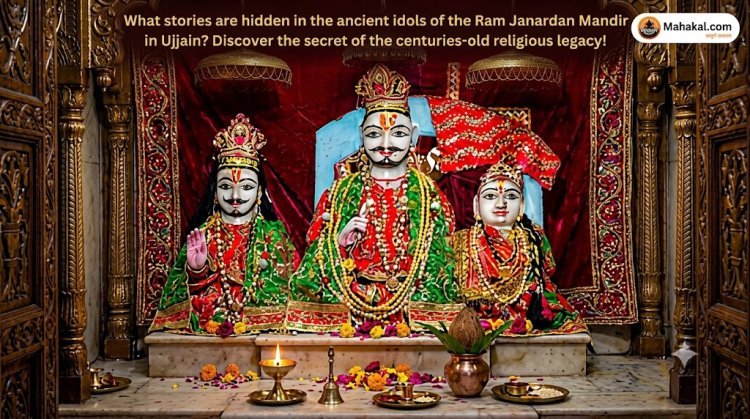
The temple complex has two distinct religious associations. The Rama Temple houses the idols of Lord Rama, Lakshmana and Goddess Sita, while the Janardan Temple is dedicated to Janardan-Vishnu.
The name Janardan is traditionally associated with Lord Vishnu, who is worshipped in Hinduism as the preserver and protector of the universe.
The presence of these shrines within the same complex offers visitors an opportunity to appreciate different but interconnected traditions of Hindu worship.
According to the Ujjain district administration’s official tourism description, the complex is recognised for its historic structures, religious idols and artistic features.
2. Who Built Ram Janardan Temple?
The history of Ram Janardan Temple is connected with the architectural and cultural development of Ujjain.
According to the official description published by the Ujjain district administration, the temples were constructed by Raja Jaisingh in the seventeenth century. Additional features, including the boundary wall and tank, were added during the Maratha period in the eighteenth century.
This history is important because it shows that the temple complex developed over time. Its present appearance reflects different phases of construction, artistic patronage and religious activity.
The Maratha influence is also visible in the paintings on the walls of both temples. These artworks contribute to the complex’s cultural identity and offer a glimpse into the artistic traditions associated with Ujjain during that period.
Thus, Ram Janardan Temple should be understood not only as a place of worship but also as a historic monument reflecting the region’s architectural and artistic heritage.
3. Why Are the Ancient Idols of the Temple So Special?
One of the most interesting features of Ram Janardan Temple is the presence of sculptures associated with different historical periods.
The official district tourism description mentions several old images installed within the temples and near the tank opposite the Janardan Temple. Some of these sculptures are considered significant examples of Indian art and iconography.
Notable examples include:
-
Vishnu images dating to the tenth century: Certain images of Vishnu located between the assembly hall and the interior of the Rama Temple are described as belonging to the tenth century.
-
Images of Brahma, Vishnu and Mahesh from the twelfth century: These sculptures represent the three major divine figures traditionally associated with creation, preservation and transformation.
-
A Govardhandhari Krishna image from the eleventh century: A sculpture of Lord Krishna holding Govardhan Hill is noted near the tank opposite the Janardan Temple.
These sculptures are valuable because they help researchers and visitors understand the development of religious imagery, sculptural techniques and devotional traditions in India.
It is important, however, to distinguish the historical dating of a sculpture from the religious stories associated with it. The age of an idol does not automatically establish that every legend connected with it occurred at that exact location.
4. The Religious Significance of Lord Rama, Sita and Lakshmana
The Rama Temple houses the idols of Lord Rama, Goddess Sita and Lakshmana. These three figures occupy an important place in the religious and cultural traditions associated with the Ramayana.
Lord Rama is widely revered as Maryada Purushottama, an ideal of righteous conduct, duty, truthfulness and honouring one’s word.
Goddess Sita is admired for her courage, dignity, patience and devotion. Lakshmana is remembered for his loyalty, service and unwavering commitment to his brother.
Together, these figures represent values that continue to influence religious practice, family traditions and moral teachings.
For devotees, visiting the Rama Temple is therefore more than an act of worship. It can also be an opportunity to reflect on the values represented by the Ramayana and their relevance to everyday life.
The idols at Ram Janardan Temple connect the sacred space with this enduring devotional tradition.
5. Who Is Lord Janardan-Vishnu?
Janardan is a traditional name of Lord Vishnu, one of the principal deities of Hinduism.
Lord Vishnu is worshipped as the preserver of the universe and is associated with maintaining cosmic order and protecting righteousness. Hindu scriptures describe his various incarnations, including Rama and Krishna, as manifestations through which divine protection and the restoration of dharma are expressed.
The Janardan Temple reflects this broader tradition of Vishnu worship.
In traditional Hindu iconography, Vishnu is often represented with symbols such as the conch, discus, mace and lotus. These symbols carry religious meanings associated with divine power, protection, order and spiritual awareness. The exact attributes of an individual sculpture should, however, be identified by examining that specific image.
The presence of both Rama and Vishnu traditions in the temple complex illustrates the diversity of Ujjain’s religious landscape.
Although Ujjain is especially famous for its Shaiva heritage and Mahakaleshwar Jyotirlinga, the city also preserves important traditions of Vaishnava worship and devotion to other Hindu deities.
6. What Story Is Associated with the Ancient Govardhandhari Krishna Sculpture?
One of the most interesting sculptures mentioned in the official description is the image of Govardhandhari Krishna near the tank opposite the Janardan Temple. It is described as dating to the eleventh century.
The image recalls the famous Govardhan Leela, a celebrated episode from the religious traditions associated with Lord Krishna.
The Traditional Story of Govardhan Leela
According to Hindu tradition, the people of Braj once worshipped Indra, the deity associated with rain. Krishna encouraged the community to recognise the importance of Govardhan Hill, nature, cattle and the resources that sustained their lives.
The traditional story says that Indra became angry and sent heavy rainfall over Braj. To protect the people and their cattle, Krishna lifted Govardhan Hill on his little finger, providing shelter to the community until the danger passed.
This episode is known as Govardhan Leela and is an important part of the religious traditions associated with Govardhan Puja.
The Govardhandhari Krishna sculpture at Ram Janardan Temple recalls this celebrated episode. It offers visitors an artistic connection to one of the best-known stories of Krishna.
However, the sculpture’s association with the story should be understood as a religious and symbolic connection. Additional historical claims about its creator or the precise circumstances of its installation would require independent evidence.
7. Do the Ancient Idols Prove That Every Associated Legend Happened Here?
This is an important question when exploring historic religious sites.
Ancient temple sculptures often represent episodes from religious texts, traditional narratives and devotional practices. For example, an image of Krishna holding Govardhan Hill represents the familiar story of Govardhan Leela.
However, the existence of an ancient sculpture does not by itself prove that every story associated with its subject took place at the location where the sculpture is now installed.
Historians and art specialists examine factors such as artistic style, material, iconography, inscriptions and archaeological context when assessing a sculpture’s age and significance.
Religious narratives, meanwhile, are understood through scriptures, traditional accounts and their continuing importance in devotional life.
Ram Janardan Temple brings these dimensions together. Its historical sculptures provide material evidence of artistic traditions, while its shrines continue to represent living traditions of devotion to Rama, Vishnu and Krishna.
This combination makes the temple interesting for devotees, history enthusiasts and visitors exploring Ujjain’s cultural heritage.
8. Maratha-Style Paintings on the Temple Walls
Another noteworthy feature of Ram Janardan Temple is the Maratha-style painting found on the walls of the two temples.
Traditional temple paintings served purposes beyond decoration. Religious imagery could communicate stories, portray deities and express the devotional ideals of the communities that supported a temple.
The paintings at Ram Janardan Temple are identified in the official description as examples of Maratha artistic influence.
They offer a valuable opportunity to understand how religious architecture, painting and local cultural traditions developed together in Ujjain.
Visitors interested in art and history can look beyond the main shrines and observe the temple’s walls, structural details and older sculptures. These features contribute to the complex’s overall historical identity.
9. Why Is Ram Janardan Temple Important to Ujjain’s Heritage?
Ujjain’s religious identity has developed through multiple traditions over many centuries. Alongside the famous Mahakaleshwar Jyotirlinga, the city preserves temples associated with Lord Vishnu, Rama, Krishna and various forms of the Divine Mother.
Ram Janardan Temple represents this diversity through three important dimensions.
Religious significance: The shrines honour Lord Rama, Goddess Sita, Lakshmana and Janardan-Vishnu, offering devotees a place for worship and reflection.
Historical significance: The temple structures are associated with the seventeenth century, while several sculptures described in the official record date to the tenth, eleventh and twelfth centuries.
Artistic significance: The sculptures, architectural features and Maratha-style paintings reflect different phases of India’s religious and artistic heritage.
These qualities make the complex more than a place for prayer. It is also a site where visitors can explore the relationship between religious traditions, historical development and artistic expression.
10. What Should Visitors Keep in Mind During a Visit?
Visitors planning to explore Ram Janardan Temple should check locally available information about access and visiting arrangements before travelling.
During a visit, consider the following:
-
Offer prayers respectfully at the Rama Temple and Janardan Temple.
-
Learn about the religious significance of the different shrines.
-
Observe the ancient sculptures and their artistic details.
-
Take time to appreciate the paintings and architectural features.
-
Follow local customs and temple rules.
-
Check the rules before photographing, touching or making offerings near historic sculptures.
A thoughtful visit can provide both a spiritual experience and a deeper appreciation of Ujjain’s historic heritage.
Conclusion: Ram Janardan Temple Is a Living Link Between Faith, Art and History
Ujjain’s Ram Janardan Temple holds an important place in the city’s religious and cultural landscape. Its shrines honour Lord Rama, Goddess Sita, Lakshmana and Janardan-Vishnu, while its historic sculptures and paintings preserve traces of different periods of Indian artistic tradition.
The ancient images described in the official record—including sculptures associated with the tenth, eleventh and twelfth centuries—make the complex particularly significant for the study of religious art. The Govardhandhari Krishna image also recalls the traditional story of Govardhan Leela, connecting the temple’s artistic heritage with a celebrated episode from Krishna’s life.
The temple’s history, Maratha-style paintings and ancient sculptures demonstrate that Ujjain’s spiritual identity is shaped by many centuries of religious devotion and cultural development.
For anyone interested in the lesser-known heritage of Ujjain, Ram Janardan Temple offers an opportunity to look beyond the city’s most famous shrines and discover another meaningful chapter in its long history.
What's Your Reaction?