What Does the Garuda Purana Say About the Journey After Death? Discover the Spiritual Beliefs About the Soul
Explore the Garuda Purana's traditional teachings about the soul's journey after death, karma, Yamaloka, rebirth, and moksha in Hinduism.
What Does the Garuda Purana Say About the Journey After Death? Discover the Spiritual Beliefs About the Soul
Death is one of the most profound mysteries of human existence. Throughout history, people have wondered what happens when the physical body dies. Does the soul continue to exist? Do our actions influence what happens after death? Is rebirth possible, and what does liberation mean in Hindu philosophy?
These questions have been explored through various religious and philosophical traditions. In Sanatan Dharma, several sacred texts discuss the soul, karma, rebirth, liberation, and the purpose of human life. Among these texts, the Garuda Purana holds a significant place in traditional Hindu understanding of death and the afterlife.
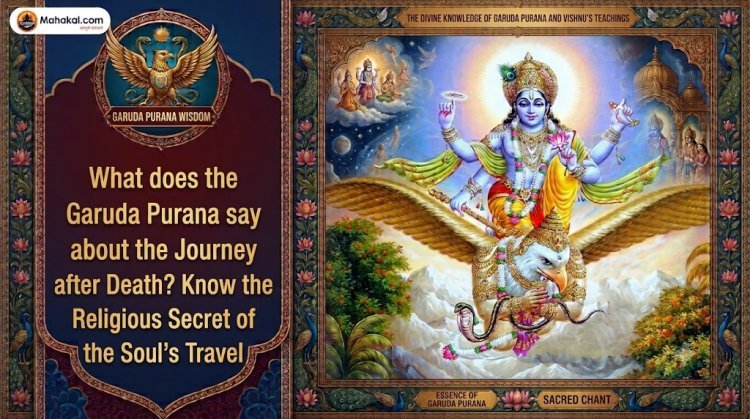
The Garuda Purana is one of the eighteen Mahapuranas of Hindu tradition and is associated with Lord Vishnu. In its traditional narrative, Lord Vishnu imparts spiritual knowledge to Garuda, his divine vehicle and devotee. The text discusses numerous subjects, including religious duties, righteous conduct, death, the consequences of actions, the journey after death, and liberation.
Its teachings about the afterlife are particularly well known. However, they should be understood as religious and philosophical beliefs rather than as scientifically established descriptions of what happens after death.
Let us explore the traditional teachings of the Garuda Purana and understand the lessons they offer for living a meaningful and ethical life.
1. What Is the Garuda Purana?
The Garuda Purana is an important Vaishnava scripture associated with Lord Vishnu. It contains teachings and narratives concerning religious practices, moral conduct, charity, spiritual knowledge, death, the afterlife, and liberation.
One of its widely discussed subjects is the journey of the soul after death. Through traditional descriptions of karma and its consequences, the text emphasizes the importance of living responsibly and treating others with compassion.
According to the moral teachings associated with the text, human life should not be devoted exclusively to material possessions, status, or personal pleasure. Honesty, kindness, self-discipline, generosity, and respect for others are also essential.
The Garuda Purana is therefore not simply a text about death. Its broader message encourages people to reflect on their actions and the kind of life they choose to lead.
2. What Happens to the Soul After Death?
Many Hindu philosophical traditions distinguish between the physical body and the soul. The physical body is temporary, while the soul is understood as enduring beyond bodily death.
The Bhagavad Gita also teaches the imperishable nature of the soul. The Garuda Purana's traditional accounts of the afterlife build upon related ideas about the soul, karma, and existence beyond physical life.
According to these religious beliefs, death marks the end of the body's physical functions, but it does not necessarily mark the end of the soul's journey.
The consequences of a person's actions are an important part of this understanding. Acts of kindness, honesty, and generosity are considered virtuous, while cruelty, deception, and injustice are regarded as harmful.
The central lesson is that human actions matter. People should take responsibility for their decisions and consider how their behavior affects others.
3. The Traditional Stages of the Soul's Journey
The Garuda Purana contains traditional descriptions of the soul's journey after death. These accounts refer to concepts such as the subtle body, the consequences of karma, Yamaloka, and the soul's subsequent destination.
Stage One: The End of the Physical Body
At death, the physical body ceases to perform its life-sustaining functions. Hindu religious philosophy views the body as temporary and distinguishes it from the soul.
This teaching encourages people to recognize the uncertainty of life. Wealth, fame, possessions, and social status cannot be retained forever.
Rather than focusing entirely on external achievements, people are encouraged to develop good character, fulfill their responsibilities, and pursue spiritual understanding.
Stage Two: The Subtle Body and Karma
Traditional interpretations of the Garuda Purana discuss the subtle body and the soul's journey beyond physical death.
The concept of karma is central to these teachings. Karma refers broadly to action and, in religious and philosophical contexts, to the consequences associated with one's actions.
Helping someone in need, speaking truthfully, respecting others, and protecting the vulnerable are examples of virtuous conduct. Deliberately harming others, exploiting people, and acting unjustly are regarded as negative forms of conduct.
These teachings encourage moral responsibility rather than fear. They remind people that their decisions have consequences for themselves, their families, and society.
Stage Three: The Yama's Messengers
The Garuda Purana's traditional accounts describe the Yamadutas, or messengers associated with Yama, the Hindu deity connected with death and justice.
Within these religious narratives, the Yamadutas are associated with the soul's journey after death.
Their descriptions can be understood as part of the text's larger teaching about accountability. A person's outward success does not make injustice or cruelty morally acceptable.
These accounts belong to Hindu religious tradition. They should not be presented as scientifically verified events that have been established to occur during every person's death.
Stage Four: Yamaloka and the Judgment of Actions
Yamaloka is traditionally described as a realm associated with Yama and the soul's journey after death.
In Hindu religious narratives, Yama is associated with justice and the consideration of a being's actions. Chitragupta is traditionally depicted as the divine record-keeper who maintains an account of deeds.
The moral significance of these descriptions lies in their emphasis on accountability.
Helping the poor, feeding the hungry, caring for vulnerable people, and serving others without selfish motives are examples of virtuous conduct. Misusing power, deceiving others, and deliberately causing harm are considered wrong.
The narrative of judgment therefore encourages people to act honestly, fairly, and responsibly.
4. What Is the Significance of the Thirteen-Day Mourning Tradition?
In many Hindu communities, families perform funeral rites and observe mourning practices after a death. Some traditions include ceremonies on or around the thirteenth day, although customs and timings vary across regions, families, and religious communities.
Certain traditional interpretations associated with the Garuda Purana connect the period following death with the soul's journey and rituals such as Pinda Daan.
Pinda Daan and Tarpan
Pinda Daan and Tarpan are important practices within many Hindu ancestral traditions. They are performed as expressions of respect, remembrance, and devotion toward deceased family members and ancestors.
These rituals can provide families with a meaningful way to honor their loved ones and maintain a connection with their ancestral traditions.
The specific procedures and beliefs associated with these rites vary among Hindu communities. It is therefore important not to treat any single regional practice as the only way Hindus observe death-related rituals.
5. How Does Karma Influence the Soul's Journey?
Karma is one of the central concepts in Hindu philosophy and an important theme in the traditional teachings associated with the Garuda Purana.
Karma broadly refers to action. Within Hindu religious traditions, it is also connected with the consequences of actions and their significance for a person's spiritual journey.
Examples of Virtuous Actions
-
Speaking truthfully and living honestly.
-
Helping people who are poor, vulnerable, or in need.
-
Respecting parents, teachers, and elders.
-
Showing compassion toward animals and caring for nature.
-
Fulfilling one's responsibilities and respecting the rights of others.
-
Serving people without expecting personal rewards.
Examples of Harmful Actions
-
Deliberately deceiving or exploiting others.
-
Causing suffering to innocent people.
-
Committing injustice or taking away another person's rights.
-
Misusing power for selfish purposes.
-
Humiliating others out of arrogance.
These examples are intended to encourage reflection, not to frighten people. Our actions influence relationships, communities, and our own moral character.
One important lesson is that good actions are valuable not only because of beliefs about their consequences after death, but also because they can make life better in the present.
6. Does the Garuda Purana Describe Punishment After Death?
The Garuda Purana includes traditional descriptions of the consequences of sinful actions, including accounts of different forms of suffering and the concept of Naraka, commonly translated as hell.
Within Hindu religious literature, Naraka is associated with the consequences of wrongdoing. Such accounts are often understood as warnings against cruelty, dishonesty, violence, and injustice.
Interpretations of hell, karma, and the soul's destination vary among Hindu texts and philosophical traditions. These subjects should therefore be approached with care rather than reduced to a single universal rule.
The practical ethical lesson is that people should avoid harming others, acknowledge their mistakes, and make sincere efforts to correct their behavior.
Religious narratives about punishment should not be used to threaten grieving families or claim certainty about the fate of a particular deceased person.
7. What Does the Garuda Purana Say About Rebirth?
Rebirth is an important concept in several Hindu philosophical and religious traditions. It describes existence as extending beyond a single physical lifetime.
The Bhagavad Gita uses the analogy of changing old clothes for new ones to explain the distinction between the body and the soul.
Traditional interpretations of the Garuda Purana also discuss karma, the soul's journey after death, and rebirth.
According to these religious beliefs, the soul's future journey is connected with karma. These teachings encourage people to practice righteousness, compassion, self-discipline, and spiritual awareness.
Rebirth remains a religious and philosophical belief. Modern science has not established it as a universally verified fact, so it is appropriate to discuss it in the context of Hindu spiritual tradition.
8. What Is Moksha, and Why Is It Important?
Moksha is commonly understood in Hindu philosophy as liberation from the cycle of birth and death.
Different Hindu traditions explain the nature of liberation and the path toward it in different ways. Some emphasize spiritual knowledge and self-realization, while others emphasize devotion to God, selfless action, or disciplined spiritual practice.
Pursuing moksha does not necessarily mean abandoning ordinary responsibilities. A person can fulfill family and social duties while practicing honesty, compassion, devotion, and self-reflection.
The concept of liberation encourages people to look beyond wealth, status, and temporary pleasures. Inner peace, wisdom, spiritual growth, and freedom from ignorance are also considered important goals.
9. What Can Hindu Teachings Teach Us About the Fear of Death?
Thinking about death can create fear and uncertainty. Many Hindu teachings encourage people to accept the temporary nature of physical life while developing wisdom, compassion, and spiritual awareness.
Some practical lessons include:
1. Value the present life. Life is uncertain, so use time wisely and maintain meaningful relationships with loved ones.
2. Practice good actions. Honesty, generosity, and compassion can make life more meaningful.
3. Reflect on attachment and ego. Excessive attachment to possessions and status can contribute to suffering.
4. Make time for spiritual practice. Prayer, meditation, mantra recitation, and the study of sacred texts can support personal reflection according to one's beliefs.
5. Approach death with understanding rather than fear. Religious texts can be studied for spiritual insight without using their descriptions to frighten oneself or others.
These teachings encourage people to live with greater awareness, responsibility, and peace of mind.
10. What Is the Deeper Purpose of Studying the Garuda Purana?
Understanding the Garuda Purana solely as a text about death and the afterlife overlooks its broader religious and philosophical subjects.
As a Purana associated with Lord Vishnu, it also discusses religious duties, moral conduct, charity, worship, and spiritual liberation.
Its teachings can inspire important questions:
-
Do we treat others fairly?
-
Do our actions help people who are in need?
-
Do we fulfill our responsibilities honestly?
-
Do we try to control selfishness and arrogance?
-
Do we make time for spiritual learning and self-reflection?
Reflecting on these questions can help people connect traditional religious teachings with everyday life.
Conclusion
The Garuda Purana contains detailed traditional accounts of the soul's journey after death, Yamaloka, karma, rebirth, and moksha. These teachings form an important part of Hindu religious thought concerning death and spiritual existence.
According to its traditional moral teachings, people should live with honesty, compassion, devotion, generosity, and a sense of responsibility. Although religious and philosophical traditions differ in their explanations of what happens after death, the value of ethical conduct and kindness remains meaningful in everyday life.
The most important practical lesson is not to live in fear of death, but to make the present life meaningful through good actions, spiritual reflection, and compassionate behavior.
By helping others, respecting their rights, and acting with integrity, people can contribute to a more peaceful and meaningful life.
Jai Shri Hari Vishnu.
What's Your Reaction?