Lord Ganesha and Moon Story: Why Did Ganesha Curse Chandra Dev?
Read the story of Lord Ganesha and Chandra Dev. Know why Ganesha cursed the Moon, why Moon sighting is avoided on Ganesh Chaturthi, and what Mithya Dosha means.
Lord Ganesha and the Moon Story: Why Did Lord Ganesha Curse the Moon?
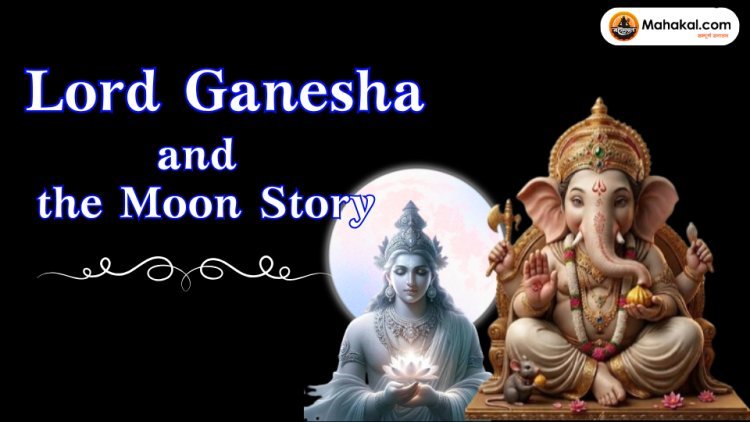
Lord Ganesha, the remover of obstacles and the first deity worshipped before auspicious beginnings, is associated with many fascinating stories from Hindu tradition. One of the most popular is the story of Lord Ganesha and Chandra Dev (the Moon God).
According to traditional belief, Chandra Dev once laughed at Lord Ganesha and made fun of His appearance. Angered by the disrespect, Lord Ganesha cursed the Moon. This story is traditionally connected with the belief that one should avoid looking at the Moon on Ganesh Chaturthi, as doing so may lead to Mithya Dosha—the possibility of facing a false accusation or false blame.
So, why did Lord Ganesha curse the Moon? What happened afterward? And why is Moon sighting avoided on Ganesh Chaturthi?
Let us explore the complete Lord Ganesha and Chandra Dev story, its significance, and the connection with Ganesh Chaturthi.
Lord Ganesha and Chandra Dev Story
According to the traditional story, Lord Ganesha was once travelling on His vehicle, Mushak Raj (the mouse). During the journey, He happened to fall because of His large belly and the movement of His vehicle.
Chandra Dev, who was known for his extraordinary beauty, saw Lord Ganesha and began laughing at Him.
The Moon God became proud of his own appearance and mocked Lord Ganesha's form.
Lord Ganesha did not appreciate Chandra Dev's arrogance and disrespect. He became angry and cursed the Moon.
According to the traditional belief, Lord Ganesha declared that anyone who looked at the Moon on Bhadrapada Shukla Chaturthi, the day associated with Ganesh Chaturthi, could face false accusations or Mithya Kalank.
This is why the tradition of avoiding Moon sighting on Ganesh Chaturthi is associated with this story.
Why Did Lord Ganesha Curse the Moon?
The main reason was Chandra Dev's arrogance and his act of making fun of Lord Ganesha.
The story is not simply about a curse. It also carries an important moral message: one should never become arrogant about beauty, wealth, knowledge, or any other quality.
It also teaches us that mocking someone's physical appearance is disrespectful and can hurt others.
What Happened After Lord Ganesha Cursed Chandra Dev?
After receiving the curse, Chandra Dev became extremely sad and realized his mistake.
He prayed to Lord Ganesha and sincerely asked for forgiveness.
The gods also requested Lord Ganesha to show mercy toward Chandra Dev because the Moon has an important place in the cosmic order and traditional Hindu thought.
Seeing Chandra Dev's repentance, Lord Ganesha softened the effect of the curse.
According to the traditional account, the Moon was not condemned permanently. Instead, the restriction became associated particularly with Chaturthi, giving rise to the belief that Moon sighting on Ganesh Chaturthi should be avoided.
Why Should We Not See the Moon on Ganesh Chaturthi?
One of the most searched questions related to Ganesh Chaturthi is:
According to Hindu tradition, looking at the Moon on Ganesh Chaturthi can result in Mithya Dosha, meaning a person may face a false accusation or false blame.
This belief is connected to the curse given by Lord Ganesha to Chandra Dev.
Therefore, devotees traditionally avoid looking at the Moon during the prescribed period on Ganesh Chaturthi.
The exact Moon-sighting restriction and timings can vary depending on the location and the year's Panchang, so devotees generally follow their local Panchang for the correct timing.
What Is Mithya Dosha?
The word Mithya means false or untrue, while Dosha refers to an affliction or adverse condition.
In this context, Mithya Dosha is traditionally associated with the possibility of facing false accusations or blame.
This belief is also connected with the story of Lord Krishna and the Syamantaka Mani.
Lord Krishna and the Syamantaka Mani Story
The story of Lord Ganesha and Chandra Dev is also connected in traditional texts with an important episode involving Lord Krishna.
According to the traditional story, Lord Krishna was once falsely accused of stealing the Syamantaka Mani, a precious jewel.
The accusation was eventually proven false, but the story explains that Krishna had seen the Moon on the Chaturthi associated with Ganesh Chaturthi.
The episode is therefore traditionally connected with the concept of Mithya Dosha.
The Syamantaka Mani story is often narrated as part of the traditional explanation of why devotees avoid Moon sighting on Ganesh Chaturthi.
What Should You Do If You Accidentally See the Moon on Ganesh Chaturthi?
According to traditional belief, if someone accidentally sees the Moon on Ganesh Chaturthi, there is no need to panic.
Devotees may worship Lord Ganesha, seek His forgiveness, and recite traditional prayers associated with removing Mithya Dosha.
One traditional verse associated with this belief is:
“Simhah Prasenamavadhit
Simho Jambavata Hatah
Sukumaraka Marodistava
Hyesha Syamantakah”
Devotees may also chant the simple and widely used Ganesha mantra:
“Om Gam Ganapataye Namah.”
The practice may differ according to family tradition and regional customs.
What Is the Moral of the Ganesha and Moon Story?
The story of Lord Ganesha and Chandra Dev contains several important life lessons.
1. Never Be Proud of Your Beauty
Chandra Dev was proud of his beauty. The story reminds us that physical beauty is temporary and should never become a reason for arrogance.
2. Never Make Fun of Someone's Appearance
Lord Ganesha's unique form is deeply revered in Hindu tradition. The story teaches us not to mock another person's appearance or physical characteristics.
3. Avoid Arrogance
The story highlights the importance of humility. No matter how many qualities a person possesses, arrogance can lead to mistakes.
4. Accept Your Mistakes
Chandra Dev realized his mistake and asked Lord Ganesha for forgiveness. Accepting one's mistakes is an important sign of humility.
5. Forgiveness Is Powerful
Lord Ganesha eventually showed compassion toward Chandra Dev. The story therefore also highlights the importance of forgiveness and mercy.
Ganesh Chaturthi and Moon Sighting
Ganesh Chaturthi is one of the most important festivals dedicated to Lord Ganesha. Devotees bring Ganesha idols home, perform prayers, offer modak and other bhog, and seek the blessings of Lord Ganesha.
Along with the celebrations, the traditional belief regarding Moon sighting on Ganesh Chaturthi is also remembered.
Devotees who follow this tradition avoid looking at the Moon during the prescribed period.
Because Moonrise and Moon-sighting restrictions depend on the location and Panchang calculations, it is best to check the local timings for your city each year.
Why Is the Moon Important in Hindu Tradition?
Chandra Dev has an important place in Hindu religious and cultural traditions.
The Moon is associated with the mind, emotions, time cycles, and various religious observances. Lunar phases are also important in determining many Hindu festival dates.
Therefore, the story of Chandra Dev and Lord Ganesha is not meant to portray the Moon as evil. Instead, it teaches the importance of humility and respectful behavior.
Lord Ganesha and Chandra Dev: Key Takeaways
The complete story can be summarized in a few points:
- Chandra Dev was proud of his beauty.
- He laughed at Lord Ganesha's appearance.
- Lord Ganesha became angry and cursed Chandra Dev.
- The curse became traditionally associated with Moon sighting on Ganesh Chaturthi.
- Chandra Dev realized his mistake and asked for forgiveness.
- Lord Ganesha reduced the severity of the curse.
- The story became connected with the belief in Mithya Dosha.
- The story of Lord Krishna and the Syamantaka Mani is also traditionally connected with this belief.
- The main moral is to avoid arrogance and never insult others.
FAQs About Lord Ganesha and the Moon
Why did Lord Ganesha curse Chandra Dev?
According to Hindu tradition, Chandra Dev mocked Lord Ganesha's appearance. Because of his arrogance and disrespect, Lord Ganesha cursed him.
Why should we not see the Moon on Ganesh Chaturthi?
According to traditional belief, seeing the Moon on Ganesh Chaturthi may lead to Mithya Dosha, associated with false accusations or blame.
What is Mithya Dosha?
Mithya Dosha is traditionally associated with the possibility of facing false accusations after seeing the Moon on the prohibited Chaturthi period.
What happened to Chandra Dev after the curse?
Chandra Dev realized his mistake, worshipped Lord Ganesha, and asked for forgiveness. Lord Ganesha then reduced the effect of the curse.
What is the connection between Lord Krishna and the Moon?
The traditional Syamantaka Mani story connects Lord Krishna's false accusation with Moon sighting on Chaturthi and the concept of Mithya Dosha.
What mantra can be chanted for Lord Ganesha?
Devotees commonly chant:
“Om Gam Ganapataye Namah.”
What should I do if I accidentally see the Moon on Ganesh Chaturthi?
According to tradition, devotees can pray to Lord Ganesha, seek forgiveness, and recite traditional prayers associated with Mithya Dosha. Practices may vary according to family and regional traditions.
Conclusion
The story of Lord Ganesha and Chandra Dev is a fascinating part of Hindu religious tradition. It explains the traditional belief surrounding Moon sighting on Ganesh Chaturthi while also teaching valuable lessons about humility, respect, forgiveness, and avoiding arrogance.
The story reminds us that no one should make fun of another person's appearance, and pride in one's beauty or abilities should never become arrogance.
For devotees, Ganesh Chaturthi is ultimately a celebration of Lord Ganesha's blessings, wisdom, prosperity, and the removal of obstacles.
Ganpati Bappa Morya!
What's Your Reaction?