Why Is Liquor Offered to Kaal Bhairav in Ujjain? Discover the Mystery Behind This Centuries-Old Tradition
Discover why liquor is offered to Lord Kaal Bhairav at the famous Ujjain temple. Explore the religious beliefs, mythological stories, tantric traditions and spiritual significance behind this unusual ritual.
Why Is Liquor Offered to Kaal Bhairav in Ujjain? Discover the Mystery Behind This Centuries-Old Tradition
Introduction: The Temple Where Liquor Is Offered to a Deity
Ujjain, one of the most sacred cities in Madhya Pradesh, is home to the famous Kaal Bhairav Temple, known for a distinctive religious tradition that surprises many first-time visitors.
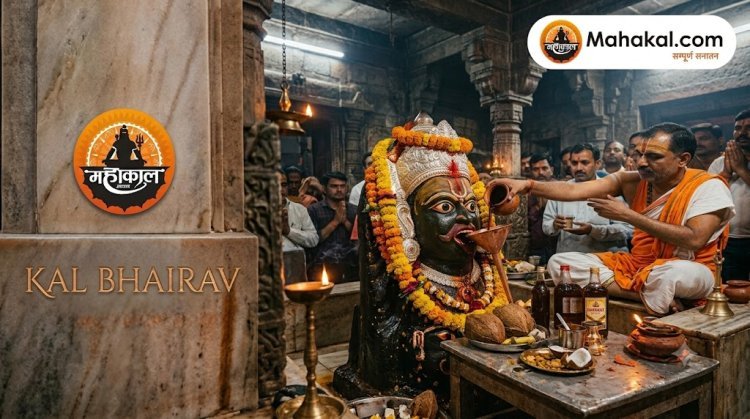
In most Hindu temples, devotees offer flowers, fruits, sweets, coconuts and other traditional items to the deity. However, at the Kaal Bhairav Temple in Ujjain, liquor is also offered as part of the temple's established worship tradition.
This unusual ritual has made the temple one of the most widely discussed religious destinations in India. It also raises questions about ancient forms of worship, the traditions associated with Lord Bhairav and the spiritual beliefs of the devotees.
Why is liquor offered to Kaal Bhairav? Is the ritual connected to an ancient legend? Does it have links to tantric worship? And what happens during the offering?
To understand this tradition, it is important to explore the religious identity of Lord Kaal Bhairav, the mythology surrounding him and the distinctive devotional culture of Ujjain.
1. Who Is Lord Kaal Bhairav?
Lord Kaal Bhairav is regarded as a fierce and protective manifestation of Lord Shiva in Hindu religious traditions. He is associated with courage, protection, the destruction of negative forces and the maintenance of sacred order.
The name “Kaal Bhairav” is often interpreted in relation to time, mortality and the power that overcomes fear. The word “Kaal” is associated with time and death, while “Bhairav” represents a powerful form of Shiva.
Kaal Bhairav is especially important in religious traditions that emphasise Shiva's protective nature, guardian deities and certain forms of tantric worship.
In Ujjain, devotees regard Kaal Bhairav as one of the important protective deities associated with the city. They visit the temple to pray for courage, protection and strength during difficult times.
2. Why Is Liquor Offered to Kaal Bhairav in Ujjain?
The offering of liquor is the most distinctive feature of the Kaal Bhairav Temple in Ujjain. The ritual is understood within the context of local religious beliefs and particular traditions of Bhairav worship.
Hindu worship does not follow one uniform set of offerings in every temple. Different deities, regions and religious traditions have developed their own forms of worship.
In some Shakta and tantric traditions, liquor is used in specific ritual contexts. It is also associated with one element of the Panchamakara framework in certain tantric systems, although the interpretation and practice vary considerably between traditions.
The liquor offering at Ujjain's Kaal Bhairav Temple is widely recognised as an example of this distinctive form of religious observance.
However, there is no single universally accepted historical account establishing exactly when this practice began or identifying one definitive event as its origin. It is therefore more accurate to describe it as an established religious tradition associated with local faith.
3. Does Kaal Bhairav Drink the Liquor? Understanding the Temple Ritual
Devotees bring liquor to the temple and offer it according to the established ritual arrangements.
During the offering, a priest presents the liquor near the deity's mouth or at the designated place used for the ritual. Visitors often perceive the liquid as being received by the deity.
This striking scene has contributed significantly to the temple's popularity.
From a religious perspective, devotees understand the ritual as an offering to the deity and an expression of faith. However, the visual impression alone does not establish that the idol drinks liquor in the same manner as a living person.
Determining precisely what happens to the liquid physically would require direct observation and appropriate scientific examination.
For worshippers, the significance of the ritual lies not only in the visual experience but also in the religious meaning they attach to the offering.
4. The Connection Between Kaal Bhairav and Tantric Worship
Kaal Bhairav is associated with tantric traditions in several branches of Hindu religious practice. Tantra is a broad field of Indian spirituality that includes mantras, meditation, ritual worship and different methods of spiritual discipline.
Certain tantric traditions use offerings and ritual procedures that differ from those found in more familiar temple worship. Their symbolism and interpretation depend on the specific tradition.
The worship of Kaal Bhairav as a guardian deity and a fierce manifestation of Shiva is often understood within this wider religious context.
Nevertheless, it would be inaccurate to claim that every devotee of Kaal Bhairav follows tantric practices or that liquor is offered at every Bhairav temple. Many temples worship the deity with flowers, lamps, incense, coconuts and other traditional offerings.
The distinctive feature of the Ujjain temple is that the liquor offering has become a central part of its public religious identity.
5. What Is the Mythological Story of Kaal Bhairav?
A well-known story associated with Kaal Bhairav appears in the broader Puranic tradition connected with Lord Shiva.
According to one version, a dispute arose between Lord Brahma and Lord Vishnu over supremacy. Some accounts describe Brahma's fifth head and the pride associated with it.
Lord Shiva manifested his fierce form, Kaal Bhairav, to destroy Brahma's arrogance. Kaal Bhairav severed Brahma's fifth head and consequently became associated with the sin of Brahmahatya, or the killing of a Brahmin.
The story continues with Kaal Bhairav wandering in search of absolution. In versions of the narrative, he eventually reaches Kashi, where he is freed from the burden of this sin.
This tradition contributes to the importance of Kaal Bhairav worship in Varanasi as well as other sacred places.
The story portrays Kaal Bhairav as a force that confronts arrogance and protects the moral and spiritual order.
Different religious texts and traditions may present variations of this narrative. There is no definitive evidence establishing that the liquor-offering ritual in Ujjain began directly because of this particular story. The two should therefore not be presented as a proven historical cause-and-effect relationship.
6. Why Is Kaal Bhairav Considered a Guardian of Ujjain?
Ujjain has been an important centre of religion and culture since ancient times. Historically known as Avantika, it is especially famous for the Mahakaleshwar Jyotirlinga.
Across India, many communities worship guardian deities associated with specific villages, regions and cities. Such deities may be known as Kshetrapalas, village deities or local protectors.
Kaal Bhairav is associated with this broader tradition of protective worship. Devotees believe that he safeguards the area and represents the destruction of harmful forces.
Together, the worship of Mahakaleshwar and Kaal Bhairav forms an important part of Ujjain's religious identity, although the two temples have their own distinct rituals and traditions.
Visitors to the Kaal Bhairav Temple often pray for courage, protection and the strength to overcome difficulties.
7. Is Offering Liquor Compulsory for Every Devotee?
No. Offering liquor should not be treated as a compulsory requirement for every devotee.
Hinduism encompasses many forms of worship. Devotees may follow their family traditions, personal beliefs and the accepted practices of a particular temple.
Those who do not wish to offer liquor may pray to Kaal Bhairav with flowers, lamps, incense, coconuts or other offerings permitted by the temple.
Respecting the temple's liquor-offering tradition does not mean that every visitor must participate in it. Personal faith and voluntary worship are also important aspects of religious practice.
Visitors should follow the temple's current rules and the guidance of its authorised priests or staff.
8. The Spiritual Meaning of the Liquor-Offering Tradition
Understanding this ritual requires looking at the wider role of offerings in Hindu worship.
Devotees offer items to their chosen deities as expressions of devotion. While many temples use flowers, fruits and sweets, certain religious traditions include other types of offerings.
At the Kaal Bhairav Temple, devotees understand the liquor offering as part of their religious heritage and a way of expressing faith in the deity.
From a broader spiritual perspective, Kaal Bhairav's symbolism encourages reflection on the power of time, the dangers of arrogance, personal discipline and the courage to face fear.
However, there is no single interpretation of the liquor offering that can be applied to every devotee or tradition. Different communities may understand the ritual in different ways.
9. What Is the Significance of Kaal Bhairav Ashtami?
Kaal Bhairav Ashtami, also known as Bhairav Ashtami, is an important religious observance dedicated to Lord Kaal Bhairav.
It is commonly associated with the Ashtami tithi of the Krishna Paksha in the Hindu month of Margashirsha, although devotees should consult the relevant local calendar to confirm the observance date.
On this occasion, worshippers pray to Kaal Bhairav, chant devotional mantras and participate in religious ceremonies according to their traditions.
Many devotees visit Bhairav temples during this festival. The number of visitors at the Ujjain temple may increase during major religious occasions.
The festival provides an opportunity to remember Kaal Bhairav's protective form and reflect on courage, discipline and righteous conduct.
10. Important Tips for Visitors to Kaal Bhairav Temple
If you are planning to visit the Kaal Bhairav Temple in Ujjain, keep the following points in mind:
-
Confirm the current temple opening hours before travelling.
-
Expect larger crowds during major festivals and religious holidays.
-
Follow the temple's designated arrangements for any offering.
-
Respect the instructions of authorised temple priests and staff.
-
Maintain cleanliness and appropriate behaviour within the premises.
-
Respect different beliefs and personal choices.
-
Remember that consuming liquor is not necessary to visit the temple or offer prayers.
Visitors should check with the local temple administration for current rules and any special arrangements before their journey.
Conclusion: Ujjain's Kaal Bhairav Temple Is a Unique Meeting Point of Faith and Tradition
The Kaal Bhairav Temple in Ujjain is famous throughout India for its distinctive tradition of offering liquor to the deity. Lord Kaal Bhairav is worshipped as a fierce and protective manifestation of Shiva, while the temple's unusual ritual reflects specific local religious practices and traditions of Bhairav worship.
The temple's significance extends beyond the liquor offering itself. It represents Ujjain's rich religious heritage, the diversity of Hindu worship and the deep faith of its devotees.
Because the precise historical origin of the ritual is not definitively established, it is important not to present a particular mythological event as its proven historical cause. Nevertheless, the practice continues to hold special religious meaning for many worshippers.
Visitors to Ujjain can explore this distinctive tradition alongside the city's other important sacred sites, including the Mahakaleshwar Jyotirlinga.
Jai Shri Kaal Bhairav!
What's Your Reaction?