Mystery of Nidhivan in Vrindavan: Is Lord Krishna's Raas Leela Still Performed at Night? Discover the Mythological Story and Religious Beliefs
Explore the mystery of Nidhivan in Vrindavan, the mythological story of Lord Krishna's Raas Leela, the religious beliefs surrounding its sacred trees, Rang Mahal, and the tradition of closing the premises after sunset.
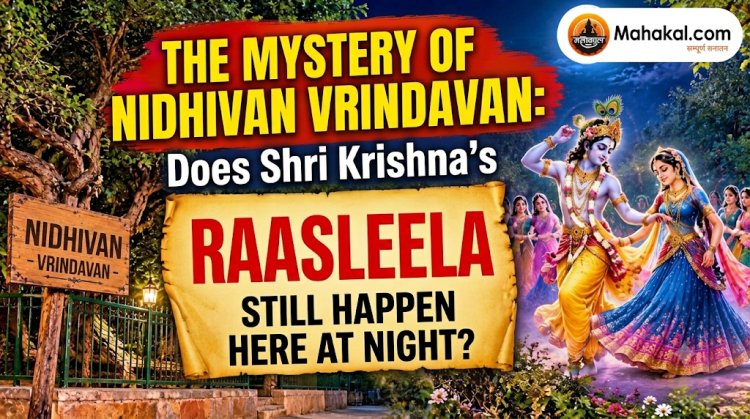
Mystery of Nidhivan in Vrindavan: Is Lord Krishna's Raas Leela Still Performed at Night? Discover the Mythological Story and Religious Beliefs
Vrindavan, located in the Mathura district of Uttar Pradesh, is one of the most sacred destinations associated with Lord Krishna. Every temple, forest and sacred place in this holy town is connected with stories of Krishna's divine childhood and his eternal love for Radha.
Among these places, there is one sacred location that has fascinated devotees for generations. It is known as Nidhivan.
Nidhivan is widely associated with the divine Raas Leela of Lord Krishna and Radha Rani. Its unusual intertwined trees, sacred Tulsi plants and the famous Rang Mahal make it one of the most distinctive spiritual destinations in Vrindavan.
According to local religious beliefs, Lord Krishna performs his divine Raas Leela with Radha Rani and the Gopis at Nidhivan during the night. This is why the premises are closed after the evening aarti, and visitors are not permitted to stay inside overnight.
But what is the story behind this mysterious tradition? Why are the trees of Nidhivan believed to represent the Gopis? What is the significance of Rang Mahal? Let us explore the history, religious beliefs and mythological stories associated with this sacred place.
1. Where Is Nidhivan Located and What Does Its Name Mean?
Nidhivan is a famous religious site situated in Vrindavan, in the Mathura district of Uttar Pradesh. It is considered one of the important spiritual destinations of Braj Bhoomi.
The name Nidhivan is traditionally associated with the words 'Nidhi', meaning treasure or divine wealth, and 'Van', meaning forest. Spiritually, the place is regarded as a precious location connected with the divine pastimes of Lord Krishna.
The forest looks different from an ordinary woodland. It contains numerous small trees and Tulsi plants, many of which have intertwined branches and twisted trunks.
According to devotees, these trees are not ordinary trees but symbolic representations of the Gopis who participate in Krishna's Raas Leela. This belief gives Nidhivan a special place in the religious traditions of Vrindavan.
2. The Most Famous Belief of Nidhivan: Krishna's Nightly Raas Leela
The most popular religious belief associated with Nidhivan concerns the divine Raas Leela of Lord Krishna.
According to local traditions and devotional beliefs, Lord Krishna performs his divine Raas Leela with Radha Rani and the Gopis at Nidhivan during the night.
Devotees believe that the forest becomes a sacred place of divine activity after sunset. For this reason, visitors are not allowed to remain inside the premises at night.
After the evening aarti and darshan, the gates are closed according to the established local tradition. People living nearby also traditionally avoid entering the forest at night.
This belief has been passed down through generations and has made Nidhivan one of the most talked-about religious destinations in Vrindavan.
3. The Mystery of Nidhivan's Trees: Are They Symbolic Forms of the Gopis?
One of the most distinctive features of Nidhivan is its collection of small, dense and intertwined trees.
Many branches appear bent or connected to nearby trees, creating an unusual natural appearance.
According to religious belief, these trees represent the Gopis who participate in the divine Raas Leela of Lord Krishna at night.
Some local traditions also interpret the intertwined branches as symbols of the eternal love between Radha, Krishna and the Gopis.
Tulsi plants hold special importance in Nidhivan. In Hinduism, Tulsi is considered sacred and has a significant place in the worship of Lord Vishnu and Lord Krishna.
However, the belief that the trees transform into Gopis is part of religious faith and local folklore. It is not an event established through scientific evidence.
4. The Mystery of Rang Mahal: Where Radha and Krishna Are Believed to Rest
Rang Mahal, situated within the Nidhivan premises, is one of its most important attractions. It is closely associated with the traditional belief about the nightly divine pastimes of Radha Rani and Lord Krishna.
According to local religious tradition, after the Raas Leela, Radha Rani and Lord Krishna rest at Rang Mahal.
As part of this belief, special arrangements are traditionally made inside Rang Mahal for the night. These may include a prepared bed, water, paan, a toothbrush twig and items associated with adornment.
Stories about the condition of these items the following morning are also popular among local devotees. Many believers connect these traditions with the divine presence of Radha and Krishna.
It is important to understand that these accounts are based on religious faith and local tradition. Their supernatural interpretation has not been independently established through scientific evidence.
5. Why Is Entry into Nidhivan Restricted at Night?
The restriction on entering Nidhivan after sunset is one of the most widely discussed aspects of the place.
The main religious explanation is that nighttime is believed to be reserved for the divine Raas Leela of Lord Krishna and Radha Rani. Therefore, the presence of ordinary visitors during this time is traditionally considered inappropriate.
According to local practice, the premises are closed after the evening aarti, and devotees are expected to leave before nightfall.
Respecting this tradition is an important part of visiting Nidhivan. Following the designated visiting hours is also necessary for the safety, management and preservation of the premises.
6. The Mythological Story of Nidhivan
The most famous story associated with Nidhivan revolves around the divine Raas Leela of Lord Krishna and Radha Rani.
According to Hindu devotional traditions and the folklore of Braj, Lord Krishna performed numerous divine pastimes in Vrindavan. Among them, the Maha Raas holds a special place.
Lord Krishna's Flute and the Gopis
According to the traditional story, whenever Lord Krishna played his enchanting flute, its melodious sound attracted the Gopis.
The sound of Krishna's flute is not merely considered music; it is also interpreted as a symbol of divine love and the soul's attraction towards the Supreme Being.
The Gopis would leave their worldly activities and come towards Krishna after hearing the beautiful melody of his flute.
The Divine Raas Leela of Radha Rani and Lord Krishna
In the devotional traditions of Braj, Radha Rani is regarded as the beloved of Lord Krishna and an embodiment of his divine spiritual energy.
According to traditional accounts, Lord Krishna performed the Raas Leela with Radha Rani and the Gopis.
This divine pastime is understood as a symbol of spiritual love and the relationship between the soul and the Supreme Being, rather than ordinary worldly romance.
Nidhivan is regarded as one of the sacred locations associated with this divine tradition.
The Spiritual Meaning of Maha Raas
The spiritual interpretation of Maha Raas teaches that when a devotee remembers God with complete faith and surrender, the mind gradually moves beyond worldly attachments towards the Divine.
The Raas Leela of Radha and Krishna is therefore understood not only as a divine dance but also as a symbol of devotion, spiritual joy and eternal love.
7. Connection Between Nidhivan and Swami Haridas Ji
Nidhivan is also associated with the great Krishna devotee and classical music saint Swami Haridas Ji.
Swami Haridas Ji was a devoted follower of Lord Krishna. He lived in Vrindavan and spent his life in devotional worship and musical practice. His spiritual tradition is closely connected with Nidhivan.
According to a popular religious belief, pleased with his devotion, Radha and Krishna appeared before him in their combined divine form. This divine manifestation is traditionally associated with the origin of the worship of Banke Bihari Ji.
Because of this tradition, Nidhivan and the Banke Bihari Temple share an important connection in the devotional history of Vrindavan.
Swami Haridas Ji's life continues to inspire devotees through his devotion, music and complete surrender to the Divine.
8. Important Religious Places Inside Nidhivan
Nidhivan contains several locations associated with religious traditions and mythological stories.
Rang Mahal: This place is especially important because of the belief that Radha Rani and Lord Krishna rest here after their divine nightly pastimes.
Bansi Chori Radha Rani Temple: This shrine is associated with devotional traditions and stories of Radha and Krishna.
Samadhi of Swami Haridas Ji: This sacred place is connected with the memory of Swami Haridas Ji and is respected by devotees and lovers of devotional music.
Visiting these places gives devotees an opportunity to understand the spiritual traditions of Braj Bhoomi.
9. Important Things to Remember Before Visiting Nidhivan
If you are planning to visit Nidhivan during your Vrindavan trip, keep the following points in mind:
-
Follow the designated visiting and temple timings.
-
Leave the premises before sunset.
-
Respect local religious beliefs and traditions.
-
Maintain cleanliness throughout the premises.
-
Do not damage trees, plants or religious objects.
-
Check local rules regarding photography and video recording.
-
Follow the instructions of temple authorities, especially during crowded occasions.
Visiting hours may change according to the season, local arrangements and special religious occasions. It is advisable to confirm the latest information before travelling.
10. Spiritual Message of Nidhivan
The religious beliefs surrounding Nidhivan are not limited to mystery and supernatural stories. The place also conveys the spiritual values of love, surrender and selfless devotion.
The Raas Leela of Radha and Krishna is traditionally interpreted as a symbol of the divine relationship between the soul and the Supreme Being. It teaches that true devotion rises above ego, selfishness and discrimination.
The sacred Tulsi plants and trees of Nidhivan also remind devotees to respect nature. Indian religious traditions have always given an important place to the natural world and regarded many plants and trees as sacred.
Conclusion
Nidhivan in Vrindavan is one of the most fascinating spiritual destinations associated with the divine Raas Leela of Radha Rani and Lord Krishna.
The belief that its trees represent the Gopis, the tradition of nightly Raas Leela and the stories associated with Rang Mahal have made it one of the most widely discussed religious places in Vrindavan.
Although many stories about Nidhivan are rooted in religious faith and local folklore, its spiritual importance remains deeply meaningful to devotees.
If you visit Vrindavan, include Nidhivan in your pilgrimage and explore its devotional traditions, natural beauty and the timeless message of divine love between Radha and Krishna.
Radhe Radhe! Jai Shri Krishna!
What's Your Reaction?