The Story of Raktabeej: How Did Goddess Kali Defeat the Powerful Demon? The Complete Mythological Tale
Discover the Hindu mythological story of Raktabeej and learn how Goddess Kali and Goddess Durga defeated the powerful demon. Explore his extraordinary power, the divine strategy, and the spiritual lessons of this legendary battle.
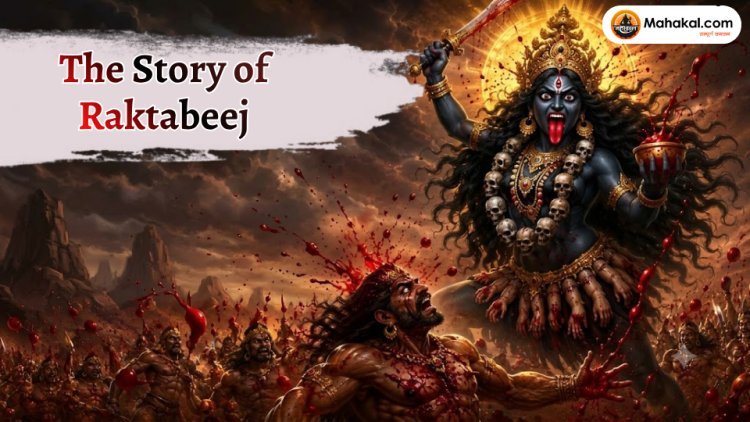
The Story of Raktabeej: How Did Goddess Kali Defeat the Powerful Demon?
Introduction
Hindu mythology contains many fascinating stories about the victory of divine power over evil. Among these, the story of Raktabeej is particularly remarkable because it describes a demon whose extraordinary ability made him extremely difficult to defeat.
According to the traditional account, every drop of Raktabeej's blood that fell to the ground could produce another demon resembling him in strength. This unusual power created a serious challenge for Goddess Durga and the divine forces fighting against him.
The more Raktabeej was wounded, the more demons appeared on the battlefield. Ordinary attacks could therefore make the situation even more difficult.
At this critical moment, Goddess Kali played a decisive role. By preventing Raktabeej's blood from reaching the ground, she stopped the process through which new demons were being created. Goddess Durga eventually killed Raktabeej, bringing the battle to an end.
But who was Raktabeej? Why was he so difficult to defeat? How did Goddess Kali overcome his extraordinary power, and what spiritual lessons can we learn from this story?
Let us explore the complete mythological account and its significance in Hindu religious tradition.
1. Who Was Raktabeej?
Raktabeej was a powerful asura, or demon, described in Hindu mythology. His story appears in the Devi Mahatmya, also known as the Durga Saptashati or Chandi Path. This celebrated text forms part of the Markandeya Purana.
The name Raktabeej reflects the extraordinary characteristic associated with him. The word “Rakta” means blood, while “Beej” means seed or source of generation.
According to the traditional story, every drop of his blood that reached the earth produced another demon. These newly generated demons possessed considerable strength, making the battle increasingly difficult for the divine forces.
Raktabeej fought against the Goddess and her divine manifestations during the conflict between the asuras and the forces of divine order.
His extraordinary ability distinguished him from ordinary warriors. Instead of weakening with every attack, he could increase the number of enemies on the battlefield.
This is why defeating Raktabeej required a special strategy.
2. What Was the Secret Behind Raktabeej's Power?
The most important feature of Raktabeej's story is his remarkable power associated with his blood.
According to the mythological account, each drop of his blood that fell onto the ground could give rise to another demon resembling him in strength.
This ability created an unusual problem. When the divine warriors attacked Raktabeej, his wounds produced blood, and the blood generated additional enemies.
As a result, ordinary combat methods were not enough to bring the battle under control.
The divine forces needed to solve two problems: defeat Raktabeej and prevent his blood from producing more demons.
The story highlights the importance of understanding the nature of a challenge before choosing how to overcome it.
Rather than simply increasing the intensity of their attacks, the divine forces needed a strategy that could neutralize the source of Raktabeej's extraordinary power.
3. How Did the Battle Between Goddess Durga and the Demons Begin?
The Devi Mahatmya describes Goddess Durga's battles against powerful asuras who challenged the divine order.
Goddess Durga is worshipped as a manifestation of divine power and is associated with the protection of righteousness and the destruction of evil.
During the larger conflict described in the text, the Goddess confronted several powerful demons. The battle against Raktabeej became particularly challenging because of his unusual ability.
Whenever the divine forces struck him, blood fell from his body. According to the story, each drop that reached the ground produced another demon.
The number of enemies began to increase, making the battlefield increasingly difficult to control.
The Goddess's forces needed a different approach. Defeating Raktabeej required stopping the process that allowed his power to multiply.
This is where Goddess Kali's role became crucial.
4. Why Was Raktabeej So Difficult to Defeat?
Raktabeej was difficult to defeat because his special ability could turn an ordinary attack into an opportunity to create more enemies.
In a conventional battle, injuring an opponent usually reduces their ability to continue fighting. In Raktabeej's case, however, every wound risked producing additional demons.
As the number of demons increased, the divine forces faced an even greater challenge.
The problem could not be solved merely by attacking Raktabeej repeatedly. His blood had to be prevented from reaching the ground.
This aspect of the story emphasizes the importance of understanding the mechanism behind a problem.
When an ordinary approach repeatedly makes a situation worse, a different strategy may be necessary. The divine forces therefore needed to stop the source of Raktabeej's power before they could achieve victory.
5. The Appearance of Goddess Kali
Goddess Kali is widely worshipped in Hinduism as a powerful manifestation of the Divine Mother.
Her fierce form is associated with the destruction of evil, the overcoming of ignorance, and the protection of devotees. She is also revered as a symbol of courage, spiritual strength, and transformation.
In the story of Raktabeej, Goddess Kali becomes central to the strategy needed to overcome the demon's extraordinary ability.
When the divine forces realize that his blood is producing more enemies, a plan is developed to prevent the blood from falling onto the earth.
Goddess Kali's role demonstrates the decisive power required to confront a seemingly overwhelming challenge.
For devotees, her fierce appearance represents the strength to confront destructive forces and the determination to restore balance.
6. How Did Goddess Kali Kill Raktabeej?
The most important episode in the story explains how Goddess Kali helped overcome Raktabeej's extraordinary power.
According to the Devi Mahatmya, Goddess Durga instructed Goddess Kali to prevent Raktabeej's blood from reaching the ground. Kali was to drink the blood before it could fall to the earth and consume the demons generated from it.
During the battle, Goddess Kali followed this strategy. Whenever Raktabeej was wounded and blood emerged from his body, she prevented it from reaching the ground.
She also dealt with the demons that emerged from the blood, preventing their numbers from continuing to grow.
As a result, Raktabeej gradually lost the advantage provided by his extraordinary ability. The process through which he generated more enemies was brought under control.
Finally, Goddess Durga killed Raktabeej, ending the battle.
The story describes a victory achieved through the combined power of Goddess Durga and Goddess Kali. It highlights not only divine strength but also the importance of identifying the source of an opponent's power and choosing the right strategy.
7. What Does the Name Raktabeej Mean?
The name Raktabeej is closely connected to the central feature of the mythological story.
-
Rakta: Blood.
-
Beej: Seed or source of generation.
Together, the name reflects the idea that his blood could become the source of new demons.
This unusual characteristic made Raktabeej a formidable opponent. Every attack risked creating more enemies, so the divine forces had to prevent his blood from reaching the ground.
The story has also inspired symbolic interpretations. Raktabeej can be understood as representing a problem that repeatedly creates new problems when its underlying cause remains unresolved.
For example, anger may lead to resentment, resentment may produce conflict, and conflict may generate further difficulties.
This symbolic interpretation is a way of reflecting on the story's meaning rather than a literal statement of the original religious text.
8. What Is the Spiritual Meaning of the Raktabeej Story?
The story of Raktabeej is often explored not only as a mythological battle but also as a source of spiritual reflection.
Different traditions may interpret its symbolism in different ways, but several useful lessons can be drawn from the episode.
The Multiplication of Negative Thoughts
Raktabeej's blood producing more demons can symbolically represent the way negative thoughts and behaviours multiply when repeatedly encouraged.
For instance, anger can lead to resentment, jealousy can create hostility, and fear can generate further anxiety.
The story encourages people to recognize destructive patterns before they become more difficult to manage.
Understanding the Root Cause
Goddess Kali's strategy focused on preventing Raktabeej's blood from reaching the ground.
Symbolically, this suggests that lasting solutions often require addressing the source of a problem rather than repeatedly reacting to its consequences.
When the same difficulty keeps returning, understanding why it persists can be more useful than dealing with each new occurrence separately.
Overcoming Ego and Arrogance
Raktabeej possessed extraordinary power, yet he was ultimately defeated.
The episode can be interpreted as a reminder that power without wisdom and responsibility may become destructive.
True strength involves using one's abilities responsibly and recognizing that no amount of personal power guarantees lasting success.
Courage Combined With Wisdom
The roles of Goddess Kali and Goddess Durga highlight the importance of courage supported by clear thinking.
Difficult situations may require determination, patience, and a willingness to change one's approach when an existing strategy fails.
9. The Religious Significance of Goddess Kali and Goddess Durga
Goddess Durga and Goddess Kali hold important places in Hindu traditions devoted to Shakti, or divine feminine power.
Goddess Durga is associated with the protection of righteousness, courage, and victory over destructive forces. Goddess Kali is widely understood as a powerful manifestation of the Divine Mother associated with the destruction of evil and the overcoming of ignorance.
In the Raktabeej episode, their roles complement each other.
Goddess Kali prevents Raktabeej's blood from producing more demons, while Goddess Durga ultimately kills him.
This episode illustrates the different manifestations of divine power and reminds devotees of the importance of courage, wisdom, and perseverance.
10. Why Is the Raktabeej Story Important During Navratri?
Navratri is one of the major Hindu festivals dedicated to the worship of Goddess Durga and her various manifestations.
During the festival, devotees pray to the Goddess, observe fasts according to their traditions, and reflect on stories describing her victories over powerful demons.
The Raktabeej episode is important within this larger tradition because it describes the defeat of a seemingly overwhelming threat.
It reminds devotees that difficult challenges can be overcome through determination, thoughtful action, and the appropriate use of strength.
Many devotees also recite the Durga Saptashati during Navratri. The text contains accounts of the Goddess's battles against different asuras, including Raktabeej.
Customs and methods of worship vary across regions, families, and religious traditions.
11. Important Life Lessons From the Story of Raktabeej
The story offers several lessons that can be applied symbolically to everyday life.
-
Address the root cause: A lasting solution often requires understanding why a problem keeps returning.
-
Remain patient: Difficult circumstances call for careful thinking rather than impulsive reactions.
-
Combine strength with wisdom: Determination becomes more effective when supported by sound judgment.
-
Prevent negativity from growing: Harmful emotions and behaviours should be recognized before they become more difficult to manage.
-
Avoid arrogance: Personal strength should be used responsibly and constructively.
-
Stand for justice: Courage and thoughtful action are important when confronting wrongdoing.
These lessons offer a way to reflect on the spiritual themes of the traditional story and their relevance to personal growth.
12. In Which Hindu Scripture Is the Story of Raktabeej Mentioned?
The story of Raktabeej is narrated in the Devi Mahatmya, also known as the Durga Saptashati or Chandi Path.
The text forms part of the Markandeya Purana and is an important work in Hindu traditions devoted to the Goddess.
It describes the greatness of the Divine Mother and her battles against powerful asuras. The episode involving Raktabeej is particularly significant because it illustrates how the Goddess overcomes an opponent whose power appears to increase with every attack.
The Devi Mahatmya is recited by many devotees during Navratri and on other occasions associated with Goddess worship.
Readers can explore traditional translations and commentaries to understand the story within its religious and cultural context.
Conclusion
The story of Raktabeej is a memorable tale from Hindu mythology that highlights the extraordinary power of Goddess Durga and Goddess Kali.
Raktabeej possessed a remarkable ability: every drop of his blood that reached the ground could create another demon. This made him extremely difficult to defeat through ordinary attacks.
Goddess Kali played a decisive role by preventing his blood from reaching the earth, while Goddess Durga ultimately killed the demon and brought the battle to an end.
Beyond its dramatic narrative, the story offers valuable reflections on courage, wisdom, perseverance, and the importance of addressing the root cause of a problem.
For devotees, the victory of Goddess Durga and Goddess Kali symbolizes the triumph of divine power over destructive forces. The episode continues to hold an important place in Hindu traditions associated with the Devi Mahatmya, the Durga Saptashati, and Navratri.
Jai Mata Di! Jai Maa Kali!
What's Your Reaction?