Why Is Maa Katyayani Worshipped on the Sixth Day of Navratri? Know Her Mythological Story, Religious Significance and Worship
Why is Maa Katyayani worshipped on the sixth day of Navratri? Discover the mythological story, religious significance, worship tradition, mantra and spiritual message associated with Maa Katyayani.
Content Blog
Navratri is one of the most sacred festivals in Hindu tradition. During the nine days of Navratri, devotees worship the nine forms of Maa Durga. Each day is dedicated to a particular form of the Goddess. The sixth day of Navratri is dedicated to Maa Katyayani, who is worshipped as a powerful manifestation of divine strength, courage and victory over evil.
Maa Katyayani is considered a radiant and powerful form of Goddess Durga. According to religious traditions, she manifested to destroy evil forces and protect righteousness. Therefore, worshipping her on the sixth day of Navratri holds special spiritual and religious importance.
Who Is Maa Katyayani?
Maa Katyayani is regarded as the sixth form among the nine manifestations of Maa Durga worshipped during Navratri. Her name is associated with Sage Katyayana.
According to a traditional account, Sage Katyayana performed intense devotion and worship of the Goddess and wished for her to be born as his daughter. Pleased with his devotion, the Goddess fulfilled his wish. Since she was born in the family of Sage Katyayana, she came to be known as Katyayani.
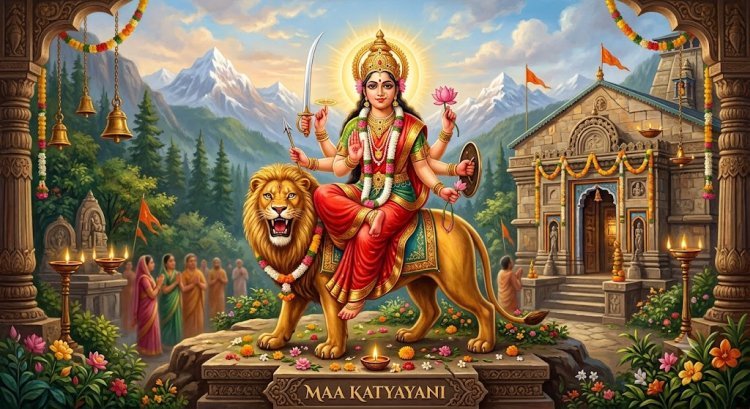
Maa Katyayani is generally depicted riding a lion and holding divine weapons in her hands. Her form represents courage, divine power and the protection of righteousness.
Why Is Maa Katyayani Worshipped on the Sixth Day of Navratri?
Each day of Navratri is traditionally dedicated to a different form of Goddess Durga. The sixth day is dedicated to Maa Katyayani, whose form is associated with strength, courage and the destruction of negative forces.
Her worship reminds devotees to overcome fear, negativity and inner weaknesses. The Goddess represents the power needed to face difficult circumstances with courage and faith.
Thus, the sixth day of Navratri is not only associated with external victory over evil but also with overcoming negative thoughts, fear and weaknesses within oneself.
Mythological Story of Maa Katyayani
According to Hindu religious traditions, the demon Mahishasura had become extremely powerful and was causing suffering among the gods and living beings. The gods prayed to the divine feminine power for protection.
A powerful divine energy manifested as Goddess Durga, who confronted Mahishasura in a fierce battle. The Goddess ultimately defeated and destroyed the demon, restoring peace and protecting righteousness.
The story symbolizes the eternal victory of Dharma over Adharma and good over evil. Maa Katyayani is therefore revered as a powerful manifestation of divine feminine strength.
Story Associated with Sage Katyayana
Another traditional account connects the Goddess directly with Sage Katyayana. The sage was a devoted worshipper of the Divine Mother and performed intense spiritual practices.
He wished that the Goddess would be born as his daughter. Pleased with his devotion, the Goddess fulfilled his wish and manifested as his daughter. Since she was born in the family of Sage Katyayana, she became known as Katyayani.
This story represents the deep relationship between sincere devotion and divine grace.
Religious Significance of Maa Katyayani
Maa Katyayani is worshipped as a symbol of strength, courage and victory. Devotees associate her worship with several spiritual beliefs.
1. Overcoming Negativity
Her worship is traditionally believed to inspire devotees to overcome negative thoughts and cultivate positive energy.
2. Courage and Self-Confidence
Maa Katyayani represents inner strength and encourages devotees to face difficult situations with courage.
3. Victory Over Obstacles
Devotees seek the blessings of the Goddess for strength to overcome challenges and obstacles in life.
4. Traditional Belief Related to Marriage
In Hindu tradition, unmarried women have a special association with the worship of Maa Katyayani while praying for a suitable life partner. The Bhagavata Purana describes the gopis of Vrindavan worshipping Katyayani Devi with the desire to have Lord Krishna as their husband.
5. Spiritual Strength
Devotion to Maa Katyayani can serve as a reminder to develop inner strength, faith and spiritual awareness.
What Does the Form of Maa Katyayani Symbolize?
Maa Katyayani riding a lion symbolizes courage, fearlessness and strength. The divine weapons associated with her form represent the protection of righteousness and the destruction of evil forces.
Her divine form teaches devotees that difficulties should not be approached with fear. Instead, they should be faced with patience, courage, faith and determination.
How Is Maa Katyayani Worshipped on the Sixth Day?
On the sixth day of Navratri, devotees traditionally take a bath and wear clean clothes before beginning their worship. The place of worship is cleaned, and an image or idol of Maa Katyayani is placed.
A lamp is lit, followed by meditation and prayer. Devotees offer flowers, fruits and other offerings according to their family traditions. The Goddess is then worshipped through prayers, mantra chanting and Aarti.
The exact method of worship may vary according to regional and family traditions. Devotion and sincere faith are considered central to the worship.
Maa Katyayani Mantra
Om Devi Katyayanyai Namah.
This mantra is traditionally chanted while worshipping Maa Katyayani. Devotees may chant it with a calm mind and sincere devotion while meditating on the divine form of the Goddess.
Spiritual Message of Maa Katyayani
The worship of Maa Katyayani teaches devotees that courage and faith should not be abandoned during difficult times.
Her form reminds us that victory is not only about overcoming external problems. It is also about conquering fear, negative thoughts, anger, ego and inner weaknesses.
Therefore, the sixth day of Navratri can be seen as a spiritual reminder to develop inner strength, courage, faith and commitment to the path of righteousness.
Conclusion
Maa Katyayani is the sixth form of Maa Durga worshipped during Navratri, and her worship is traditionally observed on the sixth day. She represents divine strength, courage, victory and the protection of righteousness.
The stories associated with Maa Katyayani convey the message that when evil and injustice increase, divine power emerges to restore balance and protect Dharma.
For devotees, worshipping Maa Katyayani can become a source of faith, courage and spiritual inspiration. On the sixth day of Navratri, devotees pray for the strength to overcome fear and negativity and to follow the path of truth, Dharma and righteousness.
What's Your Reaction?