Ujjain Panchkroshi Yatra: Discover the 118 KM Sacred Route, Five Shiva Temples, Religious Significance and Ancient Traditions
Discover the religious significance of Ujjain's Panchkroshi Yatra, its traditional 118-kilometre pilgrimage route, five sacred Shiva temples, ancient traditions, rituals and spiritual importance.
Why Is the Panchkroshi Yatra of Ujjain So Special?
Ujjain, one of the most sacred cities in Madhya Pradesh, is widely known as the city of Lord Mahakaleshwar. Also known by its ancient name, Avantika, this holy city has been an important centre of Hindu spirituality, religious traditions and pilgrimage for centuries.
Among its many ancient religious traditions, the Panchkroshi Yatra holds a special place. It is a sacred pilgrimage in which devotees undertake a circumambulation of the holy region surrounding Ujjain.
Every year, thousands of devotees participate in this pilgrimage during the Hindu month of Vaishakh. The traditional route covers approximately 118 kilometres and includes visits to five important Shiva temples.
According to religious beliefs, completing this journey with sincere devotion brings spiritual merit and the blessings of Lord Shiva.
The pilgrimage is not merely a physical journey but also represents devotion, discipline, patience and spiritual purification.
What Does Panchkroshi Yatra Mean?
The word Panchkroshi is derived from two terms:
-
Panch means five.
-
Krosh refers to an ancient Indian unit of distance.
In religious traditions, Panchkroshi refers to the circumambulation of a sacred geographical area.
The Panchkroshi Yatra of Ujjain involves travelling along a traditional route around the sacred region of Avantika while visiting important Shiva temples.
Religious Significance of the Panchkroshi Yatra
Ujjain is recognised as one of the seven sacred cities of Hinduism, traditionally known as Sapta Puri. It is also home to Shri Mahakaleshwar Jyotirlinga, one of the twelve Jyotirlingas of Lord Shiva.
The Panchkroshi Yatra is considered an important expression of devotion towards Lord Shiva.
1. Seeking the Blessings of Lord Shiva
The pilgrimage is closely associated with Shiva worship. Devotees visit five major Shiva temples and offer prayers for happiness, peace and prosperity.
2. Religious Belief in Spiritual Purification
According to Hindu religious beliefs, completing the pilgrimage with faith and dedication helps devotees attain spiritual merit and purification.
3. Mental Peace and Self-Discipline
Walking long distances while chanting the name of Lord Shiva encourages patience, discipline and self-control.
4. Experiencing the Sacred Land of Avantika
The journey allows devotees to explore the ancient religious identity of Ujjain and connect with its sacred temples and pilgrimage traditions.
Five Major Shiva Temples of the Panchkroshi Yatra
The Panchkroshi Yatra is traditionally associated with five important Shiva temples. These temples hold special religious significance in the sacred geography of Ujjain.
1. Pingleshwar Mahadev
Pingleshwar Mahadev is considered the first major stop of the Panchkroshi Yatra. Located in the eastern region of Ujjain, this temple is an important place of Shiva worship.
Devotees visit the temple to offer water, flowers and Bilva leaves to Lord Shiva and seek his blessings.
2. Kayavarohaneshwar Mahadev
Kayavarohaneshwar Mahadev is another important stop along the pilgrimage route. The temple is associated with ancient traditions of Lord Shiva worship.
Devotees offer prayers here before continuing their sacred journey.
3. Bilkeshwar Mahadev
Bilkeshwar Mahadev is associated with the religious importance of Bilva leaves, which are considered especially sacred in the worship of Lord Shiva.
Devotees offer Bilva leaves and perform traditional prayers at this temple.
4. Durdhreshwar Mahadev
Durdhreshwar Mahadev is an important religious stop in the Panchkroshi pilgrimage tradition. Devotees visit this sacred place to worship Lord Shiva and continue their circumambulation.
5. Neelkantheshwar Mahadev
Neelkantheshwar represents the Neelkanth form of Lord Shiva.
According to Hindu mythology, during the Samudra Manthan, a deadly poison known as Halahala emerged from the ocean. To protect the universe, Lord Shiva consumed the poison and held it in his throat, which turned blue.
This is why Lord Shiva is also worshipped as Neelkanth.
Panchkroshi Yatra Route and Major Stops
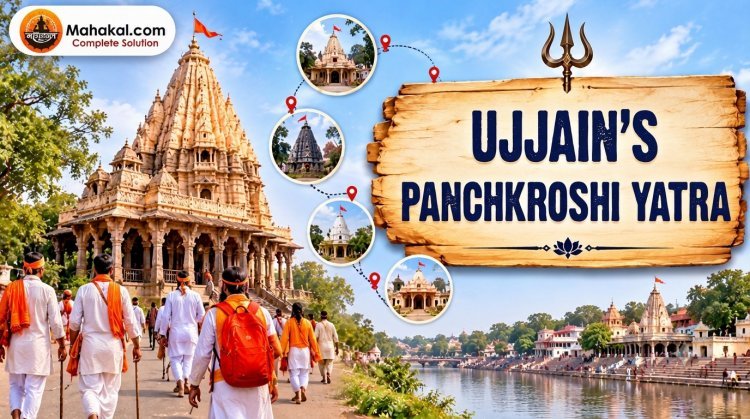
The traditional Panchkroshi Yatra covers approximately 118 kilometres around Ujjain.
During the pilgrimage, devotees visit five major Shiva temples along with several other sacred locations and villages.
|
No. |
Temple |
Religious Significance |
|---|---|---|
|
1 |
Pingleshwar Mahadev |
Important Shiva pilgrimage site |
|
2 |
Kayavarohaneshwar Mahadev |
Ancient Shiva worship tradition |
|
3 |
Bilkeshwar Mahadev |
Worship associated with Bilva leaves |
|
4 |
Durdhreshwar Mahadev |
Sacred pilgrimage stop |
|
5 |
Neelkantheshwar Mahadev |
Worship of Lord Shiva's Neelkanth form |
How Many Days Does the Panchkroshi Yatra Take?
Traditionally, the Panchkroshi Yatra is completed over five days.
During these five days, devotees cover different sections of the pilgrimage route and rest at designated religious stops.
The purpose is not simply to complete the distance but also to visit sacred temples, offer prayers and follow traditional religious practices.
When Is the Panchkroshi Yatra Organised?
The Panchkroshi Yatra of Ujjain is traditionally organised during the Hindu month of Vaishakh, generally falling in April or May.
According to the traditional calendar, the pilgrimage is associated with Vaishakh Krishna Dashami and concludes around Vaishakh Amavasya.
During this period, thousands of devotees from different parts of India visit Ujjain to participate in the sacred circumambulation.
The exact dates and arrangements should be checked through local administration and religious committees every year.
Important Traditions of the Panchkroshi Yatra
Several ancient religious traditions make the Panchkroshi Yatra a unique spiritual experience.
1. Beginning the Journey with a Religious Vow
Devotees begin the pilgrimage by remembering Lord Mahakaleshwar and taking a vow to complete the circumambulation with devotion.
2. Walking the Sacred Route
Walking is an important part of the traditional pilgrimage. Devotees chant the name of Lord Shiva while travelling along the prescribed route.
3. Offering Water and Bilva Leaves
At the major Shiva temples, devotees offer water, flowers, Dhatura and Bilva leaves as part of traditional worship.
4. Bhajans and Mantra Chanting
Chanting Om Namah Shivaya, the Mahamrityunjaya Mantra and Har Har Mahadev is an important part of the pilgrimage atmosphere.
5. Following a Satvik Lifestyle
Many devotees follow a simple and disciplined lifestyle during the journey. Some observe fasting or consume only fruits and satvik food.
6. Helping Fellow Pilgrims
The pilgrimage also promotes service and cooperation. Religious and social organisations often arrange drinking water, food, medical assistance and resting facilities for devotees.
Connection Between the Panchkroshi Yatra and Mahakaleshwar Jyotirlinga
The Panchkroshi Yatra is closely connected with the religious identity of Ujjain as the city of Lord Mahakaleshwar.
Shri Mahakaleshwar Jyotirlinga is one of the twelve sacred Jyotirlingas of Lord Shiva.
According to Hindu beliefs, Lord Shiva resides in Ujjain as Mahakal and protects his devotees.
Many pilgrims seek the blessings of Mahakaleshwar before beginning their journey. For them, circumambulating the sacred region of Ujjain is an expression of devotion and surrender to Lord Shiva.
Important Tips for First-Time Panchkroshi Pilgrims
If you are planning to undertake the Panchkroshi Yatra for the first time, keep the following points in mind:
-
Check the official pilgrimage route and dates before starting.
-
Wear comfortable footwear.
-
Carry sufficient drinking water.
-
Use a cap, scarf or umbrella to protect yourself from the summer heat.
-
Carry essential medicines and first-aid supplies.
-
Maintain cleanliness throughout the journey.
-
Senior citizens and people with health concerns should travel according to their physical capacity.
-
Follow the instructions issued by the local administration.
Spiritual Message of the Panchkroshi Yatra
The Panchkroshi Yatra teaches that devotion is not limited to prayers and temple visits. Patience, discipline, sacrifice, service and dedication are equally important aspects of spiritual life.
As devotees walk several kilometres and visit different Shiva temples, their faith and devotion become stronger.
The journey encourages people to reflect on their lives, leave behind negative thoughts and follow the path of good deeds.
Conclusion: Why Should You Experience the Panchkroshi Yatra of Ujjain?
The Panchkroshi Yatra of Ujjain is an important part of India's ancient religious and cultural heritage.
This traditional pilgrimage of approximately 118 kilometres connects devotees with the sacred temples, spiritual traditions and religious identity of Avantika Nagari.
Visiting five major Shiva temples, following ancient rituals and completing the circumambulation makes this journey a memorable spiritual experience.
For devotees of Lord Mahakaleshwar and those interested in exploring the religious heritage of Ujjain, the Panchkroshi Yatra offers a unique opportunity to experience the devotion and traditions of Mahakal Nagri.
Har Har Mahadev! Jai Shri Mahakal!
What's Your Reaction?