What Do These Signs Seen During Pitru Paksha Mean? Know Their Meaning According to Religious Beliefs
During Pitru Paksha, many people experience dreams, memories, or encounters with birds and animals that they associate with their ancestors. Know the traditional religious beliefs associated with these signs.
What Do These Signs Seen During Pitru Paksha Mean? Know Their Meaning According to Religious Beliefs
What Do the Signs Seen During Pitru Paksha Mean?
In Hindu tradition, Pitru Paksha is considered an important period for remembering and honoring ancestors. During this period, families traditionally perform rituals such as Shradh, Tarpan and, according to their customs, Pind Daan. It is also regarded as a time to express gratitude and respect toward departed family members.
During Pitru Paksha, some people experience dreams about their deceased relatives, see crows or other birds around their homes, or suddenly remember old places and belongings associated with their ancestors.
These experiences are interpreted in different ways in religious and regional traditions. However, they should be understood as religious or cultural beliefs rather than established supernatural facts. Dreams and memories can also arise naturally from emotions, memories and everyday experiences.
Let us look at some commonly discussed signs associated with Pitru Paksha.
1. Seeing Ancestors in Dreams
Some people see their deceased parents, grandparents or other relatives in dreams during Pitru Paksha.
According to certain traditional beliefs, seeing an ancestor peacefully or receiving their blessings may be interpreted positively.
On the other hand, if an ancestor appears distressed or seems to be asking for something, some traditions associate this with remembering the ancestors and performing rituals such as Shradh, Tarpan or charity in their memory.
However, dreams do not have one fixed or universal meaning. They can also be connected to memories, emotions and personal experiences.
2. Seeing a Crow Around the House
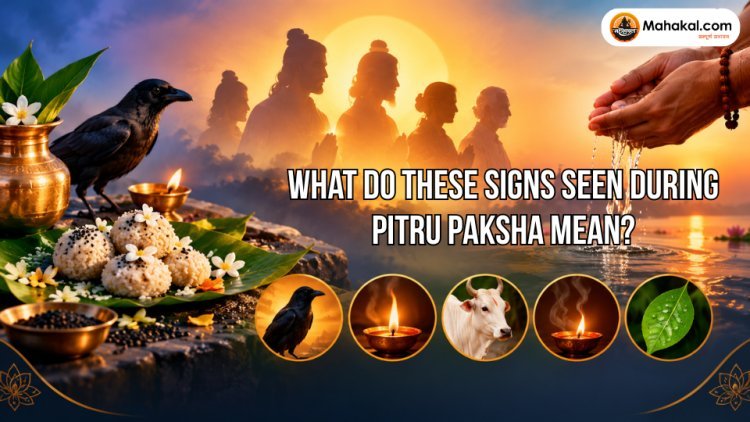
The crow has a notable place in traditional Shradh practices in many Hindu communities. In some traditions, food prepared as part of Shradh is offered to crows.
Because of this traditional association, the arrival of a crow near the home during Pitru Paksha or the crow accepting the offered food may be regarded as a positive sign by some families.
This should be understood as a religious tradition and symbolic belief rather than scientific evidence of an ancestor's presence.
3. Animals and Birds Coming Near the Home
Some people also attach religious significance to animals and birds appearing around the house during Pitru Paksha.
Indian traditions have long emphasized compassion toward living beings and feeding animals as an act of service. Therefore, providing food or water to animals and birds during Pitru Paksha can be considered a meaningful charitable or devotional activity.
4. Suddenly Remembering Departed Family Members
During Pitru Paksha, people may frequently remember deceased parents, grandparents or other loved ones.
Old photographs, conversations, family traditions or memories may suddenly come to mind. This does not necessarily indicate a supernatural message. Since Pitru Paksha is itself a period dedicated to remembering ancestors, such emotions are also completely natural.
5. Remembering Places or Belongings Connected With Ancestors
Sometimes a person may suddenly remember an old house, village, temple, object or other place connected with a deceased family member.
Some religious traditions interpret such experiences as a reminder to remember one's ancestors. A person may respond by respectfully remembering them or performing charitable activities in their name.
6. Feeling the Desire to Perform Shradh or Tarpan
If someone feels inspired during Pitru Paksha to perform rituals or do something in memory of their ancestors, this can be viewed as a positive devotional feeling.
According to family traditions, people may perform Shradh, Tarpan, Pind Daan, charity or food donation according to their customs and circumstances.
7. Creating a Peaceful and Devotional Environment
Pitru Paksha is not only about looking for signs. It is also traditionally regarded as a time for remembrance, gratitude and respect toward ancestors.
Families may choose to maintain a peaceful environment, remember their ancestors, offer food or water to animals and birds, help those in need, and follow their customary religious practices.
How Should These Signs Be Understood?
The most important thing is to distinguish between religious beliefs and established facts.
A dream, the arrival of a bird, or suddenly remembering a deceased relative should not automatically be treated as a definite message from an ancestor. Interpretations can vary across families, regions and religious traditions.
Instead of becoming fearful, such experiences can be treated as an opportunity to remember one's ancestors with respect and perform meaningful acts of charity or service.
What Is Traditionally Done During Pitru Paksha?
According to Hindu traditions, some commonly performed practices include:
- Remembering ancestors and performing Tarpan
- Performing Shradh according to family tradition
- Pind Daan where traditionally practiced
- Offering food to people in need
- Donating food, clothes or other useful items
- Providing food and water for animals and birds
- Respecting elders and family traditions
- Performing charitable and service activities in memory of ancestors
The appropriate ritual can vary according to family customs, regional traditions and religious practices.
Conclusion
The signs associated with Pitru Paksha have an important place in Hindu religious and cultural traditions. Seeing ancestors in dreams, a crow appearing near the home, remembering departed relatives, or recalling places and belongings associated with ancestors may be interpreted differently by different traditions.
Rather than being frightened by such experiences, Pitru Paksha can be viewed as an opportunity to express respect, gratitude and remembrance toward one's ancestors. Acts such as Tarpan, charity, food donation and service can provide a meaningful way to honor their memory.
Important Note: The signs discussed in this article are based on religious and traditional beliefs. They should not be treated as scientific evidence or as definite predictions about future even
What's Your Reaction?