Salasar Balaji Temple: History, Religious Significance and Complete Darshan Guide to Rajasthan's Famous Hanuman Shrine
Explore the history and religious significance of Salasar Balaji Temple in Rajasthan. Learn about the unique bearded idol of Lord Hanuman, Mohandas Ji Maharaj, the coconut-tying tradition, Sav Amani offerings, temple festivals and visitor information.
Salasar Balaji Temple: History, Religious Significance and Complete Darshan Guide to Rajasthan's Famous Hanuman Shrine
India is home to numerous famous temples dedicated to Lord Hanuman, where devotees visit throughout the year to seek blessings, strength and protection. Among these sacred destinations, Salasar Balaji Temple, located in the Churu district of Rajasthan, holds a special place. Also known as Salasar Dham, this temple is one of the most important pilgrimage centres for devotees of Lord Hanuman.
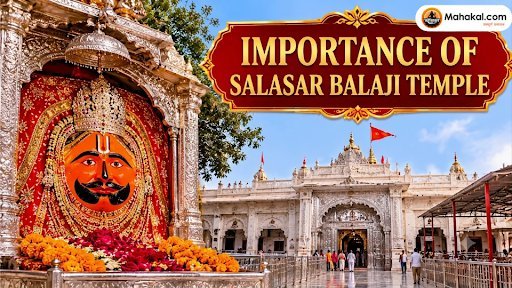
The most distinctive feature of Salasar Balaji is the unique appearance of the deity. Unlike many other Hanuman idols, the image worshipped here has a beard and moustache, along with a distinctive facial expression and large eyes. This unusual form gives the temple a special identity among Hanuman temples across India.
Devotees believe that sincere prayers offered at Salasar Balaji bring the blessings of the deity. People from Rajasthan and many other parts of the country visit the shrine to offer prayers, tie coconuts and seek blessings for their families and personal wishes.
But how was Salasar Balaji Temple established? How was the idol discovered in a farmer's field? Who was Mohandas Ji Maharaj? Why do devotees tie coconuts at the temple, and what is the significance of offering Sav Amani?
Let us explore the history, religious significance, traditions and essential visitor information about Salasar Balaji Temple.
1. Where Is Salasar Balaji Temple Located?
Salasar Balaji Temple is situated in Salasar town in the Churu district of Rajasthan, India. The temple is dedicated to Lord Hanuman, who is worshipped here as Balaji Maharaj.
Devotees visit the temple throughout the year. Tuesdays and Saturdays are particularly important days for Hanuman worship, and the number of visitors can increase on these occasions.
Salasar Dham is not only an important religious destination in Rajasthan but also a major centre of devotion for Hanuman followers from different parts of India.
Visitors come here to seek the blessings of Balaji Maharaj, offer coconuts and participate in traditional worship rituals.
2. History of Salasar Balaji Temple: How Was the Idol Discovered in a Field?
The origin of Salasar Balaji Temple is associated with a well-known traditional story about the discovery of an idol in the village of Asota.
According to the temple's traditional account, on Shravan Shukla Navami in Vikram Samvat 1811, a farmer in Asota village was ploughing his field.
Suddenly, his plough struck a hard object buried beneath the soil. When he cleared the earth, he discovered a remarkable stone idol of Lord Balaji.
The idol had an unusual appearance, different from the commonly seen images of Hanuman.
News of the discovery spread throughout the village and eventually reached the local Thakur. According to the popular belief, the Thakur received a dream that night in which Lord Balaji instructed him to send the idol to Salasar.
At the same time, Mohandas Ji Maharaj, a devoted follower of Hanuman living in Salasar, is also believed to have received a divine dream indicating that the idol was coming to the village.
When the Thakur learned about Mohandas Ji's dream, he was astonished by the details that matched his own experience.
The idol was subsequently brought from Asota to Salasar and installed at the location that became known as Salasar Dham.
This traditional account is remembered as the beginning of the temple's history and continues to be narrated among devotees.
3. Who Was Mohandas Ji Maharaj and What Was His Connection with Salasar Balaji?
Mohandas Ji Maharaj holds an important place in the religious history of Salasar Balaji Temple. He is remembered as a devoted saint of Lord Hanuman and a key figure associated with the establishment of Salasar Dham.
According to traditional accounts, Mohandas Ji spent much of his life in devotion and spiritual practice dedicated to Balaji Maharaj.
It is believed that Lord Hanuman appeared to him in a dream and informed him about the arrival of the idol from Asota.
After the idol was installed, Mohandas Ji Maharaj took responsibility for its worship and service at the shrine.
Later, the responsibility of temple worship was entrusted to his disciple Udayram Ji and his descendants.
Even today, Mohandas Ji Maharaj remains an important part of Salasar Dham's religious traditions. The temple complex also contains a site associated with his samadhi and other commemorative features that devotees regard with reverence.
4. Why Is the Idol of Salasar Balaji So Unique?
One of the most remarkable features of Salasar Balaji Temple is the distinctive appearance of the idol worshipped inside the shrine.
The face of Lord Hanuman is depicted with a beard and moustache. The idol also has large eyes and a distinctive facial appearance that attracts the attention of visitors.
This form is different from the idols commonly seen in many other Hanuman temples.
Because of this unique appearance, Salasar Balaji has become widely recognised among devotees across India.
Many worshippers regard the idol as spiritually powerful and believe that sincere prayers offered here receive the blessings of Balaji Maharaj. These beliefs form an important part of the temple's devotional tradition.
5. Why Is Salasar Balaji Considered a Siddhpeeth?
Salasar Dham is widely revered by devotees as a Siddhpeeth and a sacred place of spiritual power.
According to religious belief, devotees who visit the shrine with faith and sincerity receive the blessings of Balaji Maharaj.
People visit the temple with different prayers and wishes. Some seek peace and happiness for their families, while others pray for strength during difficult times, success in their work and relief from personal challenges.
Devotees believe that Lord Hanuman protects his followers and gives them courage to face difficult situations.
Lord Hanuman is also known as Sankatmochan, the remover of troubles. This is why many visitors come to Salasar Dham to pray for protection, confidence and guidance.
6. What Is the Significance of Tying Coconuts at Salasar Balaji Temple?
One of the most well-known traditions at Salasar Balaji Temple is tying coconuts with a sacred thread, commonly known as Mauli.
Many devotees visit the temple carrying a coconut as a symbol of their prayer or personal wish. They tie it at the designated place within the temple premises and seek the blessings of Balaji Maharaj.
According to the belief followed by devotees, when a wish is fulfilled, the devotee may return to the temple to express gratitude.
In Hindu worship traditions, the coconut is associated with purity, auspiciousness and surrender. The practice of tying coconuts at Salasar Dham is connected with these devotional sentiments.
The tradition has become one of the most recognisable features of the temple.
7. The Tradition of Offering Sav Amani at Salasar Balaji
Another important devotional practice at Salasar Balaji Temple is the offering of Sav Amani.
Sav Amani traditionally refers to an offering of food or prasad associated with one and a quarter maunds. In traditional measurements, this is often described as approximately 50 kilograms, although the exact quantity and arrangements may vary according to local practice.
Devotees may make a vow to offer Sav Amani when a wish is fulfilled or on a special religious occasion.
The offering may include churma, laddus, peda or other traditional sweets. The actual preparation and arrangements depend on the temple's established practices and the available services.
For devotees, offering Sav Amani is a way of expressing gratitude and devotion to Balaji Maharaj.
8. Major Religious Events and Festivals at Salasar Balaji Temple
Religious activities take place at Salasar Dham throughout the year. Some occasions are especially significant and attract large numbers of devotees.
Chaitra Purnima Fair: Chaitra Purnima is one of the important occasions at Salasar Dham. Many devotees visit the temple during this period to offer prayers and seek the blessings of Balaji Maharaj.
Sharad Purnima Fair: The temple also organises a major religious gathering around Sharad Purnima. Devotees from different parts of the country travel to Salasar for darshan.
Hanuman Jayanti: The birth celebration of Lord Hanuman is observed with special worship, devotional singing and religious programmes.
Tuesdays and Saturdays: These days are traditionally associated with Hanuman worship, so the temple may receive more visitors than usual.
Crowd levels and darshan arrangements can vary during fairs and major festivals.
9. Architecture and Special Features of Salasar Balaji Temple
The architecture of Salasar Balaji Temple reflects a combination of religious devotion and traditional craftsmanship.
White marble has been extensively used in the temple complex. The sanctum, assembly hall and circumambulatory areas feature decorative details.
Some parts of the temple are adorned with artistic gold and silver work. The entrance and several ritual objects also reflect traditional craftsmanship.
The sanctum is the most important area for devotees, as it is where they offer their prayers and seek darshan of Balaji Maharaj.
10. Salasar Balaji Temple Darshan Timings and Aarti
Salasar Balaji Temple follows a schedule for daily darshan and aarti. Available temple information lists the general darshan hours as 6:00 AM to 8:45 PM.
The main aartis include Mangala Aarti, Sandhya Aarti and Shayan Aarti. According to the published information on the temple website, the timings are listed as follows:
-
Mangala Aarti: 5:30 AM
-
Sandhya Aarti: 7:10 PM
-
Shayan Aarti: 10:00 PM
Please note that darshan and aarti timings may change according to the season, special festivals, fairs or temple arrangements. Visitors should confirm the latest schedule through the temple's official website or administration before travelling.
11. How to Reach Salasar Balaji Temple
Salasar Dham is located in the Churu district of Rajasthan and can be reached by road, rail and air through nearby transport centres.
By Road: Salasar is connected by road to Jaipur, Sikar, Sujangarh, Churu and nearby towns. Buses and taxis may be available from these locations. The road distance from Jaipur is commonly listed at approximately 170 kilometres, depending on the selected route.
By Train: Sujangarh is one of the nearest major railway stations, located approximately 25 kilometres from Salasar. From the station, visitors can use taxis or local transport to reach the temple.
By Air: Jaipur Airport is a major option for visitors travelling by air. From Jaipur, the remaining journey can be completed by road.
Check current train, bus and road conditions before finalising your travel plans.
12. Other Religious Places to Visit Along with Salasar Balaji
If you are planning a pilgrimage to Salasar Balaji, you may also consider visiting other well-known religious places in Rajasthan.
Khatu Shyam Ji Temple: Located in the Sikar district, this famous temple is dedicated to Khatu Shyam Ji, a revered form associated with Lord Krishna. It attracts devotees from across India.
Rani Sati Temple: Situated in Jhunjhunu, Rani Sati Temple is another important religious destination in Rajasthan. Its architecture and devotional traditions make it a notable place to visit.
You can include these temples in a broader Rajasthan pilgrimage itinerary. However, it is advisable to plan separate travel time according to the distances and road conditions.
13. Important Things to Remember During Your Salasar Balaji Visit
A little preparation can make your visit to Salasar Dham more comfortable and organised.
-
Check the latest darshan and aarti timings before travelling.
-
Expect larger crowds on Tuesdays, Saturdays and full-moon occasions.
-
Make accommodation arrangements in advance during major fairs.
-
Maintain cleanliness inside the temple premises.
-
Follow the temple's rules for worship and prasad.
-
Check the designated arrangements before tying coconuts or offering other items.
-
Carry drinking water and essential medicines when travelling with children or elderly family members.
-
Use prasad and other temple services according to the official arrangements.
Conclusion
Salasar Balaji Temple is one of Rajasthan's most revered religious destinations and holds a special place in the hearts of Lord Hanuman's devotees.
The unique bearded and moustached idol of Balaji Maharaj, the traditional story associated with Mohandas Ji Maharaj, and the practice of tying coconuts give the temple a distinctive identity.
For devotees, Salasar Dham is much more than a place for darshan. It is a sacred centre of faith, devotion and the belief in the protective blessings of Sankatmochan Hanuman.
Whether you are visiting to seek the blessings of Balaji Maharaj, tie a coconut as a symbol of your prayer or explore Rajasthan's famous pilgrimage destinations, a visit to Salasar Dham can become a meaningful spiritual experience.
Jai Shree Salasar Balaji
Maharaj! Jai Shree Ram!
What's Your Reaction?