20 November: Dev Uthani Ekadashi 2026 – The Story of Lord Vishnu's Awakening, Tulsi Vivah and Religious Significance of the Fast
Discover the mythological story and religious significance of Dev Uthani Ekadashi 2026. Learn why Lord Vishnu awakens from his four-month Yogic Sleep, the story of Tulsi Vivah, fasting rituals, puja vidhi and Parana rules.
20 November: Dev Uthani Ekadashi 2026 – The Story of Lord Vishnu's Awakening, Tulsi Vivah and Religious Significance of the Fast
In Hinduism, Ekadashi is considered one of the most sacred days dedicated to the worship of Lord Vishnu. Among all the Ekadashis observed throughout the year, the Ekadashi of Shukla Paksha in the month of Kartik holds special religious significance. It is popularly known as Dev Uthani Ekadashi, Devotthan Ekadashi and Prabodhini Ekadashi.
According to Hindu religious beliefs, Lord Vishnu awakens from his four-month-long Yogic Sleep on this auspicious day. This marks the end of Chaturmas, a sacred period during which devotees focus on prayer, meditation, fasting and spiritual discipline.
Dev Uthani Ekadashi is also associated with the beginning of auspicious activities such as weddings, housewarming ceremonies and other religious celebrations.
On this occasion, devotees worship Lord Vishnu and Goddess Lakshmi with great devotion. In many parts of India, Tulsi Vivah is also performed, symbolising the divine marriage of Goddess Tulsi with Lord Shaligram, a sacred representation of Lord Vishnu.
But why does Lord Vishnu enter Yogic Sleep for four months? What is the mythological story behind Dev Uthani Ekadashi? Why is Tulsi Vivah performed on this day, and what is the religious significance of observing this fast?
Let us explore the complete story, rituals, significance and important traditions of Dev Uthani Ekadashi 2026.
1. When Is Dev Uthani Ekadashi 2026?
Dev Uthani Ekadashi in 2026 falls on the Ekadashi Tithi of Shukla Paksha in the Hindu month of Kartik.
-
Date: 20 November 2026, Friday (Smarta tradition)
-
Lunar Month: Kartik
-
Paksha: Shukla Paksha
-
Other Names: Devotthan Ekadashi, Prabodhini Ekadashi and Dev Uthani Gyaras
-
Presiding Deity: Lord Vishnu
-
Special Traditions: Tulsi Vivah and the conclusion of Chaturmas
There is a difference between Smarta and Vaishnava fasting dates in some regions in 2026. In Ujjain, the Smarta observance falls on 20 November, while the Vaishnava observance may fall on 21 November. Devotees should follow their respective religious traditions and local Panchang.
2. Why Is Dev Uthani Ekadashi Celebrated?
The most important religious significance of Dev Uthani Ekadashi is associated with the awakening of Lord Vishnu from his Yogic Sleep.
According to Hindu beliefs, Lord Vishnu enters Yogic Sleep on Devshayani Ekadashi, which falls on Shukla Paksha Ekadashi in the month of Ashadha.
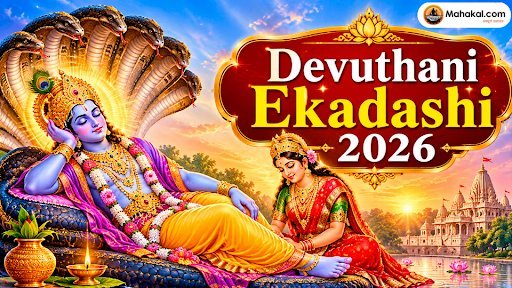
During this period, Lord Vishnu is believed to rest in the cosmic ocean, known as Ksheer Sagar, upon the divine serpent Sheshnag.
This four-month period is known as Chaturmas.
During Chaturmas, devotees are encouraged to focus on spiritual practices, religious observances, meditation, charity and self-discipline.
On Kartik Shukla Ekadashi, Lord Vishnu is believed to awaken from this divine sleep. Therefore, the day is celebrated as Dev Uthani Ekadashi.
The awakening of the Lord also marks the beginning of the traditional period for weddings and other auspicious ceremonies.
3. The Mythological Story of Lord Vishnu Entering Yogic Sleep
According to traditional Hindu beliefs, Lord Vishnu once decided to enter Yogic Sleep after continuously performing his divine responsibilities of protecting and maintaining the universe.
He informed the gods that he would rest for a certain period in the cosmic ocean.
Thereafter, on Ashadha Shukla Ekadashi, Lord Vishnu entered Yogic Sleep upon the bed of Sheshnag.
The gods recognised this period as a special time for religious discipline and spiritual devotion. This period became known as Chaturmas.
After approximately four months, on Kartik Shukla Ekadashi, Lord Vishnu awakened from his Yogic Sleep.
This occasion came to be celebrated as Dev Uthani Ekadashi.
The spiritual message of this tradition is that rest, balance and spiritual reflection are important aspects of life. Chaturmas encourages individuals to focus on devotion, discipline and inner development.
4. The Famous Vrat Katha of Dev Uthani Ekadashi
A popular traditional folk story is associated with Dev Uthani Ekadashi.
According to this story, there was once a kingdom where everyone observed the Ekadashi fast. On this day, people were not allowed to consume grains, and even animals were not given regular food.
One day, Lord Vishnu decided to test the devotion of a king.
He appeared before the king in the form of a beautiful woman.
The king was fascinated by her beauty and expressed his desire to marry her.
The woman agreed on one condition: the king would have to fulfil every wish she made.
The king accepted her condition.
After some time, the woman asked the king to eat regular food on Ekadashi and ordered that nobody in his kingdom should observe the Ekadashi fast.
The king found himself in a difficult situation. On one side was his promise, while on the other was his devotion to Lord Vishnu and his commitment to religious traditions.
The king decided that he would rather sacrifice everything than abandon his religious principles and the Ekadashi fast.
Impressed by his devotion and determination, Lord Vishnu revealed his divine form.
He blessed the king and praised his dedication to dharma.
This traditional story teaches that one should remain committed to truth, faith and religious values even during difficult circumstances.
5. Why Is Tulsi Vivah Performed on Dev Uthani Ekadashi?
One of the most beautiful traditions associated with Dev Uthani Ekadashi is Tulsi Vivah.
On this occasion, Goddess Tulsi is symbolically married to Lord Shaligram, who represents Lord Vishnu.
According to Hindu mythology, Goddess Tulsi was previously born as Vrinda. She was a devoted and virtuous woman whose husband was the demon king Jalandhar.
Jalandhar possessed extraordinary powers because of Vrinda's unwavering devotion and chastity.
Troubled by his growing power and destructive activities, the gods approached Lord Vishnu for help.
According to the traditional story, Lord Vishnu performed a divine act that affected Vrinda's devotion towards her husband.
When Vrinda discovered what had happened, she became deeply upset and cursed Lord Vishnu.
Afterwards, she gave up her physical body and was reborn as the sacred Tulsi plant.
Lord Vishnu blessed her with a special place in his worship and declared Tulsi extremely dear to him.
Since then, Tulsi leaves have held great religious importance in the worship of Lord Vishnu.
On Dev Uthani Ekadashi, devotees perform Tulsi Vivah and pray for the blessings of Lord Vishnu and Goddess Tulsi.
6. Religious and Spiritual Significance of Dev Uthani Ekadashi
Dev Uthani Ekadashi is considered an extremely auspicious day in Hinduism.
Blessings of Lord Vishnu: Devotees believe that worshipping Lord Vishnu with sincere devotion brings peace, happiness and prosperity.
End of Chaturmas: This day marks the traditional conclusion of the four-month period of Chaturmas.
Beginning of Auspicious Ceremonies: Weddings, housewarming ceremonies and other auspicious activities traditionally begin after Dev Uthani Ekadashi.
Importance of Tulsi Worship: Performing Tulsi Vivah is believed to bring happiness, harmony and prosperity to the family.
Spiritual Purification: Fasting, meditation, prayer and charity encourage self-discipline and inner purification.
7. Puja Vidhi for Dev Uthani Ekadashi 2026
Devotees worship Lord Vishnu with special devotion on this auspicious day.
The general puja procedure is as follows:
1. Morning Bath and Sankalp: Wake up early, take a bath and wear clean clothes. Take a vow to observe the fast before Lord Vishnu.
2. Prepare the Worship Area: Clean the home temple and place an idol or picture of Lord Vishnu.
3. Worship Lord Vishnu: Offer yellow flowers, yellow clothes, fruits, incense and a lit lamp.
4. Worship Goddess Tulsi: Light a diya near the Tulsi plant and offer prayers with devotion.
5. Read the Vrat Katha: Read or listen to the traditional story of Dev Uthani Ekadashi.
6. Chant Vishnu Mantras: Recite the sacred mantras dedicated to Lord Vishnu.
Mantra:
Om Namo Bhagavate Vasudevaya.
7. Perform Aarti: Perform the aarti of Lord Vishnu and Goddess Lakshmi and pray for the well-being of the family.
8. Night Vigil: According to tradition, some devotees stay awake during the night, singing devotional songs and remembering Lord Vishnu.
8. Dos and Don'ts on Dev Uthani Ekadashi
What to Do:
-
Worship Lord Vishnu and Goddess Lakshmi.
-
Light a diya near the Tulsi plant.
-
Donate food, clothes or money to people in need.
-
Recite Vishnu Sahasranama and read the Bhagavad Gita.
-
Follow a simple and sattvic lifestyle.
-
Observe the fast according to your faith and physical capacity.
What to Avoid:
-
Avoid grains and rice during the fast.
-
Do not insult or hurt others.
-
Stay away from anger, jealousy and unnecessary arguments.
-
Avoid intoxicants and tamasic food.
-
Do not perform religious rituals merely for show; maintain sincere devotion.
Fasting rules may vary according to family traditions, religious beliefs and individual health conditions.
9. Importance of Parana on Dev Uthani Ekadashi
Parana refers to the proper completion of the Ekadashi fast.
The fast is traditionally broken on the following Dwadashi Tithi during the prescribed auspicious time.
Devotees first worship Lord Vishnu and then conclude their fast with fruits or a simple sattvic meal.
For the Smarta observance in Ujjain, the Parana is on 21 November 2026, approximately from 1:18 PM to 3:30 PM.
The exact Parana time should always be checked according to the local Panchang and the religious tradition being followed.
10. Important Traditions Associated with Dev Uthani Ekadashi
Dev Uthani Ekadashi is celebrated in different ways across India.
Some of the important traditions include:
-
Special worship of Lord Vishnu in homes and temples.
-
Organisation of Tulsi Vivah ceremonies.
-
Decoration of courtyards with rangoli and traditional designs.
-
Singing devotional songs to symbolically awaken Lord Vishnu.
-
Preparing a traditional wedding pavilion using sugarcane in several regions.
-
Donating food and clothes to people in need.
In many parts of India, the festival is also popularly known as Dev Uthani Gyaras.
Conclusion
Dev Uthani Ekadashi 2026 is an important Hindu festival dedicated to Lord Vishnu and his divine awakening from Yogic Sleep.
The occasion marks the traditional conclusion of Chaturmas and is celebrated through Vishnu worship, Tulsi Vivah, fasting, charity and devotional activities.
The festival reminds devotees of the importance of faith, discipline, service and devotion in life.
Observing Dev Uthani Ekadashi with sincerity is believed to bring spiritual peace and inspire people to follow a positive and disciplined way of life.
Om Namo Bhagavate Vasudevaya!
What's Your Reaction?