What is Aarti? Meaning, Importance, Puja Vidhi, Best Time, Rules & Popular Aartis
What is Aarti and why is it performed in Hindu worship? Learn the meaning, religious significance, Puja Vidhi, best time, Aarti Thali items and popular Hindu Aartis.
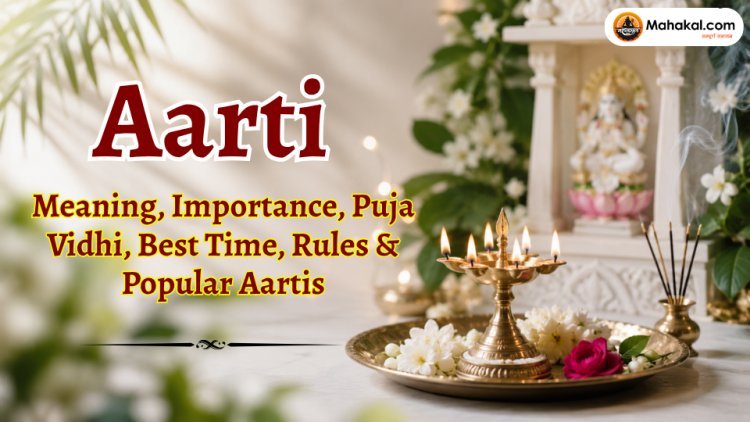
Aarti: Meaning, Importance, Puja Vidhi, Best Time, Rules & Popular Aartis
Aarti is one of the most beautiful and widely practiced rituals in Hindu worship. During Aarti, a lit Diya or sacred flame is offered before a deity while devotional prayers or songs are recited. It represents devotion, surrender, gratitude and the presence of divine light.
From daily home Puja to major Hindu festivals, Aarti holds an important place in Sanatan traditions. Different deities have their own popular Aartis, including Lord Ganesha, Lord Shiva, Goddess Durga, Goddess Lakshmi, Lord Vishnu and Lord Hanuman.
What is Aarti?
Aarti is a Hindu devotional ritual in which a lamp or sacred flame is moved in circular motions before the deity.
The ritual is generally accompanied by devotional songs, prayers or mantras. Aarti can be performed at home, in temples and during special religious ceremonies.
The light offered during Aarti is traditionally associated with divine presence, knowledge and the removal of spiritual darkness.
Why is Aarti Performed?
Aarti is performed as an expression of:
- Devotion
- Gratitude
- Respect
- Surrender
- Prayer
- Spiritual connection
During Aarti, devotees pray for peace, happiness, prosperity, good health and the well-being of their families.
The ritual also provides a moment for devotees to focus their minds on the Divine.
Religious Significance of Aarti
The flame or light has an important symbolic role in Hindu traditions.
Light is often associated with knowledge and positivity, while darkness can symbolize ignorance.
When devotees perform Aarti, the sacred flame is offered to the deity as an expression of devotion.
After the Aarti, many traditions involve devotees bringing their hands over the flame and touching them to their forehead as a gesture of receiving blessings.
When Should Aarti Be Performed?
There is no single universal time for Aarti. The practice varies according to family traditions, temples and different Hindu traditions.
Aarti is commonly performed:
- During morning Puja
- During evening worship
- After completing a Puja
- During festivals
- During special religious ceremonies
- As part of daily temple worship
Many families perform morning and evening Aarti as part of their daily Puja routine.
How to Perform Aarti at Home?
Aarti can be performed through a simple devotional routine.
Step 1: Clean the Puja Area
Keep the worship area clean and organized.
Step 2: Light the Diya
Light a Diya using ghee or oil according to your family tradition.
Step 3: Pray to the Deity
Take a moment to focus your mind on the deity you are worshipping.
Step 4: Sing the Aarti
Recite or sing the appropriate Aarti while offering the sacred flame.
Step 5: Move the Aarti Flame
Move the lamp respectfully before the deity according to your family or temple tradition.
Step 6: Offer Your Prayer
After completing the Aarti, pray for the happiness, health and well-being of your family.
Step 7: Receive the Aarti
Devotees may place their hands over the flame and then touch them to their forehead according to tradition.
What Should Be Kept in an Aarti Thali?
A simple Aarti Thali may include:
- Diya
- Ghee or oil
- Camphor
- Flowers
- Kumkum
- Akshat
- Sandalwood
- Incense
The exact contents of an Aarti Thali can vary according to regional and family traditions.
You do not need an elaborate arrangement for a simple daily Aarti. Faith and devotion are considered more important than elaborate decoration.
Popular Aartis of Hindu Gods and Goddesses
India has a rich tradition of devotional Aartis dedicated to different deities.
Lord Ganesha Aarti
“Sukh Karta Dukh Harta” is a popular Marathi Aarti dedicated to Lord Ganesha. It is especially associated with Ganesh worship and Ganesh Chaturthi celebrations.
Lord Vishnu Aarti
“Om Jai Jagdish Hare” is one of the most widely known Hindu Aartis and is traditionally associated with Lord Vishnu.
Lord Shiva Aarti
Devotees perform different Shiva Aartis and prayers during Mahashivratri, Mondays and regular Shiva Puja.
Goddess Durga Aarti
Durga Aarti is commonly performed during Navratri and other Devi worship ceremonies.
Goddess Lakshmi Aarti
Lakshmi Aarti is especially popular during Diwali and Lakshmi Puja, when devotees worship Goddess Lakshmi for prosperity and abundance.
Lord Hanuman Aarti
Devotees perform Hanuman Aarti during Hanuman worship, particularly on Tuesdays and Saturdays in many traditions.
Shani Dev Aarti
Shani Dev Aarti is performed by devotees during Saturday worship dedicated to Lord Shani.
What is the Difference Between Aarti and Bhajan?
Aarti and Bhajan are both forms of devotional expression, but they are not exactly the same.
Aarti specifically involves offering a sacred flame or lamp before a deity, usually accompanied by an Aarti song.
A Bhajan is a devotional song or hymn expressing love, praise or devotion toward God.
A Bhajan may be sung during worship, and an Aarti may follow afterward.
Can We Perform Aarti Every Day?
Yes. Many Hindu families perform Aarti as part of their daily morning or evening Puja.
The frequency and timing depend on family customs, personal beliefs and religious traditions.
Some families perform Aarti once a day, while others perform it both in the morning and evening.
What Should We Do After Aarti?
After Aarti:
- Offer your prayers to the deity.
- Bow respectfully before God.
- Receive the Aarti flame according to your tradition.
- Distribute Prasad if it has been prepared.
- Take a moment for gratitude and peaceful reflection.
Why is Aarti Important in Hindu Worship?
Aarti brings together several elements of Hindu devotion—light, prayer, music, concentration and surrender.
It transforms the end of a Puja into a collective moment of devotion where family members can pray together.
Whether it is a simple Aarti at home or a large temple Aarti, the central purpose remains devotion and remembrance of the Divine.
Conclusion
Aarti is an important and deeply meaningful tradition in Hindu worship. The sacred flame represents light, while the accompanying prayers express devotion and gratitude.
From Ganesh Aarti and Shiva Aarti to Durga Aarti, Lakshmi Aarti, Vishnu Aarti and Hanuman Aarti, countless devotional traditions have developed across India.
The method may differ from one family or region to another, but the heart of Aarti remains the same—faith, devotion, gratitude and spiritual connection.
What's Your Reaction?