Why Did Lord Krishna Teach the Bhagavad Gita to Arjuna on the Battlefield? The Spiritual Mystery Behind the Gita
Discover why Lord Krishna delivered the Bhagavad Gita to Arjuna on the battlefield of Kurukshetra. Learn its spiritual significance, core teachings, symbolism, and relevance in modern life.
Why Did Lord Krishna Teach the Bhagavad Gita to Arjuna on the Battlefield?
Why Was the Bhagavad Gita Delivered During the Mahabharata War?
The Bhagavad Gita is not just a sacred Hindu scripture—it is one of the world's greatest guides to life, duty, and spiritual wisdom. Just before the Mahabharata war began, Arjuna became overwhelmed with sorrow and confusion after seeing his own relatives, teachers, and loved ones standing on the battlefield. At that crucial moment, Lord Krishna imparted the divine wisdom that is now revered as the Bhagavad Gita.
But have you ever wondered why Lord Krishna chose the battlefield of Kurukshetra instead of a peaceful temple, forest, or ashram to deliver the Gita? The answer lies in a profound spiritual and philosophical truth that remains relevant even today.
What Happened Before the Mahabharata War?
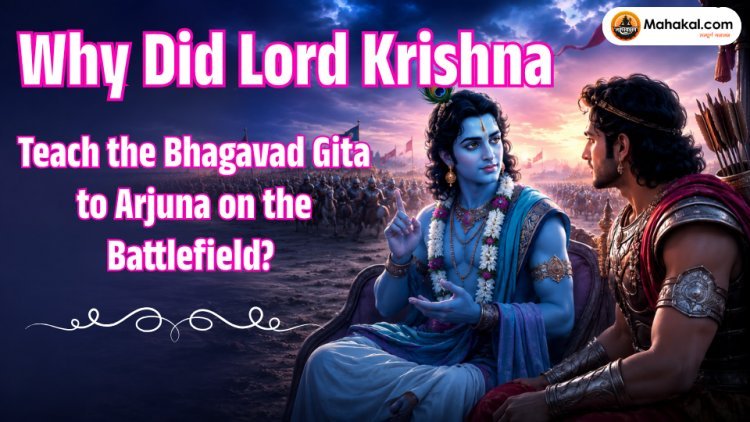
The armies of the Pandavas and Kauravas stood face-to-face on the sacred battlefield of Kurukshetra. Moments before the war began, Arjuna asked Lord Krishna, his charioteer, to place the chariot between the two armies.
As Arjuna looked around, he saw his grandfather Bhishma, his guru Dronacharya, cousins, relatives, and close friends. Overcome with compassion and grief, he dropped his mighty bow Gandiva and refused to fight.
It was at this defining moment that Lord Krishna began delivering the timeless wisdom of the Bhagavad Gita.
Why Did Lord Krishna Choose the Battlefield?
1. Life Itself Is a Battlefield
Lord Krishna wanted to teach that life is filled with struggles, dilemmas, and difficult decisions, just like the battlefield of Kurukshetra.
The Bhagavad Gita is not only for Arjuna—it is for every person who experiences confusion, fear, stress, or moral conflict.
2. Arjuna Needed Freedom from Attachment
Arjuna was torn between duty (Dharma) and emotional attachment. His compassion caused him to forget his responsibility as a warrior.
Lord Krishna reminded him:
"You have the right to perform your duty, but not to the fruits of your actions."
This remains one of the most famous teachings of the Bhagavad Gita.
3. Dharma Must Be Protected
Lord Krishna explained that when injustice, adharma (unrighteousness), and evil become dominant, protecting righteousness becomes one's highest duty.
Therefore, Arjuna's participation in the war was not an act of violence driven by hatred, but a duty to restore justice and uphold Dharma.
4. Spiritual Wisdom Belongs in Everyday Life
If the Bhagavad Gita had been taught in a peaceful hermitage, many people might have viewed spirituality as something meant only for monks and sages.
By delivering it on the battlefield, Lord Krishna demonstrated that true spirituality must guide us in the midst of life's greatest challenges—whether in family, career, relationships, or society.
5. Knowledge Removes Fear
Arjuna's greatest enemy was not the Kaurava army—it was his own fear, confusion, and attachment.
Lord Krishna taught that self-knowledge and spiritual wisdom eliminate fear, enabling a person to perform their duties with courage and clarity.
The Core Message of the Bhagavad Gita
The Bhagavad Gita teaches us to:
- Perform our duties with sincerity.
- Work without attachment to results.
- Understand that the soul is eternal while the body is temporary.
- Stand for truth and righteousness.
- Remain calm during difficult situations.
- Develop unwavering faith in God.
- Practice self-control, discipline, and compassion.
Importance of the Bhagavad Gita in Modern Life
Today's world is full of stress, anxiety, competition, and uncertainty. The timeless teachings of the Bhagavad Gita provide practical guidance for overcoming these challenges.
The Gita helps us:
- Manage stress and anxiety.
- Make wise decisions.
- Stay balanced during success and failure.
- Control anger and ego.
- Build confidence and inner peace.
- Develop leadership qualities and resilience.
This is why the Bhagavad Gita is studied not only in India but across the world.
Is the Bhagavad Gita Only for Hindus?
No.
The Bhagavad Gita is a universal spiritual guide for humanity. Its teachings on duty, ethics, leadership, self-discipline, and inner peace transcend religion and culture.
Today, it has been translated into hundreds of languages and continues to inspire millions of people worldwide.
Timeless Teachings from the Bhagavad Gita
"Karmanye Vadhikaraste Ma Phaleshu Kadachana."
Meaning: You have the right to perform your duties, but never to the fruits of your actions.
"Yada Yada Hi Dharmasya Glanir Bhavati Bharata..."
Meaning: Whenever righteousness declines and unrighteousness rises, I manifest Myself to restore Dharma.
The Spiritual Symbolism of the Battlefield
The battlefield of Kurukshetra is also symbolic of the human mind.
- Arjuna represents the sincere seeker struggling with doubts.
- The Kauravas symbolize greed, anger, ego, attachment, and ignorance.
- The Pandavas represent righteousness, truth, and virtue.
- Lord Krishna symbolizes divine wisdom, higher consciousness, and the inner guide.
The real Mahabharata is fought within every human being. Victory comes when wisdom overcomes ignorance.
Conclusion
Lord Krishna delivered the Bhagavad Gita on the battlefield because life itself is a battlefield filled with choices, responsibilities, and challenges. The Gita teaches us that spirituality is not about escaping life's struggles but facing them with wisdom, courage, and unwavering faith.
Even after thousands of years, the Bhagavad Gita remains one of humanity's greatest spiritual and philosophical treasures. By applying its teachings in our daily lives, we can achieve inner peace, clarity, success, and spiritual growth.
Frequently Asked Questions (FAQs)
Q1. Why did Lord Krishna teach the Bhagavad Gita on the battlefield?
Because the battlefield represents the challenges of life, and Lord Krishna wanted to show that spiritual wisdom should guide us even in the most difficult situations.
Q2. Why did Arjuna refuse to fight?
He became emotionally overwhelmed after seeing his relatives, teachers, and loved ones on the battlefield.
Q3. What is the central message of the Bhagavad Gita?
To perform one's duty selflessly, uphold Dharma, and attain self-realization through devotion and wisdom.
Q4. Is the Bhagavad Gita relevant today?
Yes. Its teachings help people manage stress, make ethical decisions, develop leadership skills, and find inner peace.
Q5. What does the battlefield of Kurukshetra symbolize?
It symbolizes the inner conflict every human experiences between righteousness and selfish desires.
What's Your Reaction?