Lord Kartikeya Sits in Maa Skandamata’s Lap — Know the Special Secret Behind This Divine Form
Maa Skandamata is worshipped on the fifth day of Navratri. Discover why Lord Kartikeya is shown sitting in her lap and understand the religious and spiritual significance behind this divine form.
CONTENT BLOG:
Navratri is a sacred Hindu festival dedicated to the worship of the nine forms of Maa Durga. On the fifth day of Navratri, devotees worship Maa Skandamata, a divine form associated with motherhood, compassion, protection and spiritual strength.
One of the most distinctive features of Maa Skandamata is that Lord Kartikeya, also known as Skanda, is depicted sitting in her lap in his child form. This beautiful representation carries a deep religious and spiritual message.
Why does Lord Kartikeya sit in Maa Skandamata’s lap? What is the special significance behind this divine form? Let us understand its meaning.
Who is Maa Skandamata?
Maa Skandamata is regarded as the fifth form of Maa Durga and is worshipped on the fifth day of Navratri.
Lord Kartikeya is also known as Skanda. Since Goddess Durga is worshipped as the mother of Skanda in this form, she is known as Skandamata.
Her appearance is traditionally described as peaceful, compassionate and motherly. Her divine form represents the loving and protective nature of a mother.
Why Does Lord Kartikeya Sit in Her Lap?
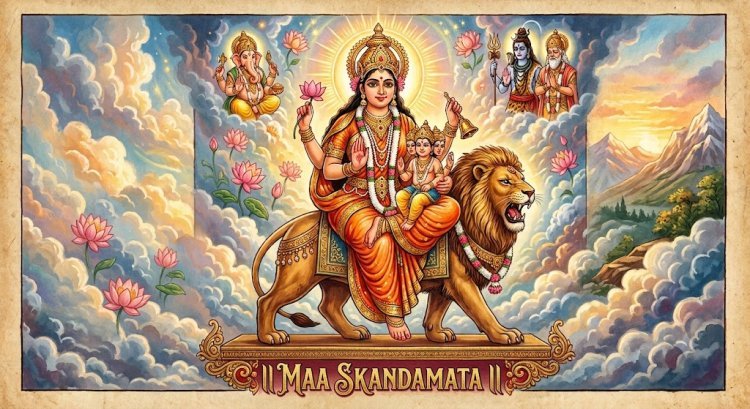
The most distinctive feature of Maa Skandamata is Lord Kartikeya sitting in her lap in his child form.
Lord Kartikeya is traditionally associated with courage, strength, valor and victory. He is also known as the commander of the divine forces. Yet, in the form of Skandamata, he appears as a child resting peacefully in his mother’s lap.
This conveys a beautiful spiritual message: no matter how powerful a person becomes, the love, protection and blessings of a mother remain among the greatest sources of strength.
The Hidden Message of Motherhood
The divine form of Maa Skandamata represents the extraordinary power of motherhood.
A mother does not merely give birth to a child. She provides protection, values, confidence, discipline and emotional strength.
Therefore, the image of Lord Kartikeya resting in his mother’s lap is often understood as a symbol of unconditional love, protection and the sacred bond between a mother and her child.
Spiritual Meaning of Lord Kartikeya’s Child Form
Lord Kartikeya’s child form also carries an important spiritual lesson.
Kartikeya represents courage, discipline and strength. However, when he is shown in his mother’s lap, his form reminds devotees that true strength is not only about power or victory.
True strength also includes humility, compassion, self-control, discipline and respect for one’s roots and family.
This divine image beautifully combines power with innocence and courage with humility.
The Divine Form of Maa Skandamata
Maa Skandamata is traditionally depicted with four arms. She is shown holding lotus flowers in two of her hands. With another hand, she holds Lord Skanda or Kartikeya, while another hand is shown in a blessing gesture.
She is depicted seated on a lotus, which represents purity, spiritual growth and inner peace.
Her peaceful appearance reflects compassion, motherhood and divine protection.
Why Is the Lotus Important?
The lotus has a special symbolic meaning in the form of Maa Skandamata.
A lotus grows in muddy water but remains beautiful and pure. Spiritually, it teaches us that a person can live in difficult circumstances while maintaining purity of thoughts, values and actions.
Therefore, the lotus associated with Maa Skandamata represents purity, positivity and spiritual elevation.
Benefits Traditionally Associated With Worshipping Skandamata
According to Hindu religious traditions, devotees worship Maa Skandamata with faith for peace, positivity and divine blessings.
Many devotees especially pray for the happiness and well-being of their children, family harmony, protection and prosperity.
Such spiritual benefits are matters of faith and religious tradition and should be understood as expressions of devotion rather than guaranteed outcomes.
How to Worship Maa Skandamata on the Fifth Day of Navratri
On the fifth day of Navratri, devotees traditionally begin the day by taking a bath and wearing clean clothes.
The place of worship is cleaned and an image or idol of Maa Skandamata is placed there. A lamp is lit and the Goddess is worshipped with flowers, fruits, offerings and sincere devotion.
Devotees may also chant prayers or mantras dedicated to Maa Skandamata and recite devotional texts associated with Maa Durga.
The worship is completed with an aarti and prayers for peace, happiness, protection and the well-being of the family.
What Does Maa Skandamata Teach Us?
The form of Maa Skandamata is more than an image of worship. It carries valuable lessons for everyday life.
Lord Kartikeya sitting in his mother’s lap reminds us that strength and love can exist together. A truly strong person is not only courageous but also compassionate, humble, disciplined and responsible toward loved ones.
Maa Skandamata also teaches devotees to remain hopeful and spiritually strong even during difficult situations.
Conclusion
Maa Skandamata is one of the most graceful and compassionate forms of Maa Durga worshipped during Navratri. Lord Kartikeya sitting in her lap represents much more than a beautiful religious image.
It symbolizes motherhood, protection, love, strength, discipline and humility.
The child form of Lord Kartikeya reminds us that even great strength becomes gentle in the presence of a mother’s love, while Maa Skandamata teaches us that true strength becomes meaningful when it is accompanied by compassion and care.
Understanding the deeper message behind this divine form can make the worship of Maa Skandamata during the fifth day of Navratri even more meaningful and spiritually inspiring.
What's Your Reaction?