The Story of Savitri and Satyavan: An Inspiring Tale of True Love, Devotion, and Unbreakable Commitment
Discover the legendary story of Savitri and Satyavan, a powerful tale of true love, courage, wisdom, and devotion. Learn how Savitri faced Lord Yama, the God of Death, to save her husband's life and discover the spiritual significance of Vat Savitri Vrat.
The Story of Savitri and Satyavan: An Inspiring Tale of True Love, Devotion, and Unbreakable Commitment
Indian Sanatan Dharma is filled with ancient stories that teach valuable lessons about love, faith, courage, sacrifice, wisdom, and devotion. Among these timeless stories, the story of Savitri and Satyavan holds a very special place in Hindu mythology.
This legendary story describes the extraordinary courage and determination of a woman who faced the God of Death, Lord Yama, to protect her husband's life. Through her intelligence, patience, devotion, and unwavering love, Savitri refused to accept a destiny that seemed impossible to change.
The story of Savitri and Satyavan is considered a powerful symbol of marital devotion, loyalty, dedication, and the strength of a woman's determination. Even today, this story is remembered with great respect during the festival of Vat Savitri Vrat, when married women worship the Banyan tree and pray for the long life and well-being of their husbands.
But do you know that Savitri already knew about her husband's destined death before marrying him? Why did she still choose Satyavan as her life partner? What did she say to Lord Yama that made the God of Death reconsider his decision?
Let us explore the complete story of Savitri and Satyavan and understand its religious significance and important life lessons.
1. King Ashwapati and the Birth of Goddess Savitri
Long ago, there lived a noble and righteous king named Ashwapati, who ruled the kingdom of Madra. He was known for his wisdom, kindness, and commitment to dharma. His kingdom was prosperous, and his people lived peacefully under his rule.
However, despite having wealth, power, and respect, the king had one great sorrow: he had no children.
King Ashwapati deeply wished to have a child who could continue his family lineage. To fulfil this desire, he performed religious rituals, prayers, and severe penance dedicated to Goddess Savitri.
He worshipped the goddess with complete faith and devotion for a long period.
Pleased with his dedication, Goddess Savitri blessed him with a daughter.
Soon, a beautiful and radiant girl was born into the royal family. Since she was born through the blessings of the goddess, she was named Savitri.
From childhood, Savitri displayed extraordinary qualities. She was intelligent, graceful, compassionate, disciplined, and deeply devoted to religious values.
As she grew older, her beauty and virtues became widely known. People admired her not only for her appearance but also for her knowledge, wisdom, and noble character.
When Savitri reached the age of marriage, King Ashwapati began searching for a suitable husband who would be worthy of his daughter.
2. Why Did Savitri Choose Satyavan as Her Life Partner?
When Savitri became ready for marriage, King Ashwapati wanted to find a suitable prince for her. However, Savitri wished to choose her own life partner.
Understanding his daughter's decision, the king gave her permission to travel to different kingdoms and search for a suitable husband.
During her journey, Savitri met a young prince named Satyavan.
Satyavan was handsome, intelligent, brave, truthful, and deeply devoted to his parents. He possessed all the qualities of an ideal human being.
His father, King Dyumatsena, had once ruled a prosperous kingdom. Unfortunately, after losing his eyesight and kingdom, he was forced to leave the palace and live in the forest with his wife and son.
Despite being born into royalty, Satyavan lived a simple life in the forest. He never complained about his difficult circumstances and devoted himself to caring for his blind father and mother.
Savitri was deeply impressed by Satyavan's character, honesty, kindness, and devotion towards his parents.
She realized that a person's true worth is not determined by wealth or royal status but by their values, behaviour, and character.
Savitri made up her mind and accepted Satyavan as her future husband.
When she returned to her father's kingdom, she informed King Ashwapati about her decision.
3. Sage Narada Reveals the Secret of Satyavan's Death
Before finalizing the marriage, King Ashwapati consulted the great sage Narada.
Sage Narada knew about Satyavan's life and destiny. He praised Satyavan's virtues and described him as a noble, honest, and righteous young man.
However, he also revealed something that shocked everyone.
Narada informed the king that Satyavan was destined to die exactly one year after his marriage.
According to the prediction, Satyavan had only a short period left to live.
Hearing this, King Ashwapati became extremely worried. He did not want his beloved daughter to suffer the pain of losing her husband so soon after marriage.
The king tried to convince Savitri to reconsider her decision and choose another suitable man.
But Savitri remained firm.
She explained that she had already accepted Satyavan as her life partner. For her, marriage was not a decision that could be changed repeatedly according to circumstances.
She believed that true commitment meant standing by one's decision through both happiness and difficulties.
Seeing her determination, King Ashwapati finally accepted her choice.
Thus, Savitri and Satyavan were married according to traditional Hindu rituals.
4. Savitri's Married Life in the Forest
After her marriage, Savitri left the comforts of the royal palace and went to live with Satyavan and his parents in the forest.
She happily accepted her new life and devoted herself to serving her husband and in-laws.
She respected King Dyumatsena and his wife and helped them with their daily activities. She lived a simple life filled with love, patience, and devotion.
Savitri never complained about the absence of royal luxuries.
However, deep inside her heart, she remembered the prediction made by Sage Narada.
She knew that the day of Satyavan's death was approaching.
As the months passed, her anxiety increased, but she never allowed her fear to disturb her husband's happiness.
She continued praying to God and hoped that her husband would remain safe.
Her devotion was not simply an expression of emotion; it reflected her determination to face the most difficult situation with courage.
5. Savitri Observes a Three-Day Fast Before Satyavan's Death
As the predicted day of Satyavan's death approached, Savitri decided to observe a strict three-day fast.
She dedicated these days to prayer, worship, meditation, and spiritual discipline.
Her fast represented her faith, determination, and hope for her husband's well-being.
During these days, she remained deeply involved in religious practices and prayed for the happiness and long life of her family.
When Satyavan noticed her fasting, he became concerned about her health.
However, Savitri remained determined to complete her religious observance.
After completing the three-day fast, she offered prayers to the gods and sought blessings for her family.
Although she knew what was expected to happen, she did not lose hope.
6. The Day Satyavan Was Destined to Die
Finally, the day predicted by Sage Narada arrived.
That morning, Satyavan prepared to go into the forest to collect firewood.
Savitri requested permission to accompany him.
Initially, Satyavan tried to explain that the forest journey could be tiring, but Savitri insisted on going with him.
Eventually, Satyavan agreed.
When they reached the forest, Satyavan began cutting wood from a tree.
After some time, he suddenly experienced a severe headache and weakness.
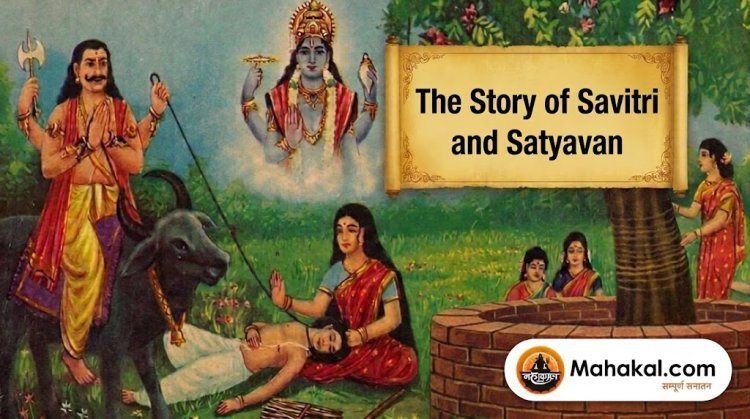
He climbed down from the tree and rested his head in Savitri's lap.
He told her that he was feeling extremely tired and wanted to rest for a while.
Savitri immediately understood that the moment she had feared had arrived.
She gently held her husband and remained beside him.
Soon, Satyavan's body became still, and he stopped breathing.
Savitri was heartbroken, but she did not leave his side.
At that moment, she noticed a divine and powerful figure approaching them.
He had a noose in his hand and a serious appearance.
It was none other than Lord Yama, the God of Death.
7. Lord Yama Takes Satyavan's Soul
Lord Yama approached Satyavan and separated his soul from his physical body using his divine noose.
He then began travelling towards the southern direction, carrying Satyavan's soul.
Savitri watched everything carefully.
Instead of accepting the situation and returning home, she began following Lord Yama.
Lord Yama noticed her and told her that death was a natural law of existence.
Every living being who is born must eventually leave the physical world.
He explained that she should return home because her husband's time on earth had ended.
However, Savitri refused to turn back.
She respectfully explained that a devoted wife should remain committed to her husband. Therefore, as long as she had the strength to walk, she would continue following him.
Her words reflected extraordinary determination and devotion.
Lord Yama was impressed by her courage and righteous behaviour.
He offered her a boon, asking her to request anything except the life of Satyavan.
8. The First Boon: Restoration of Her Father-in-Law's Eyesight
Lord Yama was pleased with Savitri's devotion and asked her to request a blessing.
Instead of asking for something for herself, Savitri thought about her family.
She requested that her blind father-in-law, King Dyumatsena, regain his eyesight and good health.
She wanted him to live a healthy and peaceful life.
Lord Yama accepted her request and granted the first boon.
However, Savitri continued walking behind him.
Lord Yama again advised her to return home, but she continued speaking about righteousness, compassion, and the importance of good conduct.
Her thoughtful words impressed him once again.
9. The Second Boon: Restoration of Her Father-in-Law's Kingdom
After hearing Savitri's wise words, Lord Yama offered her another boon.
This time, Savitri requested that her father-in-law regain his lost kingdom and royal position.
She wanted King Dyumatsena to return to his rightful place and rule his kingdom with honour.
Lord Yama accepted this request as well.
Savitri's thoughts were not limited to her own happiness.
She wanted her family to regain its lost dignity, prosperity, and respect.
Lord Yama was increasingly impressed by her selflessness and devotion.
Yet Savitri continued following him.
10. The Third Boon: Blessings for King Ashwapati
Lord Yama offered Savitri another opportunity to ask for a blessing.
This time, Savitri remembered her father, King Ashwapati.
She requested that her father be blessed with many worthy and noble sons who would continue his family lineage.
Lord Yama granted this boon too.
Through her requests, Savitri had secured blessings for both her husband's family and her father's family.
Even after receiving three boons, she did not stop following Lord Yama.
Her courage and wisdom continued to amaze the God of Death.
11. The Fourth Boon: Savitri's Extraordinary Intelligence
Lord Yama was deeply impressed by Savitri's devotion, patience, and intelligence.
He offered her another boon and asked her to make a wish.
This time, Savitri made a very thoughtful request.
She asked Lord Yama to bless her with one hundred sons through her husband, Satyavan.
Without considering the deeper meaning of her request, Lord Yama granted the boon.
However, Savitri then respectfully explained an important point.
She reminded Lord Yama that he had taken Satyavan's soul with him.
If Satyavan remained dead, how could she become the mother of one hundred sons through him?
Her request was based on the very blessing that Lord Yama had already granted.
She had used wisdom and logical reasoning rather than anger or confrontation.
Lord Yama realized the strength of her argument.
He understood that Savitri's wish could only be fulfilled if Satyavan returned to life.
12. Lord Yama Returns Satyavan's Life
Lord Yama was deeply pleased with Savitri's devotion, intelligence, courage, and unwavering love.
He finally decided to grant her greatest wish.
He returned Satyavan's soul and blessed him with a new life.
Thus, Satyavan was brought back from the path of death.
Savitri's determination and wisdom had changed what appeared to be an unavoidable destiny.
The blessings granted by Lord Yama also fulfilled her wishes for her father and father-in-law.
Satyavan gradually regained consciousness and found himself beside Savitri.
He returned home with her, where they later received the blessings promised by Lord Yama.
This extraordinary event made the story of Savitri and Satyavan immortal in Hindu mythology.
It teaches us that true love is not merely about emotions. It also involves patience, responsibility, intelligence, sacrifice, and determination.
13. Religious Significance of the Story of Savitri and Satyavan
The story of Savitri and Satyavan has great religious and cultural significance in Hindu tradition.
It is especially associated with the festival of Vat Savitri Vrat.
On this occasion, married women observe a fast and worship the Banyan tree while praying for the long life, health, and happiness of their husbands.
According to Hindu religious beliefs, the Banyan tree represents longevity, stability, and continuity of life.
Its long lifespan and spreading branches symbolize the strength and continuity of family relationships.
Women traditionally worship the Banyan tree, offer prayers, and tie sacred threads around its trunk.
They also listen to or recite the story of Savitri and Satyavan.
This festival reminds people of the importance of love, trust, mutual respect, and commitment in married life.
14. Why Is the Banyan Tree Worshipped During Vat Savitri Vrat?
In Hindu tradition, the Banyan tree is considered sacred and spiritually significant.
According to religious beliefs, the Banyan tree is associated with the divine presence of the Hindu Trinity:
-
Lord Brahma: Considered the creator of the universe.
-
Lord Vishnu: Considered the protector and preserver of the universe.
-
Lord Shiva: Considered the destroyer and transformer of the universe.
The roots, trunk, and branches of the Banyan tree are symbolically associated with creation, preservation, and transformation.
Its long life represents stability, strength, and continuity.
During Vat Savitri Vrat, women worship the tree and pray for the well-being of their families.
The tradition is closely connected with Savitri's devotion and her extraordinary determination to protect her husband.
15. Seven Important Life Lessons from the Story of Savitri and Satyavan
The story of Savitri and Satyavan is not only a religious tale but also a source of valuable life lessons.
It teaches us how love, wisdom, courage, and commitment can help people face difficult circumstances.
1. True Love Is Selfless
Savitri did not choose Satyavan because of his wealth, royal position, or social status. She chose him because of his good character and noble qualities.
True love is based on respect, understanding, and emotional connection rather than material possessions.
2. Patience Is Essential During Difficult Times
Savitri knew about her husband's predicted death, yet she did not lose her courage.
Her story teaches us to remain patient and strong even when circumstances seem unfavourable.
3. Wisdom Is a Powerful Strength
Savitri used her intelligence and logical thinking while communicating with Lord Yama.
She proved that wisdom and thoughtful communication can help overcome difficult situations.
4. Family Responsibilities Should Be Respected
Savitri did not think only about herself and her husband. She also prayed for the well-being of her father and father-in-law.
Her actions highlight the importance of family values and responsibility.
5. Trust and Commitment Strengthen Relationships
The relationship between Savitri and Satyavan represents faith, loyalty, and dedication.
A strong relationship requires mutual respect, honesty, and understanding.
6. Never Lose Courage in Difficult Situations
Savitri faced the God of Death without surrendering to fear.
Her story inspires people to face challenges with confidence and determination.
7. Respect the Strength and Wisdom of Women
Savitri's character represents the courage, intelligence, independence, and determination of women.
Her story reminds society that women possess the strength to make difficult decisions and face challenging circumstances.
16. Why Is Savitri Considered an Ideal Woman in Hindu Tradition?
In Indian culture, Savitri is remembered as an ideal woman and a symbol of devotion, courage, and wisdom.
Her greatness is not limited to her devotion towards her husband.
She also demonstrated remarkable intelligence, patience, self-confidence, and the ability to make thoughtful decisions during difficult circumstances.
She accepted a simple life in the forest after marriage and fulfilled her responsibilities towards her husband and in-laws.
When faced with the greatest challenge of her life, she did not surrender to fear.
Instead, she presented her thoughts with confidence and used her knowledge of dharma to communicate with Lord Yama.
Her story teaches both men and women that a successful relationship should be based on love, respect, understanding, and responsibility.
Savitri continues to inspire generations through her extraordinary example of determination and devotion.
Conclusion: An Immortal Story of Love, Faith, and Devotion
The story of Savitri and Satyavan is one of the most inspiring and memorable stories in Hindu mythology.
It teaches us that true love is not simply about being together during happy moments. It also means standing beside one another during difficult times with courage, patience, faith, and commitment.
Savitri demonstrated extraordinary wisdom and determination when she faced Lord Yama, the God of Death, to protect her husband's life.
Her character represents the strength of women, the importance of family values, and the power of unwavering faith.
Even today, millions of married women observe Vat Savitri Vrat and remember the legendary devotion of Savitri and Satyavan.
Their story continues to inspire people to build relationships based on mutual respect, trust, love, and responsibility.
Ultimately, the story of Savitri and Satyavan is much more than an ancient mythological tale. It is an eternal message about the strength of love, the importance of wisdom, and the power of determination.
What's Your Reaction?