Why Is Maa Mahagauri Called the Symbol of Peace and Purity? Know the Significance of Navratri Ashtami and Her Worship
Maa Mahagauri is worshipped as the eighth form of Goddess Durga during Navratri. Discover why she represents peace and purity, the religious significance of Ashtami, her worship, mantra, offerings and Kanya Pujan traditions.
Why Is Maa Mahagauri Called the Symbol of Peace and Purity? Know the Significance of Ashtami
Navratri is one of the most sacred and important festivals in Hindu tradition. During the nine days of Navratri, devotees worship the nine forms of Goddess Durga. Each form represents a particular divine quality and carries a unique spiritual message.
Among the nine forms, Maa Mahagauri is traditionally worshipped as the eighth form of Goddess Durga. The eighth day of Navratri is known as Ashtami, and it holds special significance for the worship of Maa Mahagauri.
Maa Mahagauri is associated with peace, purity, calmness, compassion and spiritual clarity. Her serene form inspires devotees to maintain purity of thought, positive intentions and inner peace.
Who Is Maa Mahagauri?
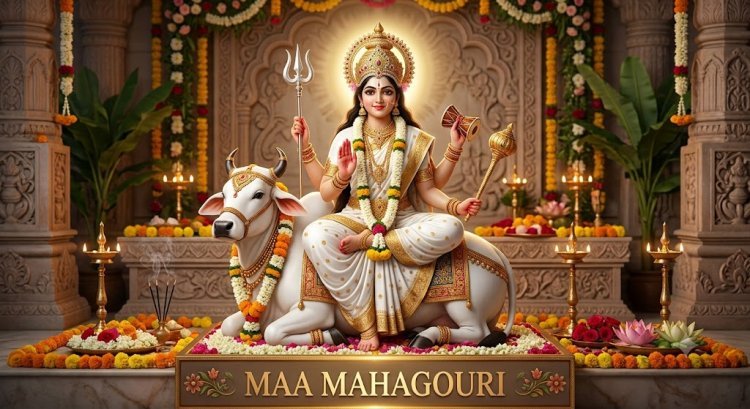
Maa Mahagauri is regarded as the eighth form of Goddess Durga. The name "Mahagauri" is associated with an exceptionally bright and radiant form.
She is traditionally described as a calm and compassionate goddess dressed in white. Her appearance is considered a symbol of purity, peace and spiritual cleanliness.
Why Is Maa Mahagauri Called the Symbol of Peace and Purity?
White is traditionally associated with peace, purity, simplicity and positivity. Since Maa Mahagauri is described in a radiant white form, she is strongly associated with these qualities.
Her worship reminds devotees that true purity is not only about external appearance but also about the purity of one's thoughts, intentions and actions.
Maa Mahagauri's peaceful form teaches devotees to move away from anger, negativity and hatred and develop compassion, patience and positive thinking.
Religious Significance of Maa Mahagauri's Form
Maa Mahagauri is generally depicted with four arms. Traditional descriptions associate her with objects such as the trident and damaru, while her other hands are shown in protective and blessing gestures.
Her calm appearance represents fearlessness, compassion and spiritual purity.
Her vehicle is traditionally considered to be the bull, which is also an important part of her traditional iconography.
What Is the Significance of Ashtami?
The eighth day of Navratri is known as Ashtami and is also commonly referred to as Durga Ashtami or Maha Ashtami.
It is one of the most important days of Navratri. Devotees worship Goddess Durga and Maa Mahagauri with devotion and perform various religious activities according to their family traditions.
In many households and communities, special prayers, Durga Saptashati recitation, havan and Kanya Pujan are performed on Ashtami.
Why Is Maa Mahagauri Worshipped on Ashtami?
According to Hindu religious tradition, Maa Mahagauri is worshipped on the eighth day of Navratri. Devotees seek her blessings for peace, happiness, prosperity and positivity in their lives.
The worship of Maa Mahagauri is also viewed as an opportunity for spiritual reflection and devotion.
How Is Maa Mahagauri Worshipped?
Devotees traditionally take a bath in the morning and wear clean clothes before beginning the puja. The place of worship is cleaned and an image or idol of Maa Mahagauri is placed respectfully.
Commonly used puja items include:
- Flowers and garlands
- Incense
- Diya
- Rice or Akshat
- Roli or Kumkum
- Fruits
- Sweets
- Coconut
- Satvik offerings
The most important aspect of worship is devotion, cleanliness and sincere faith.
What Bhog Is Offered to Maa Mahagauri?
Offering coconut to Maa Mahagauri is a traditional practice in many places. Devotees may also offer fruits, sweets and other pure vegetarian or satvik food according to their family traditions.
The spiritual value of an offering is traditionally connected not only with the material item but also with the devotion and भावना with which it is offered.
Maa Mahagauri Mantra
Devotees commonly chant the following mantra while worshipping Maa Mahagauri:
Om Devi Mahagauryai Namah.
Devotees can chant this mantra with faith and concentration while meditating on the peaceful form of Maa Mahagauri.
Kanya Pujan on Ashtami
Kanya Pujan is a popular tradition associated with Ashtami or Navami in many Hindu households.
Young girls are respectfully worshipped as manifestations of feminine divine energy and are offered food, gifts or Dakshina.
The central भाव of Kanya Pujan is to express respect toward feminine power and devotion toward the Goddess.
Spiritual Message of Maa Mahagauri
Maa Mahagauri's form carries several meaningful spiritual lessons.
Purity of Mind:
Devotees are encouraged to keep their thoughts and actions pure.
Peace:
The peaceful form of Maa Mahagauri inspires people to control anger and negativity.
Positivity:
Her worship encourages devotees to remain hopeful and positive even during difficult circumstances.
Devotion:
Faith and sincere devotion can provide inner strength and emotional stability.
What Can Devotees Do on Ashtami?
According to their family traditions, devotees may:
- Take a bath and begin the day with a spiritual intention.
- Worship Maa Mahagauri.
- Light a diya and incense.
- Chant Maa Mahagauri's mantra.
- Recite Durga Saptashati or other devotional prayers.
- Offer satvik bhog.
- Perform Kanya Pujan according to tradition.
- Help someone in need.
- Maintain positive thoughts and peaceful behavior.
- Remember and worship the Goddess throughout the day.
Conclusion
Maa Mahagauri is worshipped as the eighth form of Goddess Durga during Navratri. Her serene and radiant form is traditionally associated with peace, purity, compassion and spiritual clarity.
Ashtami is an especially important day of Navratri when devotees express their devotion through puja, prayer, mantra chanting and other religious practices.
The deeper message of Maa Mahagauri is that true beauty and purity begin within. By cultivating peaceful thoughts, positive actions, compassion and devotion, a person can move toward greater inner harmony.
For devotees, worshipping Maa Mahagauri on Ashtami is therefore not only a religious tradition but also an opportunity to seek peace, positivity and spiritual purity in life.
What's Your Reaction?