What Siddhis Are Associated with Maa Siddhidatri Puja? Know the Spiritual Significance of the Last Day of Navratri
Maa Siddhidatri is worshipped on the ninth and final day of Navratri. Learn about her divine form, the eight Siddhis associated with her, the significance of Mahanavami, Puja Vidhi and Kanya Pujan.
Content Blog:
What Siddhis Are Associated with Maa Siddhidatri Puja? Know the Significance of the Last Day of Navratri
Sharadiya Navratri is a nine-day festival dedicated to the worship of the nine forms of Goddess Durga, known as Navdurga. On the ninth and final day of Navratri, devotees worship Maa Siddhidatri, the ninth form of Navdurga.
The name Siddhidatri means “the Goddess who grants Siddhis.” According to Hindu religious traditions, Maa Siddhidatri is associated with spiritual accomplishment, divine wisdom, inner strength and the eight great Siddhis.
Her worship holds special importance on Mahanavami, the ninth day of Navratri. Devotees seek her blessings for peace, wisdom, spiritual growth, positivity and a balanced life.
Who Is Maa Siddhidatri?
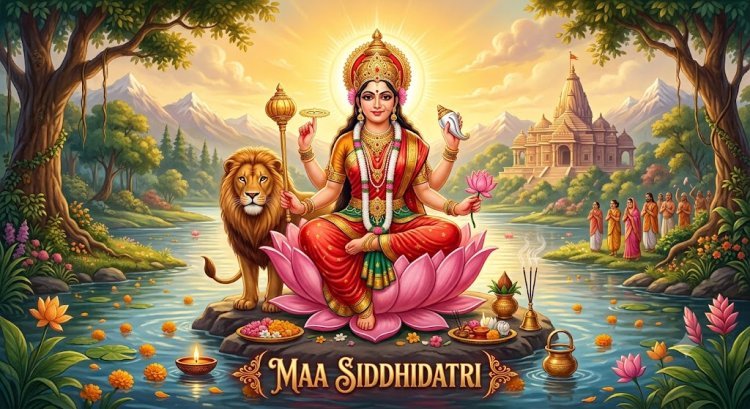
Maa Siddhidatri is regarded as the ninth form of Goddess Durga. She is traditionally described as a peaceful and divine form of the Goddess who blesses devotees with spiritual knowledge and Siddhis.
She is commonly depicted with four arms. Her hands are traditionally shown holding a lotus, mace, discus and conch. Different traditions may portray her form and vehicle in slightly different ways.
The form of Maa Siddhidatri represents the culmination of spiritual practice. Her worship reminds devotees that true spiritual progress is not only about gaining extraordinary powers but also about developing wisdom, discipline, humility and inner peace.
Which Siddhis Are Associated with Maa Siddhidatri?
According to traditional Hindu beliefs, Maa Siddhidatri is associated with the Ashta Siddhis, or eight great Siddhis:
- Anima – the ability to become extremely subtle or minute.
- Mahima – the ability to become extremely vast or great.
- Garima – the ability to become immensely heavy.
- Laghima – the ability to become extremely light.
- Prapti – the ability to attain or reach what is desired.
- Prakamya – associated with the fulfillment of one's intentions or desires.
- Ishitva – associated with divine authority or mastery.
- Vashitva – associated with the power of influence or control.
These Siddhis are traditionally understood as spiritual or divine accomplishments. They can also be interpreted symbolically as representing self-control, concentration, discipline, spiritual awareness and the development of higher consciousness.
Why Is the Last Day of Navratri Important?
The ninth day of Navratri is known as Mahanavami and is considered an important day in the nine-day spiritual journey of Navratri.
During the first eight days, devotees worship different forms of Goddess Durga. On the ninth day, Maa Siddhidatri is worshipped as the final form of Navdurga.
Devotees believe that worshipping Maa Siddhidatri with devotion can help develop inner strength, wisdom, concentration and positive thinking.
In many households and communities, Kanya Pujan is also performed on Mahanavami. Young girls are respectfully worshipped as manifestations of feminine divine energy and are offered food, sweets, fruits and gifts according to family traditions.
How to Perform Maa Siddhidatri Puja?
On Mahanavami, devotees traditionally wake up early, take a bath and wear clean clothes. The Puja area is cleaned and an image or idol of Maa Siddhidatri is placed respectfully.
A lamp is lit and the Goddess is worshipped with flowers, rice, roli, kumkum, incense, fruits and devotional offerings.
Devotees may chant Durga Mantras according to their tradition. Some also recite Durga Saptashati, Devi Kavach or other traditional devotional texts.
At the end of the Puja, devotees pray for peace, wisdom, good health, prosperity, family well-being and spiritual progress.
Bhog Offered to Maa Siddhidatri
Devotees offer different types of traditional and sattvic food to Maa Siddhidatri according to their family and regional customs.
During Kanya Pujan, halwa, puri and black chickpeas (kala chana) are commonly prepared in many households. Fruits and sweets may also be offered.
The most important aspect of devotional offering is considered to be faith and purity of intention rather than the value or quantity of the food.
Significance of Kanya Pujan
Kanya Pujan is an important tradition observed by many devotees during Ashtami or Mahanavami. Young girls are respectfully treated as embodiments of divine feminine energy.
In some traditions, a young boy is also worshipped as a form of Batuk or Langur along with the girls.
After the Puja, the children are offered a traditional meal and gifts or Dakshina according to the family's custom.
Beyond its religious significance, Kanya Pujan also conveys a message of respecting girls and honoring feminine power.
Spiritual Benefits Associated with Maa Siddhidatri Puja
According to religious beliefs, worshipping Maa Siddhidatri can inspire devotees toward several spiritual benefits, including:
- Greater inner peace and positivity.
- Improved concentration and self-discipline.
- Development of courage and confidence.
- Greater interest in spiritual knowledge.
- A stronger sense of devotion and surrender.
- Inspiration to overcome negative thoughts.
- Greater awareness of one's actions and thoughts.
- A deeper interest in meditation and self-reflection.
These benefits should be understood as part of religious and spiritual beliefs rather than as guaranteed material results.
The Spiritual Message of Maa Siddhidatri
The worship of Maa Siddhidatri is not simply about seeking supernatural powers. Her form carries a deeper spiritual message.
True Siddhi can also be understood as the ability to control the mind, overcome negative tendencies, develop wisdom, reduce ego and live according to Dharma and good values.
The nine days of Navratri represent a spiritual journey of devotion, discipline and self-reflection. Worshipping Maa Siddhidatri on the final day symbolizes the completion of this journey and the beginning of a deeper path toward spiritual awareness.
Important Things to Remember During Puja
Devotees should perform the Puja with a peaceful mind and sincere devotion. The Puja area should be kept clean and the rituals should be performed according to one's family or regional tradition.
Sattvic food, positive thoughts, respectful behavior and devotion are traditionally given importance during Navratri.
If a family follows a particular Puja tradition, it is appropriate to follow that tradition or seek guidance from a knowledgeable priest for specific rituals.
Conclusion
Maa Siddhidatri is worshipped as the ninth form of Navdurga on the final day of Navratri, known as Mahanavami. According to Hindu religious traditions, she is associated with the Ashta Siddhis and represents spiritual accomplishment, wisdom and divine grace.
Her worship teaches that true success is not limited to material achievements. Inner peace, self-control, wisdom, devotion, positive thinking and spiritual growth are also important aspects of a meaningful life.
On the auspicious occasion of Mahanavami, devotees worship Maa Siddhidatri with faith and pray for peace, wisdom, strength, prosperity and spiritual progress. Her worship marks the completion of the nine-day Navratri journey and inspires devotees to continue their spiritual path with devotion and righteousness.
What's Your Reaction?