Where Did Goddess Sati’s Elbow Fall in Ujjain? Discover the Mythological Story of Harsiddhi Mata Shakti Peeth
: Discover the mythological belief that Goddess Sati’s elbow fell at Harsiddhi Mata Temple in Ujjain. Explore the legend of Lord Shiva, the origin of Shakti Peethas, the significance of Goddess Harsiddhi, and the temple’s spiritual heritage.
Content Blog
Where Did Goddess Sati’s Elbow Fall in Ujjain? The Mythological Story of Harsiddhi Mata Shakti Peeth
Ujjain, one of India’s ancient sacred cities, is widely known as the city of Lord Mahakal. Devotees from across India and beyond visit the famous Mahakaleshwar Jyotirlinga to seek the blessings of Lord Shiva. However, the spiritual identity of Ujjain extends far beyond the Mahakal Temple. The city is also an important centre of Goddess worship, and the Harsiddhi Mata Temple holds a special place in the hearts of devotees.
One of the most significant religious beliefs associated with this temple is that Goddess Sati’s elbow fell at this sacred location. For this reason, Harsiddhi Mata Temple is revered as an important Shakti Peeth in Hindu tradition.
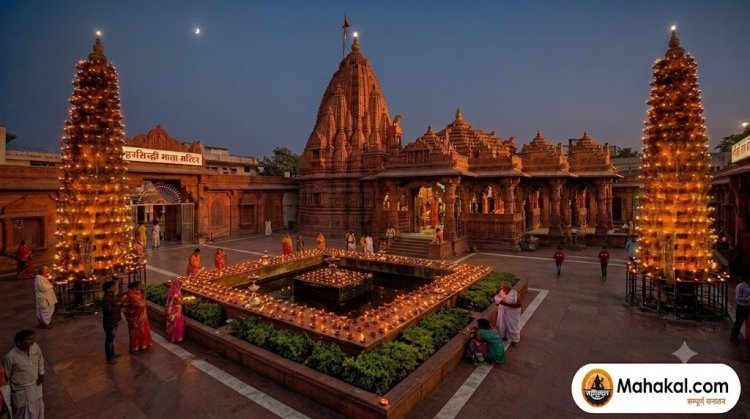
The temple is also known for its spiritual atmosphere, the worship of Goddess Harsiddhi, the sacred Shri Yantra, and its two magnificent lamp pillars that create a spectacular sight when illuminated during religious occasions.
But why is Ujjain associated with the fall of Goddess Sati’s elbow? Why was Lord Shiva carrying the body of Sati? How did the Shakti Peethas originate, and how did Goddess Chandi become known as Harsiddhi?
The answers to these questions lie in ancient Hindu mythology and the religious traditions associated with Goddess Shakti.
1. The Mythological Belief About Goddess Sati’s Elbow in Ujjain
According to Hindu religious tradition, Harsiddhi Mata Temple in Ujjain marks the sacred place where Goddess Sati’s elbow is believed to have fallen.
The official tourism information published by the Ujjain district administration also refers to this belief through the traditional account associated with the Shiva Purana.
In Hinduism, Shakti Peethas are sacred places associated with the legend of Goddess Sati. According to different religious traditions, parts of her body or ornaments fell at various locations, which subsequently became important centres of Goddess worship.
Harsiddhi Mata Temple is an important part of this sacred tradition. Here, Goddess Harsiddhi is worshipped as a manifestation of divine feminine power.
For devotees, the temple is much more than a religious structure. It represents faith, spiritual strength, and the enduring presence of the Divine Mother in Hindu tradition.
The belief concerning Sati’s elbow forms a central part of the temple’s religious identity.
2. Who Was Goddess Sati, and What Was Her Relationship with Lord Shiva?
Goddess Sati is revered as a manifestation of Adi Shakti, the primordial divine feminine energy. She was the daughter of Prajapati Daksha and the wife of Lord Shiva.
According to mythology, Sati chose Lord Shiva as her husband, but her father Daksha disapproved of their relationship.
Daksha was associated with status, authority, and worldly prestige, whereas Lord Shiva represented asceticism, detachment, and a simple way of life. These differences form an important part of the traditional account of their conflict.
Goddess Sati remained deeply devoted to Lord Shiva. When Daksha organised a grand yajna and did not invite Shiva, the incident became the beginning of a tragic mythological story that is closely associated with the origin of the Shakti Peethas.
This story is not merely about a family dispute. It also explores themes of pride, respect, devotion, sacrifice, and divine power.
3. The Story of Daksha’s Yajna: Why Did Goddess Sati Give Up Her Life?
According to Hindu mythology, Prajapati Daksha organised a grand sacrificial ceremony known as a yajna. Many gods and sages were invited, but Lord Shiva was deliberately excluded.
When Goddess Sati learned about the ceremony, she wished to visit her father’s home. Lord Shiva advised her that attending a gathering where her husband was not respected might cause her distress.
Nevertheless, Sati went to the yajna. There, she witnessed the disrespect shown towards Lord Shiva and felt deeply hurt.
According to the traditional account, Goddess Sati gave up her physical body through yogic fire at the site of the yajna.
When Lord Shiva learned of her death, he was overcome with grief and anger. The subsequent events in the mythology include the manifestation of Virabhadra, the destruction of Daksha’s yajna, and Shiva’s profound sorrow.
This story eventually becomes connected with the tradition of the Shakti Peethas, which are revered throughout Hindu religious culture.
The spiritual message: Pride and disrespect can lead to destruction, while love, respect, and devotion are essential values in human relationships.
4. How Did the Shakti Peethas Originate?
After Goddess Sati’s death, Lord Shiva was overwhelmed by grief. According to a widely known mythological account, he carried her body as he wandered, unable to bear the separation.
The story describes how the balance of the universe was threatened by Shiva’s immense sorrow.
To restore cosmic balance, Lord Vishnu used his Sudarshan Chakra. According to the traditional narrative, different parts of Sati’s body fell at various locations, and these places subsequently became revered as Shakti Peethas.
These sacred sites are worshipped as important centres of divine feminine energy and devotion.
Within this tradition, Harsiddhi Mata Temple in Ujjain is associated with the place where Goddess Sati’s elbow fell.
Devotees believe that the temple represents the special presence of Goddess Shakti and provides a sacred space for prayer and spiritual reflection.
It is worth noting that the number and identification of Shakti Peethas differ among religious texts and traditions. The story should therefore be understood in its mythological and devotional context.
5. Why Is Harsiddhi Mata Temple So Famous?
Harsiddhi Mata Temple is one of Ujjain’s important centres of religious worship. Located near the Mahakaleshwar Temple, it attracts devotees who wish to experience the city’s rich spiritual heritage.
The temple is known for its worship of Goddess Harsiddhi, the presence of the Shri Yantra, its sacred images, and its magnificent lamp pillars.
Inside the temple, Goddess Annapurna is enshrined between the images of Goddess Mahalakshmi and Goddess Mahasaraswati. This arrangement reflects the rich tradition of worshipping different manifestations of the Divine Mother.
The temple’s significance extends beyond the belief concerning Sati’s elbow. It is also an important part of Ujjain’s historical, cultural, and spiritual identity.
Devotees visit Harsiddhi Mata to pray for peace, strength, wisdom, and the well-being of their families.
6. How Did Goddess Chandi Become Known as Harsiddhi?
Another mythological tradition associated with Goddess Harsiddhi is found in the religious narratives connected with the Skanda Purana.
According to this story, Lord Shiva and Goddess Parvati were on Mount Kailash when two demons, Chand and Prachand, attempted to approach them. Lord Shiva called upon Goddess Chandi to confront the demons, and she defeated them.
Pleased with her victory, Lord Shiva bestowed upon her the name Harsiddhi. The name is commonly interpreted in devotional tradition as referring to a goddess who grants accomplishments or triumphs over obstacles.
This story symbolises the victory of righteousness over evil and highlights the courage and power of the Divine Mother.
The legend of Sati’s elbow and the story explaining the name Harsiddhi are two distinct mythological traditions associated with the temple. Together, they contribute to its religious significance.
7. What Is the Significance of the Lamp Pillars at Harsiddhi Temple?
One of the most recognisable features of Harsiddhi Mata Temple is its pair of towering lamp pillars, known as Deep Stambhs.
These pillars are among the temple’s most striking attractions. During Navratri, they are illuminated with numerous lamps, creating a magnificent sight for devotees.
In Hindu worship, the lighting of a lamp symbolises knowledge, hope, and the removal of darkness. Spiritually, it represents the triumph of wisdom over ignorance.
The illuminated pillars at Harsiddhi Temple reflect the devotion of worshippers and the grandeur of traditional Goddess worship.
As the lamps glow in the evening, the temple courtyard takes on a deeply devotional atmosphere. Visitors gather for darshan, prayers, and religious ceremonies, making the experience memorable for pilgrims and visitors alike.
The Deep Stambhs are therefore important not only for their visual beauty but also for the religious traditions they represent.
8. King Vikramaditya and His Devotion to Goddess Harsiddhi
The religious folklore of Ujjain also connects King Vikramaditya with Goddess Harsiddhi. In popular tradition, the goddess is regarded as the king’s revered deity and family goddess.
Stories describe King Vikramaditya’s deep devotion, dedication, and spiritual commitment to the Divine Mother. Some versions also include miraculous episodes that have been passed down through local religious traditions.
However, every detail of these stories should not automatically be treated as a historically verified event. They are best understood as part of Ujjain’s cultural memory and devotional heritage.
The association between King Vikramaditya and Goddess Harsiddhi adds another dimension to the temple’s enduring popularity and spiritual identity.
9. Why Does Harsiddhi Mata Temple Become Especially Important During Navratri?
Navratri is one of the major Hindu festivals dedicated to Goddess Durga and the divine feminine energy. During these nine days, devotees worship different manifestations of the Goddess through prayers, fasting, mantra chanting, meditation, and aarti.
Harsiddhi Mata Temple in Ujjain also becomes an important destination during this festival. The decorations, illuminated lamp pillars, and gatherings of devotees create a vibrant devotional atmosphere.
Worshippers pray to Goddess Harsiddhi for courage, peace of mind, family well-being, and prosperity.
The spiritual message of Navratri encourages people to overcome fear, anger, pride, and other negative tendencies within themselves. Worshipping the Goddess is regarded as a way of seeking inspiration and awakening inner strength.
Anyone planning a visit to Ujjain during Navratri should check the latest darshan and aarti information with the local temple administration.
10. Is There Historical Evidence That Goddess Sati’s Elbow Fell in Ujjain?
This is an important question when discussing religious history.
The belief that Goddess Sati’s elbow fell at Harsiddhi Mata Temple is a traditional mythological belief associated with the Shiva Purana tradition and the wider concept of Shakti Peethas.
It should not be presented as an event established through modern historical or archaeological evidence. Religious narratives carry significance within their own spiritual, cultural, and devotional contexts.
The importance of Harsiddhi Mata Temple is reflected in its longstanding worship traditions, its place in local religious culture, and its association with Ujjain’s sacred heritage.
Therefore, the most accurate way to describe the tradition is:
According to Hindu religious belief, Goddess Sati’s elbow fell at the site of Harsiddhi Mata Temple in Ujjain.
This wording respects the religious tradition while presenting the information responsibly to readers.
11. The Spiritual Significance of Worshipping Goddess Harsiddhi
For devotees, worshipping Goddess Harsiddhi represents faith, courage, and inner strength. Through prayer, worshippers seek inspiration to face life’s challenges and follow a righteous path.
Depending on their family and religious traditions, devotees may light lamps, offer flowers, chant devotional mantras, and participate in aarti.
An important aspect of Goddess worship is self-reflection. Prayer can encourage people to cultivate humility, compassion, patience, and positivity in their daily lives.
Religious rituals should not be presented as guarantees of specific material outcomes. Their spiritual value lies in devotion, inner peace, and the discipline of maintaining a meaningful religious practice.
12. The Place of Harsiddhi Shakti Peeth in Ujjain’s Religious Heritage
Ujjain has been recognised for centuries as one of India’s important sacred cities. It is home to the Mahakaleshwar Jyotirlinga, Harsiddhi Mata Temple, and numerous other places of religious importance.
Harsiddhi Mata Temple represents a tradition in which the worship of Lord Shiva and Goddess Shakti is closely connected.
The story of Goddess Sati, the origin of the Shakti Peethas, and the legends surrounding Goddess Harsiddhi give the temple a distinctive spiritual identity.
For pilgrims visiting Ujjain, the temple offers an opportunity not only to worship the Goddess but also to explore the city’s ancient religious traditions.
Conclusion:
How Does the Legend of Sati’s Elbow Make Ujjain Special?
Harsiddhi Mata Temple in Ujjain is an important centre of devotion, mythology, and the worship of divine feminine power.
According to Hindu religious belief, Goddess Sati’s elbow fell at this sacred location while Lord Shiva was carrying her body in grief. This tradition is the reason the temple is revered as a Shakti Peeth.
The story of Sati’s sacrifice, Lord Shiva’s sorrow, the origin of the Shakti Peethas, the legend explaining the name Harsiddhi, and the magnificent Deep Stambhs all contribute to the temple’s unique identity.
The temple reminds devotees that Goddess Shakti represents not only divine worship but also courage, dedication, wisdom, and inner strength.
For anyone interested in the spiritual mysteries and mythological heritage of Ujjain, the story of Harsiddhi Mata Temple offers a meaningful glimpse into India’s ancient religious traditions.
Jai Maa Harsiddhi! Jai Maa Shakti!
What's Your Reaction?