Why Do We Celebrate Dussehra? Know the Story of Lord Rama, Ravana and the Significance of Vijayadashami
Why is Dussehra celebrated? Learn about the victory of Lord Rama over Ravana, the tradition of Ravana Dahan, the religious significance of Vijayadashami and the spiritual message of this important Hindu festival.
CONTENT BLOG:
Why Do We Celebrate Dussehra? Know the Religious and Spiritual Significance of Vijayadashami
Dussehra, also known as Vijayadashami, is one of the most important Hindu festivals celebrated across India. The festival represents the victory of good over evil, truth over falsehood and righteousness over unrighteousness. It carries a powerful religious, cultural and spiritual message for everyone.
Dussehra is most famously associated with Lord Rama's victory over Ravana, the king of Lanka. According to religious tradition, Lord Rama defeated Ravana and rescued Goddess Sita after a great battle. To commemorate this victory, effigies of Ravana, Kumbhakarna and Meghnada are traditionally burned on Vijayadashami.
When Is Dussehra Celebrated?
Dussehra is celebrated on the Dashami Tithi, the tenth day of the Shukla Paksha of the Ashwin month according to the Hindu calendar. It marks the conclusion of Sharadiya Navratri.
During the nine days of Navratri, devotees worship different forms of Goddess Durga. The tenth day is celebrated as Vijayadashami, making the festival an important conclusion to the Navratri celebrations.
The Story of Lord Rama and Ravana
The most well-known story associated with Dussehra comes from the Ramayana. According to religious tradition, Ravana abducted Goddess Sita and took her to Lanka.
Lord Rama, with the help of his brother Lakshmana and the Vanara Sena, travelled to Lanka to rescue Sita. A great battle took place between Lord Rama and Ravana.
After a long and difficult battle, Lord Rama defeated Ravana. This victory is remembered on Vijayadashami as the triumph of righteousness over evil.
The story also teaches that knowledge, power and wealth cannot protect a person from the consequences of arrogance and unrighteous actions.
Why Is Ravana's Effigy Burned?
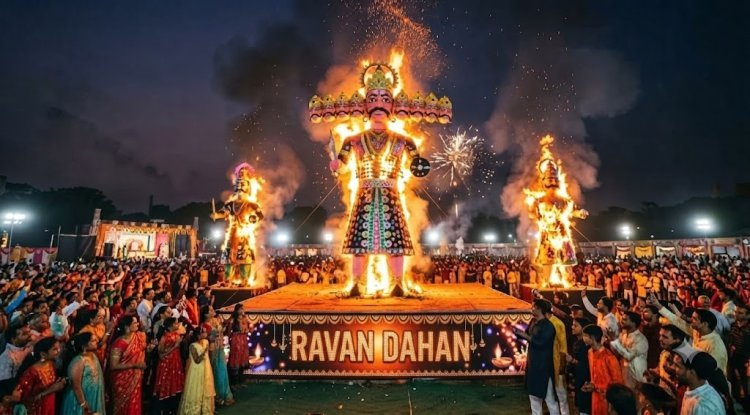
One of the most popular traditions of Dussehra is Ravana Dahan, the burning of Ravana's effigy. In many places, effigies of Kumbhakarna and Meghnada are also burned.
Symbolically, the burning of Ravana represents the destruction of negative qualities within human beings. Ravana's ten heads are often interpreted as symbolic representations of various negative tendencies such as desire, anger, greed, attachment, pride, jealousy and ego.
Therefore, Ravana Dahan carries a deeper spiritual message. It encourages people to overcome their inner weaknesses and choose the path of righteousness.
What Is the Connection Between Dussehra and Navratri?
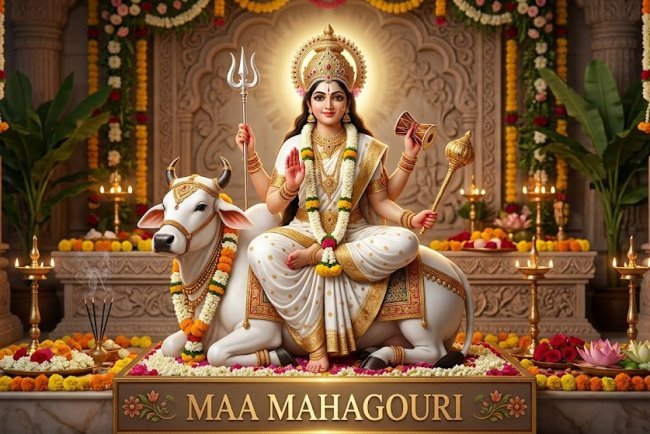
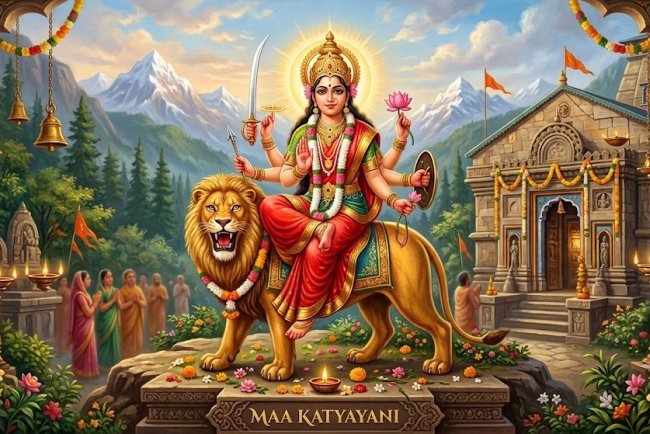
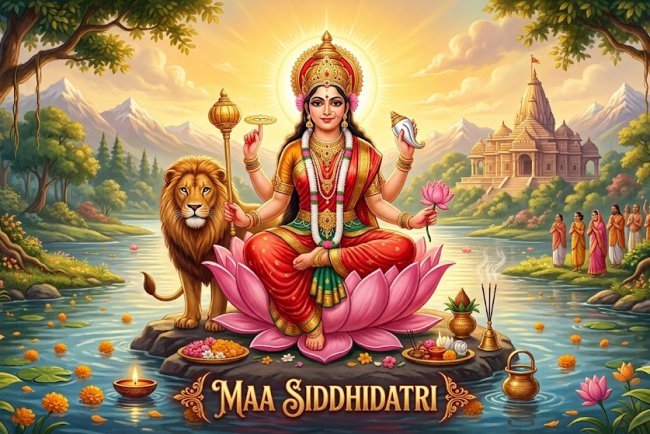
Dussehra and Navratri are closely connected. Sharadiya Navratri is observed for nine days, during which devotees worship Goddess Durga and seek her blessings.
According to a widely known religious tradition, Goddess Durga defeated the demon Mahishasura. Her victory represents the triumph of divine power over evil forces.
Therefore, Vijayadashami represents victory in more than one religious tradition. It is associated with Lord Rama's victory over Ravana as well as the victory of Goddess Durga over Mahishasura.
Spiritual Meaning of Dussehra
The spiritual meaning of Dussehra goes beyond the burning of an effigy.
Every person faces negative emotions such as anger, greed, jealousy, pride and hatred at different stages of life. Vijayadashami encourages us to recognize these weaknesses and work toward overcoming them.
In this sense, the true meaning of Dussehra is not simply to burn an external effigy of Ravana, but to remove the negative qualities that exist within ourselves.
How Is Dussehra Celebrated in India?
Dussehra is celebrated in different ways across India. In many cities and towns, people organize Ramleela performances, religious processions, fairs and Ravana Dahan ceremonies.
Families gather together to participate in celebrations and visit local fairs. In many places, large effigies of Ravana are prepared and burned in the evening as part of the Vijayadashami celebration.
Different regions also have their own unique traditions, rituals and cultural celebrations associated with Dussehra.
What Does Dussehra Teach Us?
Dussehra gives us several valuable lessons for everyday life:
- Always follow the path of truth and righteousness.
- Avoid arrogance and excessive pride.
- Remember that evil ultimately leads to destruction.
- Use power and knowledge responsibly.
- Control negative emotions.
- Believe in the power of good actions.
- Remain committed to truth even during difficult situations.
Conclusion
Dussehra or Vijayadashami is much more than a festival of burning Ravana's effigy. It is a celebration of the victory of truth, righteousness and goodness over evil.
The victory of Lord Rama over Ravana reminds us that no matter how powerful evil may appear, righteousness ultimately prevails. The festival also gives us an opportunity to look within ourselves and identify the negative qualities that we need to overcome.
As Navratri comes to an end with Vijayadashami, the festival inspires us to begin a new chapter with positivity, faith and good intentions.
The most meaningful message of Dussehra is simple:
“No matter how powerful evil may become, goodness ultimately triumphs.”
What's Your Reaction?