Why Is Maa Shailputri Worshipped on the First Day of Navratri? Know Its Special Significance
Learn why Maa Shailputri is worshipped on the first day of Navratri, her divine form, religious significance, puja vidhi, mantra, bhog and spiritual message.
Why Is Maa Shailputri Worshipped on the First Day of Navratri?
Navratri is one of the most important and sacred festivals observed by Hindus. During the nine days of Navratri, devotees worship the nine forms of Goddess Durga, traditionally known as Navdurga.
The first day of Navratri is dedicated to Maa Shailputri, who is regarded as the first form of Navdurga. Devotees begin their nine-day spiritual journey by worshipping Maa Shailputri with devotion, prayers and religious rituals.
Maa Shailputri is associated with strength, stability, purity, nature and devotion. Her divine form carries a deep spiritual message and is traditionally worshipped for peace, strength, prosperity and well-being.
But why is Maa Shailputri worshipped first? What does her name mean? What is special about her divine form? And what are the traditional beliefs associated with her worship?
Let us explore the significance of Maa Shailputri, her story, puja vidhi, mantra and spiritual message in detail.
Who Is Maa Shailputri?
Maa Shailputri is traditionally regarded as the first form of Goddess Durga among the Navdurga. The name Shailputri means “daughter of the mountain.”
According to Hindu religious traditions, Goddess Parvati was born as the daughter of the Himalayas. Because of this, she came to be known as Shailputri.
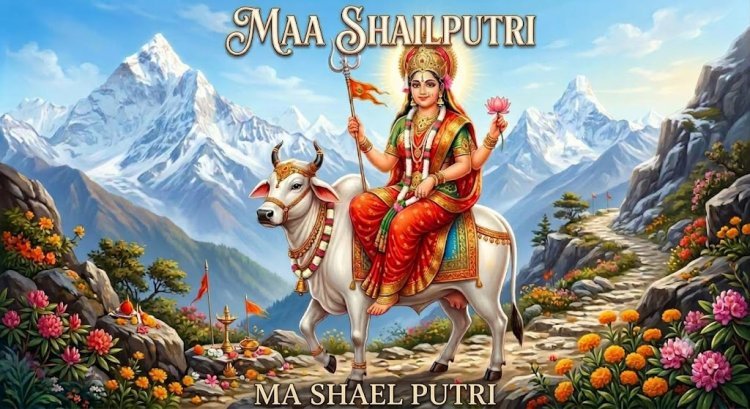
Maa Shailputri is generally depicted with a trident in one hand and a lotus in the other, while riding a bull. The bull is known as her traditional vehicle.
Her form represents a combination of divine strength, purity, stability and spiritual awareness.
Why Is Maa Shailputri Worshipped on the First Day of Navratri?
The nine forms of Goddess Durga are traditionally worshipped in a particular sequence during Navratri. Maa Shailputri is regarded as the first form, and therefore her worship marks the beginning of Navratri worship.
The first day is considered the beginning of a spiritual journey. Devotees start the nine-day observance with prayers, devotion, discipline and a positive intention.
Maa Shailputri is associated with stability and strength. Therefore, her worship is traditionally understood as a reminder that a strong foundation is important before beginning any spiritual journey.
For devotees, the first day of Navratri is therefore not simply the beginning of a festival but also an opportunity to begin a period of devotion, self-discipline and inner reflection.
The Significance of Maa Shailputri's Divine Form
Every element associated with Maa Shailputri carries symbolic meaning in Hindu religious traditions.
1. The Bull as Her Vehicle
Maa Shailputri is traditionally shown riding a bull. The bull is associated with strength, stability, patience and determination.
Her vehicle therefore represents the importance of remaining steady and patient while facing challenges in life.
2. The Trident
The trident, or Trishul, is one of the important symbols associated with Goddess Durga and other forms of Shakti.
It represents divine power and protection in Hindu religious symbolism. The presence of the Trishul in Maa Shailputri's hand reflects her powerful and protective aspect.
3. The Lotus
The lotus is traditionally associated with purity and spiritual awakening.
The lotus in Maa Shailputri's hand symbolizes the idea of remaining pure and spiritually aware even while living in the changing circumstances of the world.
Religious Significance of Maa Shailputri Puja
Maa Shailputri Puja has special significance on the first day of Navratri. Devotees worship the Goddess and pray for peace, strength, prosperity and well-being for themselves and their families.
According to traditional beliefs, worshipping Maa Shailputri with devotion can help devotees develop a sense of faith, positivity, patience and inner strength.
Her association with nature and the mountains also reminds devotees of the importance of respecting nature and maintaining balance in life.
How to Perform Maa Shailputri Puja?
On the first day of Navratri, devotees traditionally begin the day by taking a bath and wearing clean clothes. The puja area is cleaned and an image or idol of Maa Shailputri is placed respectfully.
A lamp and incense may be lit, followed by offerings such as flowers, rice, roli, sandalwood, fruits and other traditional items.
Kalash Sthapana, or the installation of the sacred kalash, is also an important part of Navratri rituals in many Hindu households.
Devotees then worship Maa Shailputri, recite the appropriate mantra or prayer and conclude the puja with an aarti.
The exact rituals may vary according to family traditions, regional customs and individual religious practices.
Maa Shailputri Mantra
A commonly recited mantra for Maa Shailputri is:
Om Devi Shailputryai Namah॥
Devotees may chant this mantra with devotion according to their personal practice and tradition.
Maa Shailputri Dhyan Mantra
A traditional dhyan shloka associated with Maa Shailputri is:
Vande Vanchhita Labhaya Chandrardha Krita Shekharam।
Vrisharudham Shuladharam Shailaputrim Yashasvinim॥
The verse is traditionally used while meditating upon Maa Shailputri and seeking divine blessings, strength and well-being.
What Bhog Is Offered to Maa Shailputri?
Devotees traditionally offer fruits, sweets and other sattvic food items to the Goddess.
In many traditions, ghee is also associated with the bhog offered to Maa Shailputri on the first day of Navratri.
However, religious customs can differ between families and regions. Devotion and sincerity are generally considered more important than the quantity or variety of offerings.
Traditional Beliefs Associated with Maa Shailputri Puja
Maa Shailputri worship is traditionally associated with prayers for peace, stability, positivity and strength.
Devotees commonly pray for:
- Peace and harmony in the family.
- Strength and courage in difficult situations.
- Stability and patience in life.
- Positive thoughts and spiritual awareness.
- A meaningful beginning to the nine-day Navratri observance.
These are religious and traditional beliefs, rather than scientifically established effects.
The Story of Maa Shailputri
According to Hindu religious traditions, Maa Shailputri is associated with the story of Goddess Sati and her rebirth as Goddess Parvati.
The traditional story describes Goddess Sati as the daughter of King Daksha and the wife of Lord Shiva. After the events surrounding Daksha's yajna and the insult directed toward Lord Shiva, Sati gave up her body.
She was later born as the daughter of the Himalayas and came to be known as Parvati. Because she was the daughter of the mountain, she was called Shailputri.
She later became the consort of Lord Shiva. This traditional narrative connects Maa Shailputri with devotion, determination, divine strength and spiritual transformation.
What Should Devotees Do on the First Day of Navratri?
Devotees may follow their family or regional traditions and perform activities such as:
- Taking a bath and wearing clean clothes.
- Cleaning the puja area.
- Performing Kalash Sthapana according to tradition.
- Worshipping Maa Shailputri.
- Lighting a diya and incense.
- Offering flowers, fruits and sattvic bhog.
- Chanting Maa Shailputri's mantra.
- Reading Durga-related scriptures or prayers.
- Performing aarti.
- Helping someone in need.
- Maintaining discipline, devotion and positive thoughts.
What Message Does Maa Shailputri Give Us?
Maa Shailputri represents the beginning of the Navdurga spiritual journey. Her form carries a message of stability, strength, patience and purity.
The bull represents steadiness and strength. The Trishul represents divine power and protection, while the lotus represents purity and spiritual awareness.
Together, these symbols remind devotees of the importance of developing inner strength, patience, courage, purity and balance in life.
Conclusion
The first day of Navratri is traditionally dedicated to Maa Shailputri, the first form of Navdurga. Devotees begin the nine-day worship by seeking her blessings and starting their spiritual journey with faith and devotion.
Maa Shailputri's form is associated with strength, stability, purity and determination. Her worship provides devotees with an opportunity to begin Navratri with a positive intention and a renewed sense of devotion.
Whether you observe Navratri through elaborate rituals or simple prayer, the central message of Maa Shailputri is one of faith, strength, patience and spiritual balance.
Jai Mata Di!
What's Your Reaction?