Why Pran Pratishtha of Ram Mandir Is a Historic Moment for Hindus?
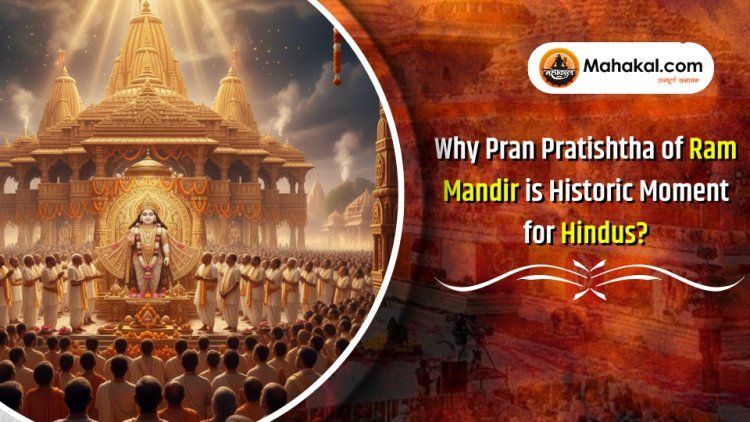
The Pran Pratishtha of Ram Mandir marks a historic and spiritually significant moment for Hindus across the world. It symbolizes the restoration of faith, devotion, and cultural identity rooted in centuries-old belief. The consecration ritual infuses divine life force into the idol, transforming the temple into a living spiritual center. For millions, it represents the fulfillment of a long-awaited aspiration tied to Lord Ram and Dharma. The event unites devotees beyond regions, languages, and generations. It also reflects the perseverance of faith through historical challenges. The Ram Mandir stands as a symbol of justice, devotion, and cultural continuity. The Pran Pratishtha reconnects Hindus with their civilizational heritage. It inspires spiritual awakening and moral values in society. Overall, it marks a defining chapter in Hindu history and collective consciousness.
Why Pran Pratishtha of Ram Mandir Is a Historic Moment for Hindus?
Introduction: A Date with Destiny
On January 22, 2024, the world witnessed an event that transcended the boundaries of time and politics. The Pran Pratishtha (consecration) of Bhagwan Shri Ram at his Janmabhoomi (birthplace) in Ayodhya was a spiritual homecoming that resonated with over a billion people. It wasn't just the opening of a religious structure; it was the reclamation of a civilizational identity that had been suppressed for centuries.
1. The Vedic Science of Pran Pratishtha
To understand why this moment is historic, one must understand the ritual itself. In Hindu theology, Pran Pratishtha is the ceremony by which a physical idol is infused with life-force (Prana).
-
The Ritual: Through complex Vedic chants, Nyasa, and Abhisheka, the deity is invited to reside in the idol.
-
The Significance: For Hindus, the Ram Lalla idol is no longer an object of art; it is a "Vigraha"—a living manifestation of the Divine. This transformation turns Ayodhya into a powerful energy center for spiritual seekers.
2. 500 Years of Resilience: The Struggle for Truth
The history of the Ram Mandir is a testament to the unparalleled patience of the Hindu community.
-
The Dark Chapters: From the destruction of the original temple in 1528 to the long-drawn legal battles in independent India, the struggle spanned five centuries.
-
A Peaceful Resolution: Unlike many historical conflicts globally, the resolution of the Ram Janmabhoomi case through the Supreme Court of India was a triumph of the rule of law. It showed that faith could be defended within the framework of a modern democracy.
3. Architectural Marvel: A Link to the Golden Age
The temple itself is a historic achievement in engineering and art:
-
Nagara Style: Built in the traditional North Indian Nagara style, the temple features intricate carvings that depict the life of Shri Ram.
-
Longevity: Designed to last for over 1,000 years, the structure uses no iron or steel, which are prone to rusting. Instead, it uses high-quality sandstone and a unique interlocking stone mechanism.
-
Science meets Tradition: The Surya Tilak mechanism, which uses mirrors and lenses to focus sunlight on the idol’s forehead every Ram Navami, is a brilliant blend of ancient astronomical knowledge and modern optics.
4. Global Impact and Socio-Economic Transformation
The Pran Pratishtha has placed Ayodhya on the global map as a "Spiritual Vatican" or "Mecca" for Hindus.
-
Economic Growth: The temple has triggered a massive boom in tourism, infrastructure, and local businesses, lifting thousands out of poverty in the region.
-
Unity in Diversity: The ceremony saw participation from people of all castes, tribes, and even different religious backgrounds, echoing Shri Ram’s own life where he embraced Kevat, Shabari, and Hanuman.
Conclusion
The historic nature of this moment lies in the message of "Swa" (Self)—the awakening of India’s own soul. It signifies that a nation can move toward the future while staying deeply rooted in its ancient values. The Ram Mandir is a monument of peace, a symbol of justice, and a beacon of Sanatana Dharma that will inspire generations to come.
What's Your Reaction?