November 21: Tulsi Vivah 2026 – The Divine Marriage Story of Goddess Tulsi and Lord Shaligram with Complete Puja Vidhi
Discover Tulsi Vivah 2026 date, the divine marriage story of Goddess Tulsi and Lord Shaligram, its religious significance, puja samagri, complete worship rituals, and sacred mantras.
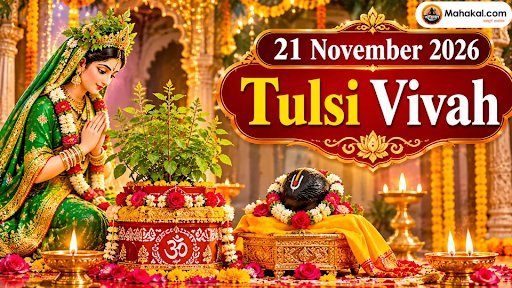
November 21: Tulsi Vivah 2026 – The Divine Marriage Story of Goddess Tulsi and Lord Shaligram with Complete Puja Vidhi
In Hinduism, Tulsi is not considered merely a sacred plant but is worshipped as a divine manifestation associated with Goddess Lakshmi and a beloved devotee of Lord Vishnu. Having a Tulsi plant in the courtyard of a home is traditionally considered a symbol of purity, positivity, and prosperity. Its religious importance becomes even greater during the holy month of Kartik.
Tulsi Vivah is an important Hindu festival celebrated on the Dwadashi Tithi of the Shukla Paksha in the month of Kartik. On this auspicious occasion, the ceremonial marriage of Goddess Tulsi with Lord Vishnu in his Shaligram form is performed with traditional wedding rituals.
According to religious beliefs, participating in Tulsi Vivah with devotion brings the blessings of Lord Vishnu and Goddess Lakshmi. The festival also symbolises the conclusion of Chaturmas and the beginning of auspicious ceremonies and wedding celebrations.
But do you know why Goddess Tulsi is married specifically to Lord Vishnu in his Shaligram form? Behind this sacred tradition lies a fascinating mythological story involving the devotion of a devoted wife, the divine play of Lord Vishnu, and a powerful blessing.
Let us explore the date of Tulsi Vivah 2026, its auspicious significance, the divine marriage story of Goddess Tulsi and Lord Shaligram, required puja materials, complete worship rituals, and the spiritual message of this sacred festival.
1. When Is Tulsi Vivah 2026? Know the Date and Tithi
In 2026, Tulsi Vivah will be celebrated on Saturday, November 21. The festival is observed on the Dwadashi Tithi of Shukla Paksha during the Hindu month of Kartik.
Tulsi Vivah is generally performed on the day following Dev Uthani Ekadashi. However, in some families and regions, the ceremony is also performed on the evening of Dev Uthani Ekadashi itself.
Important Details of Tulsi Vivah 2026:
-
Day: Saturday
-
Date: November 21, 2026
-
Month: Kartik
-
Paksha: Shukla Paksha
-
Tithi: Dwadashi
-
Dwadashi Begins: November 21, 6:31 AM
-
Dwadashi Ends: November 22, 4:56 AM
In Ujjain, sunset on November 21, 2026, will be approximately at 5:36 PM. Traditionally, Tulsi Vivah rituals are performed during the evening Pradosh period. Devotees should follow their local Panchang and family traditions when deciding the exact ceremony time.
2. What Is Tulsi Vivah and Why Is It Celebrated?
Tulsi Vivah is a sacred Hindu ceremony in which the Tulsi plant, worshipped as Goddess Tulsi, is symbolically married to Lord Vishnu in his Shaligram form.
Shaligram is considered a sacred representation of Lord Vishnu. These naturally occurring stones are traditionally found in Nepal's Gandaki River and hold great importance in the Vaishnava tradition.
According to Hindu beliefs, Goddess Tulsi is one of the greatest devotees of Lord Vishnu. Pleased with her devotion and spiritual dedication, Lord Vishnu blessed her with a special place in his worship.
Tulsi Vivah is celebrated to commemorate this divine relationship.
The main purposes of this festival include:
-
Worshipping Lord Vishnu and Goddess Tulsi.
-
Praying for happiness, peace, and prosperity in the household.
-
Celebrating the conclusion of Chaturmas.
-
Welcoming the beginning of auspicious ceremonies and wedding rituals.
-
Preserving religious and spiritual traditions within families.
3. The Mythological Story of Goddess Tulsi and Lord Shaligram
The most popular mythological story associated with Tulsi Vivah revolves around a devoted woman named Vrinda and the powerful demon king Jalandhar.
According to Hindu mythology, there once lived a powerful demon named Jalandhar. He was married to Vrinda, a deeply religious and devoted woman.
Vrinda was a great devotee of Lord Vishnu and remained completely faithful to her husband. Her unwavering devotion and chastity gave Jalandhar extraordinary spiritual protection, making him extremely powerful.
Jalandhar's Tyranny and the Concern of the Gods
According to the legend, Jalandhar became arrogant because of his immense power. He began troubling the gods and sages and attempted to establish control over heaven.
The gods found it extremely difficult to defeat him because Vrinda's unwavering devotion protected him.
Eventually, the gods approached Lord Vishnu and requested his help in resolving the crisis.
Lord Vishnu's Divine Leela and Vrinda's Devotion
To protect the gods, Lord Vishnu performed a divine act.
According to the popular mythological account, Lord Vishnu assumed the appearance of Jalandhar and appeared before Vrinda.
Believing him to be her husband, Vrinda welcomed him. As soon as her vow of chastity was broken, the spiritual protection surrounding Jalandhar came to an end.
Taking advantage of this moment, Lord Shiva defeated Jalandhar in battle.
When Vrinda discovered the truth about Lord Vishnu's divine act, she became deeply sorrowful and angry.
Vrinda's Curse and Lord Vishnu's Shaligram Form
Heartbroken by what had happened, Vrinda cursed Lord Vishnu to turn into stone.
Lord Vishnu accepted her curse and manifested in the form of the sacred Shaligram Shila.
Later, Vrinda understood the divine purpose behind the events. Lord Vishnu blessed her and declared that she would be worshipped on Earth in the form of the sacred Tulsi plant.
He also granted her a special place in his worship, declaring that his worship would be considered incomplete without Tulsi leaves.
According to another popular belief, Vrinda gave up her physical form, and a sacred Tulsi plant emerged at that place.
Lord Vishnu blessed Tulsi and declared that she would become especially dear to him. He also established the tradition of her ceremonial marriage with his Shaligram form.
This divine story is remembered every year through the celebration of Tulsi Vivah on Kartik Shukla Dwadashi.
4. Religious and Spiritual Significance of Tulsi Vivah
Tulsi Vivah is considered one of the most auspicious festivals in Hinduism. Worshipping Goddess Tulsi and Lord Shaligram on this day is traditionally believed to bring spiritual peace and divine blessings.
Blessings of Lord Vishnu: Tulsi is extremely dear to Lord Vishnu. Therefore, Tulsi leaves hold special importance in his worship.
Blessings of Goddess Lakshmi: Tulsi is worshipped as a form associated with Goddess Lakshmi. Devotees believe that performing Tulsi Vivah brings prosperity and happiness into the home.
Marital Happiness: Married women perform the rituals to pray for harmony and happiness in their married lives. Unmarried women also worship Goddess Tulsi with the wish of finding a suitable life partner.
End of Chaturmas: After Lord Vishnu awakens from his cosmic sleep on Dev Uthani Ekadashi, Tulsi Vivah is celebrated as an auspicious indication of the return of ceremonial activities and wedding celebrations.
5. Tulsi Vivah 2026 Puja Samagri
Tulsi Vivah is celebrated with the same enthusiasm and devotion as a traditional Hindu wedding ceremony. On this day, the Tulsi plant is decorated like a bride, while Lord Shaligram is prepared as the groom.
Essential Puja Materials:
-
A healthy Tulsi plant with its pot.
-
Lord Shaligram or an idol of Lord Vishnu.
-
Red or yellow chunari and sari.
-
Red bangles, bindi, and vermilion.
-
Flowers and floral garlands.
-
Turmeric, kumkum, and sandalwood paste.
-
Akshat (unbroken rice grains).
-
Roli and sacred moli thread.
-
Ghee lamp and cotton wicks.
-
Incense sticks and dhoop.
-
Fruits, sweets, and Panchamrit.
-
Sugarcane sticks for the wedding mandap.
-
Coconut, betel leaves, and betel nuts.
-
Camphor and puja thali.
-
Prasad and offerings.
The puja materials may vary according to family traditions and regional customs.
6. Complete Tulsi Vivah 2026 Puja Vidhi
Tulsi Vivah can be performed at home following traditional Hindu wedding rituals. Begin by cleaning the worship area and decorating the Tulsi plant.
Step 1: Clean and Prepare the Worship Area
First, clean the courtyard or worship area of your home. Make a rangoli around the Tulsi pot and decorate the surrounding area with flowers.
Place Lord Shaligram beside the Tulsi plant on a clean platform.
Step 2: Decorate Goddess Tulsi Like a Bride
Decorate the Tulsi plant with a red or yellow chunari. Apply turmeric, kumkum, and sandalwood paste to the pot.
Offer bangles, a bindi, and floral garlands to Goddess Tulsi. Traditionally, the plant is decorated to resemble a bride.
Step 3: Prepare Lord Shaligram as the Groom
Bathe Lord Shaligram with clean water and Panchamrit. Then offer sandalwood paste, Akshat, and flowers.
Decorate the sacred Shaligram with yellow cloth and place it beside Goddess Tulsi.
Step 4: Worship Lord Ganesha and Lord Vishnu
Lord Ganesha is traditionally worshipped before beginning any auspicious ceremony. Therefore, begin by remembering and worshipping Lord Ganesha.
Afterwards, worship Lord Vishnu and Goddess Tulsi by lighting a lamp and offering incense.
Step 5: Perform the Marriage Ceremony of Tulsi and Shaligram
Now begin the ceremonial marriage rituals of Goddess Tulsi and Lord Shaligram.
A wedding mandap can be prepared around the Tulsi plant using sugarcane sticks. Decorate both with beautiful flower garlands.
According to family traditions, symbolic wedding rituals are performed between Goddess Tulsi and Lord Shaligram. Some families also perform the Kanyadaan ceremony for Goddess Tulsi.
Afterwards, sing traditional wedding songs and perform symbolic circumambulations while remembering the divine couple.
Step 6: Chant the Sacred Tulsi Vivah Mantras
During the ceremony, chant the sacred mantras dedicated to Goddess Tulsi and Lord Vishnu.
Goddess Tulsi Mantra:
Om Tulasye Namah.
Lord Vishnu Mantra:
Om Namo Bhagavate Vasudevaya.
Tulsi Prayer:
Vrindayai Tulasi Devyai Priyayai Keshavasya Cha.
Vishnu Bhakti Prade Devi Satyavatyai Namo Namah.
Chant these mantras with devotion and pray for happiness, peace, and prosperity in your family.
Step 7: Perform Aarti and Distribute Prasad
Finally, perform the aarti of Goddess Tulsi and Lord Shaligram.
Offer fruits, sweets, and other prasad to the divine couple. After completing the worship, distribute the prasad among family members and devotees.
With this, the sacred Tulsi Vivah ceremony is completed.
7. What Should You Do and Avoid on Tulsi Vivah?
Following certain religious traditions on Tulsi Vivah is considered auspicious.
Things to Do:
-
Take a bath in the morning and wear clean clothes.
-
Clean and decorate the Tulsi plant.
-
Perform Tulsi Vivah during the evening.
-
Offer flowers, fruits, and sweets to Goddess Tulsi and Lord Shaligram.
-
Chant the names and mantras of Lord Vishnu.
-
Donate food or clothes to people in need.
-
Participate in the puja and aarti with family members.
Things to Remember:
-
Avoid unnecessarily damaging the Tulsi plant.
-
Maintain cleanliness and purity in the worship area.
-
Follow your family's religious traditions regarding plucking Tulsi leaves.
-
Maintain a devotional and positive attitude during the ceremony.
-
Treat the Shaligram Shila with respect and devotion.
8. Popular Religious Beliefs Associated with Tulsi Vivah
Several religious beliefs are associated with the celebration of Tulsi Vivah.
-
Performing Tulsi Vivah is traditionally believed to bring happiness, peace, and prosperity into the home.
-
Offering Tulsi leaves to Lord Vishnu is considered highly auspicious.
-
Participating in Tulsi Vivah is associated with prayers for harmony and happiness in married life.
-
Unmarried women worship Goddess Tulsi for the blessing of a suitable life partner.
-
Worshipping Tulsi and Shaligram on this day is believed to attract the blessings of Lord Vishnu.
These beliefs are based on Hindu faith, mythology, and traditional practices.
9. Why Do Auspicious Ceremonies Begin After Tulsi Vivah?
According to the Hindu calendar, the period beginning with Ashadha Shukla Ekadashi and ending with Kartik Shukla Ekadashi is known as Chaturmas.
According to religious beliefs, Lord Vishnu remains in a state of cosmic sleep during this period.
Dev Uthani Ekadashi celebrates the awakening of Lord Vishnu. Tulsi Vivah is traditionally performed on the following day.
For this reason, Tulsi Vivah is associated with the beginning of auspicious ceremonies and wedding celebrations.
After this festival, Hindu traditions generally resume weddings, housewarming ceremonies, and other auspicious occasions. However, an appropriate Panchang muhurat is still considered necessary for individual ceremonies.
10. What Is the Spiritual Message of Tulsi Vivah?
Tulsi Vivah is not just a religious ceremony; it also represents devotion, dedication, faith, and purity.
The story of Goddess Vrinda teaches us the importance of sincere devotion and unwavering faith. The divine connection between Goddess Tulsi and Lord Vishnu represents the special place that devotion and love hold in the eyes of God.
The festival also reminds us to respect nature. Apart from its medicinal qualities, the Tulsi plant holds an important place in Indian culture, spirituality, and religious traditions.
Conclusion
Tulsi Vivah 2026 will be celebrated with devotion and enthusiasm on Saturday, November 21. This sacred occasion commemorates the divine marriage of Goddess Tulsi and Lord Vishnu in his Shaligram form.
The story of Vrinda's devotion, Lord Vishnu's divine leela, and the sacred blessing given to Tulsi makes this festival especially meaningful.
On this auspicious day, devotees perform Tulsi Vivah at home and pray to Lord Vishnu and Goddess Tulsi for happiness, peace, love, and prosperity in their families.
Tulsi Vivah also reminds us that sincere devotion, purity, and dedication make life spiritually meaningful and beautiful.
Wishing everyone a blessed and happy Tulsi Vivah 2026!
Jai Shri Hari! Jai Tulsi Mata!
What's Your Reaction?