Why Does Maa Chandraghanta Have a Moon on Her Forehead? Know the Amazing Religious Significance of This Divine Form
Why is a crescent moon placed on the forehead of Maa Chandraghanta, worshipped on the third day of Navratri? Discover the religious significance, spiritual message, divine form and importance of worshipping Maa Chandraghanta.
Content Blog
Navratri is one of the most sacred festivals in Hinduism, during which devotees worship the nine divine forms of Goddess Durga. The third day of Navratri is dedicated to Maa Chandraghanta, a powerful form of the Goddess associated with courage, peace, strength and spiritual energy.
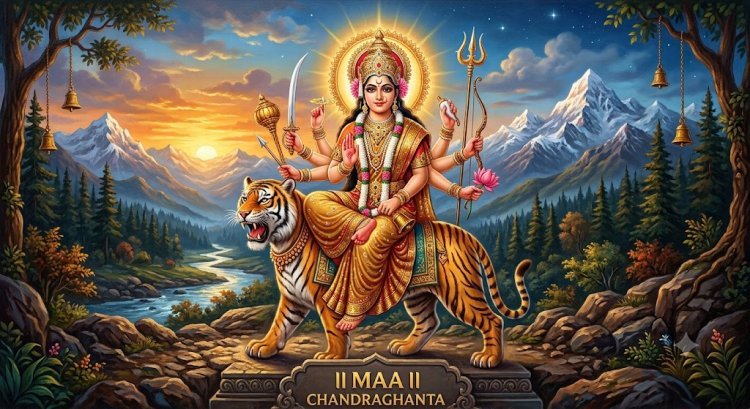
One of the most distinctive features of Maa Chandraghanta is the crescent moon adorning her forehead. This divine symbol is not merely an ornament. It carries deep religious and spiritual significance and is closely associated with the name and form of the Goddess.
Why Does Maa Chandraghanta Have a Moon on Her Forehead?
According to religious traditions, the crescent moon on the forehead of Maa Chandraghanta represents peace, calmness, balance and divine consciousness. The moon is traditionally associated with the mind, emotions and coolness.
The divine form of Maa Chandraghanta teaches that true strength should always be accompanied by inner peace and wisdom. Her powerful appearance represents courage, while the moon represents calmness and emotional balance.
The crescent moon, together with the bell-like appearance associated with her form, is considered an important reason behind the name “Chandraghanta.”
Religious Significance of the Moon
The Moon holds a special place in Hindu religious traditions. It is traditionally associated with the mind, emotions, coolness and peace.
Just as moonlight provides a soothing presence during the darkness of night, the moon on the forehead of Maa Chandraghanta symbolizes peace, calmness and spiritual positivity.
It conveys an important message: even when life becomes difficult, a person should try to maintain a peaceful and balanced mind.
What Does the Divine Form of Maa Chandraghanta Represent?
Maa Chandraghanta is traditionally depicted as a radiant and powerful Goddess. She is shown with ten hands carrying various divine weapons and objects, and her vehicle is a lion, symbolizing courage and strength.
Her form teaches devotees not to surrender to fear when facing challenges. Courage, patience, faith and positive thinking can help a person face difficult situations with greater confidence.
The most beautiful aspect of this divine form is the combination of power and peace. Her weapons represent strength, while the moon on her forehead represents calmness and balance.
Why Is Maa Chandraghanta Worshipped on the Third Day of Navratri?
Each day of Navratri is traditionally dedicated to a different form of Goddess Durga. The third day is dedicated to Maa Chandraghanta.
Devotees worship her with faith and devotion and seek blessings for courage, peace, confidence and protection from negativity. Her worship is also seen as an opportunity for spiritual reflection and inner strength.
Spiritual Message of the Moon on Her Forehead
The moon on Maa Chandraghanta's forehead carries a powerful spiritual message about maintaining balance in the mind.
Human life constantly goes through happiness and sadness, success and failure, fear and confidence. In such situations, maintaining inner stability becomes important.
The coolness traditionally associated with the moon reminds devotees that even during difficult circumstances, they should try to remain patient, peaceful and emotionally balanced.
This is what makes Maa Chandraghanta's form particularly meaningful: it beautifully combines strength with serenity.
How Is Maa Chandraghanta Worshipped?
On the third day of Navratri, devotees traditionally take a bath, wear clean clothes and clean the place of worship. They then meditate upon Maa Durga and Maa Chandraghanta.
A lamp may be lit, followed by offerings such as flowers, rice grains, fruits and devotional offerings according to one's family tradition. Devotees may also recite prayers, mantras and perform the aarti of the Goddess.
Different families and traditions may follow different methods of worship. The central element of the worship is faith, devotion and sincere remembrance of the Goddess.
Importance of Worshipping Maa Chandraghanta
According to Hindu religious beliefs, worshipping Maa Chandraghanta is associated with courage, confidence, peace and spiritual strength.
Her lion vehicle represents bravery, while the crescent moon on her forehead represents calmness and balance. Together, these symbols convey an important lesson: a person needs both courage to face challenges and a peaceful mind to make wise decisions.
What Can We Learn from Maa Chandraghanta?
The divine form of Maa Chandraghanta gives several meaningful lessons for everyday life:
- Face difficult situations with courage.
- Try to maintain peace and balance in the mind.
- Use strength for righteous and constructive purposes.
- Replace fear with confidence and faith.
- Maintain positive thinking during difficult circumstances.
- Balance inner strength with calmness and wisdom.
Conclusion
The crescent moon on the forehead of Maa Chandraghanta is one of the most distinctive features of her divine form. In religious and spiritual traditions, the moon is associated with peace, coolness and mental balance, while the powerful form of the Goddess represents courage and strength.
Together, these symbols convey a beautiful message: strength becomes truly meaningful when it is guided by peace, patience, wisdom and balance.
Worshipping Maa Chandraghanta on the third day of Navratri is therefore not only an expression of devotion but also an opportunity to reflect upon courage, inner peace and spiritual strength.
The divine form of Maa Chandraghanta reminds us that when life demands courage, it is equally important to maintain a calm and balanced mind.
What's Your Reaction?